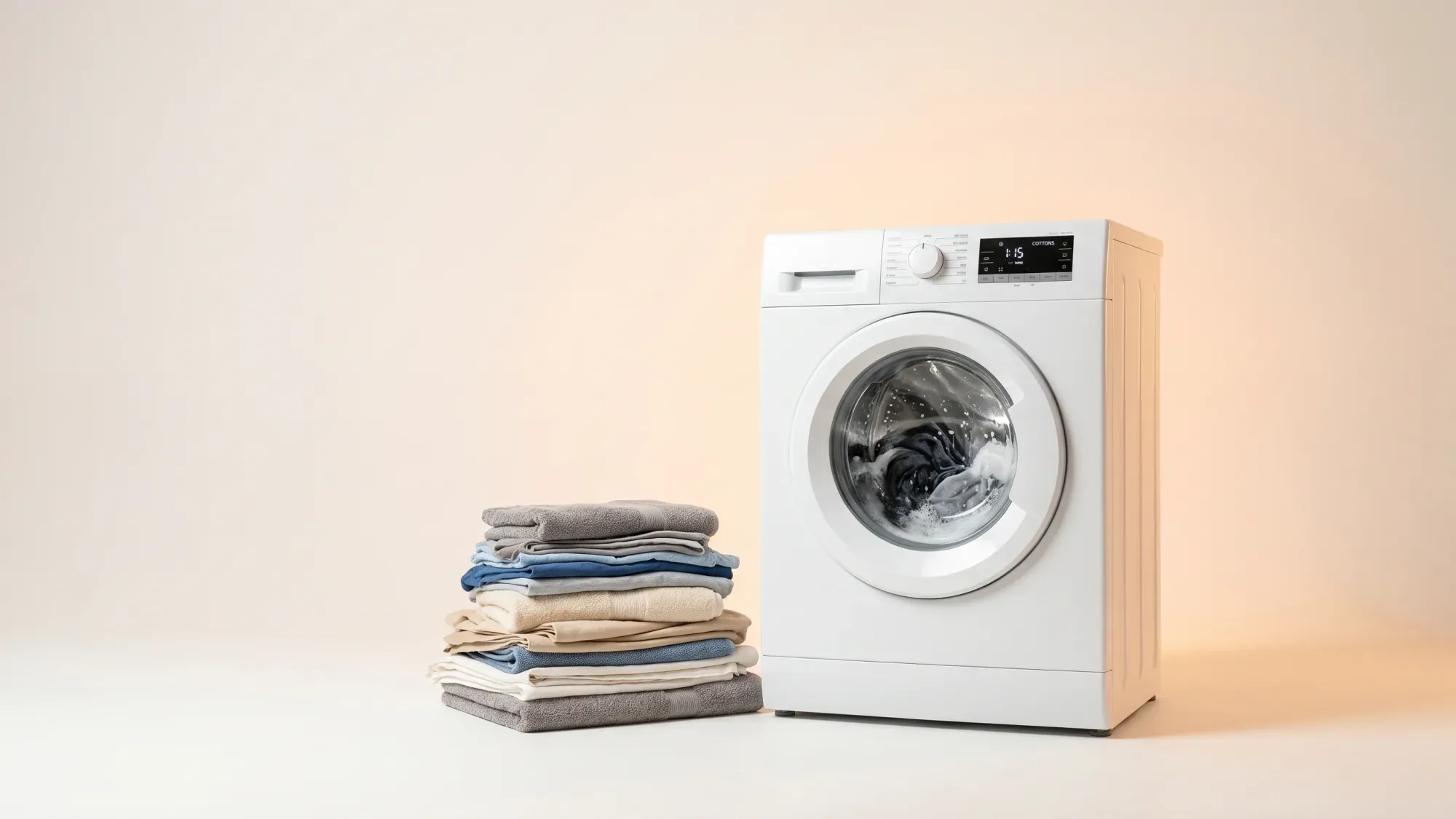
Energy-efficient laundry can significantly reduce your household energy bills and environmental impact. This guide offers practical advice to help you take control of your energy use, making everyday laundry more efficient and cost-effective.
Making your laundry more energy efficient is one step towards a smarter home. Fuse Energy helps you manage your energy use with clear pricing and real-time data. Click here to switch to Fuse Energy today.
To save energy, it helps to understand how your washing machine uses it. Heating the water is the main energy consumer, making wash temperature a critical factor in running costs.
The true cost of a wash cycle
A typical energy-efficient washing machine cycle at 30°C can cost around 16 pence to run. This figure is based on an electricity unit rate of 26.11 pence per kilowatt-hour, which is the Ofgem Price Cap for 1 July to 30 September 2026. This highlights the financial benefit of lower temperature washes.
Factors influencing energy use
Beyond temperature, other factors influence your washing machine's energy use. These include the load size, spin speed, and chosen wash cycle. Running partial loads wastes water and electricity, while an inefficient spin can lead to longer, more energy-intensive drying times.
Decoding energy ratings and modified energy factor
All new washing machines sold in the UK must display an energy label, using an A-G scale where A is the most efficient. This rating helps you choose appliances that use less electricity and water. The "modified energy factor" combines energy and water efficiency for a more complete picture of an appliance's overall impact. Choosing an A-rated machine can significantly reduce long-term running costs.
Small changes to your laundry routine can lead to substantial savings and a reduced environmental footprint.
Embrace lower temperatures: 20°C and 30°C washes
Washing at lower temperatures is one of the most effective ways to cut energy use. Reducing your wash temperature from 40°C to 30°C can save around 30-40% of the energy used per cycle. For most everyday loads, 20°C or 30°C is perfectly sufficient to get clothes clean, especially with modern detergents designed for cooler washes.
Optimise load sizes: full but not overloaded
Always aim for a full load, but avoid overloading your machine. A full load ensures you are making the most of the water and energy used for each cycle. Overloading, however, can prevent clothes from getting properly clean, requiring re-washing, and can also strain the machine, potentially reducing its lifespan.
Maximise spin speed for faster drying
Select the highest spin speed appropriate for your clothes. A faster spin removes more water, which drastically reduces the time and energy needed if you are using a tumble dryer, or speeds up air drying. This simple step can make a big difference to your overall energy consumption.
Utilise eco programmes and energy-saving buttons
Many modern washing machines come equipped with 'eco' programmes or energy-saving buttons. These settings are designed to optimise water and energy use, often by extending wash times at lower temperatures or adjusting spin cycles. Familiarise yourself with your machine's features and use these settings whenever possible.
When you run your washing machine can also affect your energy costs, particularly if you are on a time-of-use electricity tariff.
Cheapest time to use washing machine in the UK
For households on standard tariffs, the cost per kilowatt-hour remains constant throughout the day. However, if you have a time-of-use tariff (like Economy 7), electricity is cheaper during off-peak hours, typically overnight. Running your washing machine during these periods can lead to savings. Check your energy bill or contact your supplier to understand your specific tariff structure.
Understanding time-of-use tariffs
Time-of-use tariffs charge different rates for electricity depending on the time of day. Peak hours, usually in the late afternoon and evening, are more expensive, while off-peak hours (often overnight or in the middle of the day) are cheaper. Shifting energy-intensive tasks like laundry to off-peak times can help reduce your overall bill.
The role of smart meters in optimising laundry times
Smart meters provide real-time data on your energy consumption, allowing you to see exactly how much electricity you are using and when. This information can be invaluable for optimising your laundry schedule, helping you identify the cheapest times to run your washing machine and make informed decisions about your energy use.
Energy efficiency does not stop when the wash cycle ends. How you dry your clothes and maintain your machine also plays a crucial role.
Prioritising air drying over tumble dryers
Tumble dryers are significant energy consumers. Whenever feasible, opt for air drying your clothes outdoors or on an indoor drying rack. This not only saves energy but also extends the life of your garments. If you must use a tumble dryer, ensure the load is well-spun to reduce drying time.
Regular maintenance for efficiency and longevity
Maintaining your washing machine ensures it operates at peak efficiency and prolongs its lifespan. Regularly cleaning the detergent drawer, filter, and drum prevents blockages and mould build-up. Descaling your machine, especially in hard water areas, can improve heating efficiency. A well-maintained machine uses less energy and avoids costly repairs.
Addressing washing machine running cost increase concerns
With rising energy costs, concerns about washing machine running costs are understandable. By implementing the tips above - lower temperatures, full loads, high spin speeds, air drying, and regular maintenance - you can actively mitigate these increases and keep your laundry expenses in check.
If you are in the market for a new appliance, selecting an energy-efficient model is a long-term investment in lower bills and reduced environmental impact.
What to look for in a new appliance
When buying a new washing machine, look beyond the purchase price. Consider its energy rating, water consumption, and features like eco programmes or delayed start functions. A higher initial investment in an A-rated machine will often pay off through significant energy savings over its lifetime.
Understanding the A-G energy label
The A-G energy label provides clear information about a washing machine's energy efficiency, with A being the most efficient. This label also details the appliance's energy consumption in kilowatt-hours per 100 cycles, water consumption per cycle, and noise levels. Always check this label to compare models effectively.
Considering washer dryers and their efficiency
Washer dryers offer convenience by combining two appliances in one. However, their drying function typically uses more energy than a standalone tumble dryer. If space is a concern, an energy-efficient washer dryer can be a good compromise, but always compare its energy rating for both washing and drying cycles.
Making your laundry more energy efficient is a simple way to take control of your household energy use. Fuse Energy offers clear pricing and in-app usage data to help you understand and manage your energy consumption. Our 24/7 human support team is always on hand to help. Click here to switch to Fuse Energy today and start making smarter energy choices. You can also learn more about our mission to make energy fairer and greener by clicking here.