Wind waste in the UK: causes and solutions
The UK is a leader in wind power, yet it frequently pays wind farms to switch off, wasting clean energy that could power millions of homes. This phenomenon, known as wind curtailment, undermines the nation's clean energy goals and drives up costs for consumers. Understanding why this inefficiency occurs and exploring actionable solutions is crucial for maximising the UK's abundant wind resources.
Wind waste is a symptom of an outdated energy system. Fuse Energy is committed to building a future where clean energy is abundant and fully utilised, not wasted. Discover how we're working towards a smarter energy future by clicking here to switch to Fuse Energy today.
Enter your address to get a quote and see how much you could save
What is wind waste (curtailment)?
Wind waste, or curtailment, happens when wind farms are instructed to reduce or cease generating electricity, even when conditions are optimal for production. This occurs because the electricity grid cannot safely transmit all the power being generated to where it is needed, or there isn't enough demand at that specific time. The lost renewable power must then be replaced by more expensive generation, often from fossil fuels, and wind farm operators are compensated for the energy they could not produce.
Understanding energy curtailment
Energy curtailment is a balancing act. Grid operators must ensure a stable and reliable electricity supply, matching generation precisely with demand. When the grid infrastructure is unable to handle the volume of electricity being produced by wind farms, or when demand is low, curtailment is used to prevent overloading the system. This ensures grid stability but results in clean energy being deliberately unused.
The difference between curtailment and physical waste
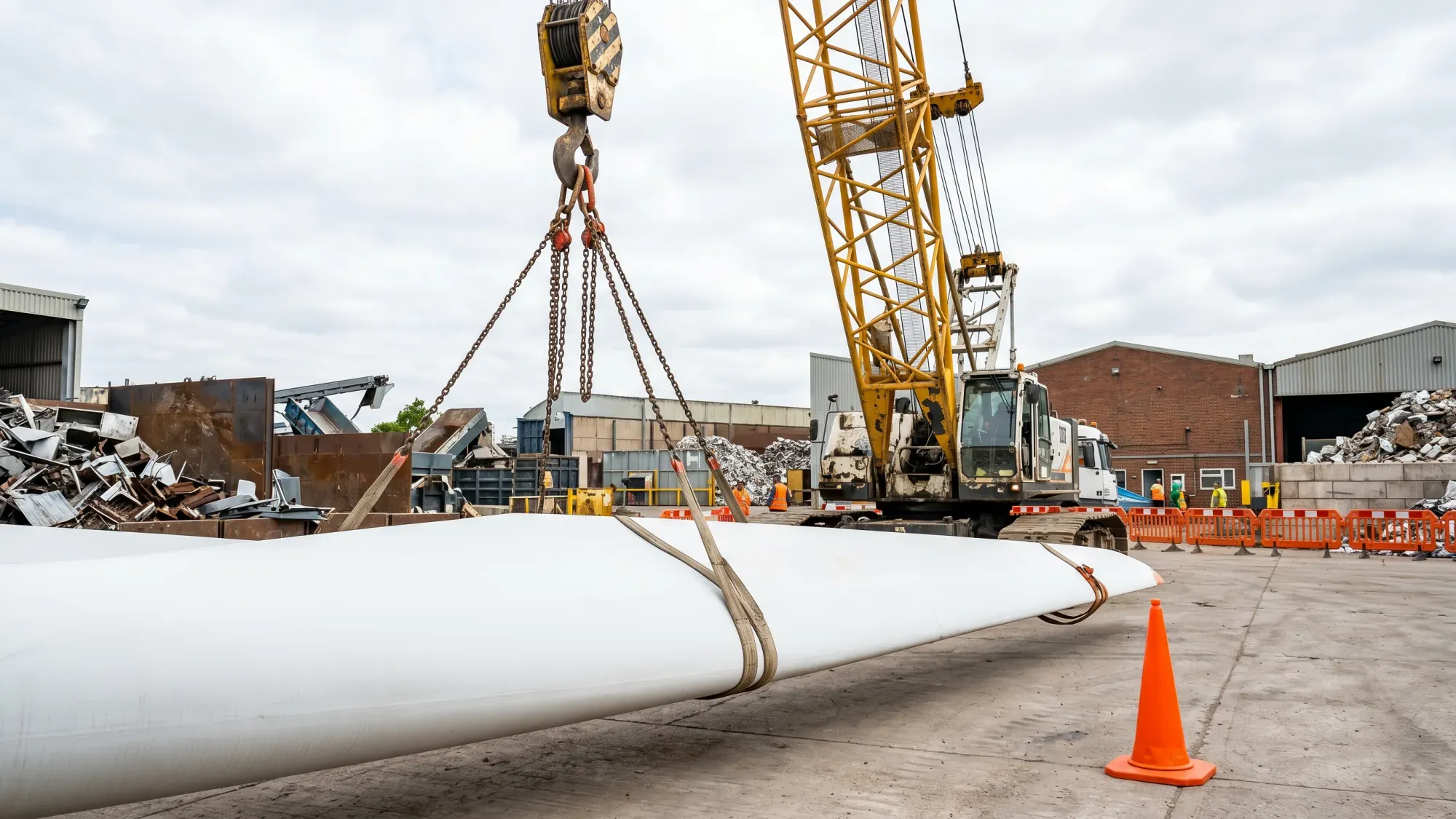
It is important to distinguish between wind curtailment and the physical waste associated with wind turbine blades. Wind curtailment refers to the wasted generation of electricity, where operational turbines are idled. In contrast, the physical waste of wind turbine blades relates to the challenge of recycling composite materials at the end of a turbine's 20-25 year lifespan. While blade disposal is a separate environmental concern, blades are typically made from non-toxic fibreglass and are considered landfill-safe, with new recycling innovations emerging to address disposal challenges.
Why is the UK wasting wind energy?
The root causes of wind waste in the UK are systemic, stemming from an energy infrastructure that has not kept pace with the rapid expansion of renewable generation.
Grid infrastructure limitations
The UK's electricity grid was primarily designed for a centralised, fossil-fuel-based energy system, with power flowing in one direction from large power plants to consumers. This ageing infrastructure struggles to accommodate the decentralised and intermittent nature of modern renewable sources like wind. Key bottlenecks exist, particularly between Scotland, where much of the UK's wind capacity is located, and the main demand centres in England. The transmission capacity between these regions, often referred to as the B6 boundary, frequently reaches its limits, forcing Scottish wind farms to curtail output. This issue is exacerbated by a significant backlog of renewable projects awaiting connection to the grid, with some facing delays of up to a decade.
Lack of energy storage
The intermittent nature of wind power, which fluctuates with wind speed, necessitates robust energy storage solutions to ensure a continuous and stable supply. Without sufficient grid-scale storage, excess wind energy generated during periods of high winds and low demand often goes to waste. Energy storage systems, such as large-scale batteries, are crucial for capturing this surplus energy and releasing it when needed, helping to balance the grid and reduce curtailment.
Market and policy mechanisms
Current market mechanisms contribute to the problem. When wind farms are curtailed, they are compensated for their lost revenue through "constraint payments". Simultaneously, gas-fired power stations or other generators are paid to increase their output to make up the shortfall. This creates a costly "double payment" for consumers, as they effectively pay for both the wasted wind and the replacement fossil fuel generation. These costs are then passed on to households through their energy bills.
The impact of wind curtailment
The inefficiency of wind curtailment has far-reaching consequences, affecting consumers, the environment, and the pace of the UK's transition to clean energy.
Financial costs to consumers
The financial burden of wind curtailment on UK consumers is substantial and growing. In 2021, the cost of curtailing wind reached a record £507 million. By 2025, this figure had soared to approximately £1.46 billion, with projections indicating it could reach £8 billion annually by 2030 if urgent reforms are not implemented. These costs are folded into balancing costs and ultimately passed on to every household through their electricity bills. For instance, constraint costs alone added an estimated £15 to a typical household bill in late 2025.
How much does wind curtailment cost UK consumers?
In 2025, the UK spent approximately £1.46 billion on wind curtailment and replacement generation. This included around £380 million paid to wind farms to switch off and £1.08 billion for gas-fired power to compensate. Without reform, these costs could rise to £8 billion annually by 2030, impacting household bills.
Environmental consequences
Wasting clean wind energy often leads to an increased reliance on fossil fuels to meet energy demand. When wind farms are curtailed, gas-fired power stations are frequently dispatched to fill the generation gap. This results in higher carbon dioxide emissions, directly undermining the environmental benefits of renewable energy and the UK's climate targets.
Hindering renewable energy growth
The persistent issue of wind curtailment acts as a brake on the UK's clean energy ambitions. It makes renewable energy projects less economically viable and creates uncertainty for investors, as potential generation is not always utilised. This inefficiency slows down the deployment of new wind farms and other renewable technologies, hindering the country's progress towards a decarbonised grid.
Solutions for maximising clean energy abundance
Addressing wind waste requires a multi-faceted approach, focusing on modernising infrastructure, expanding storage capabilities, and implementing innovative energy management strategies.
Upgrading the National Grid
A fundamental solution lies in a comprehensive upgrade of the National Grid. The UK is investing significantly in this area, with estimates suggesting that network companies may need to spend between £70 billion and £90 billion on high-voltage network upgrades over the coming years as part of the "Great grid Upgrade". Key projects, such as the Eastern Green Links, aim to create new "electricity superhighways" to connect Scottish wind generation to English demand centres. Beyond new infrastructure, efforts are also underway to speed up the connection process for new renewable projects, which has historically faced considerable delays.
Investing in energy storage
Scaling up energy storage is critical for integrating intermittent renewables. Long-duration energy storage (LDES) and battery energy storage systems (BESS) can store surplus wind power during periods of high generation and release it when demand is high or wind speeds drop. This flexibility helps to balance the grid, reduce curtailment, and decrease reliance on fossil fuel backups. The UK is already a leading market for battery storage, with significant capacity operational and in the pipeline.
Innovative energy system approaches
Beyond physical infrastructure, innovative approaches to energy system management are essential. This includes greater grid flexibility and the implementation of demand-side response mechanisms, which incentivise consumers and businesses to adjust their electricity use in response to grid conditions. By better aligning demand with available supply, these strategies can help absorb periods of abundant renewable generation, reducing the need for curtailment.
Fuse Energy's approach to eliminating wind waste
Fuse Energy recognises wind waste as a symptom of an outdated energy system built on scarcity. Its mission is to challenge this mindset by demonstrating that abundant clean energy is available and can be fully utilised.
Rebuilding the energy system from scratch
Fuse's core strategy involves vertically integrating and rebuilding the energy system from scratch. This means taking a holistic approach that addresses the fundamental constraints causing wind waste, rather than merely patching existing problems. By owning and optimising various parts of the energy value chain, Fuse aims to create an infrastructure capable of handling and distributing vast amounts of clean energy efficiently.
Vertical integration for efficiency
Fuse's vertical integration directly tackles the grid limitations and lack of storage that lead to wind curtailment. By developing its own generation assets, grid infrastructure, and storage solutions, Fuse can ensure that clean energy is not only generated but also effectively transmitted and stored for when it is needed. This integrated approach minimises waste and maximises the delivery of clean, affordable energy.
Empowering a future of abundance
By actively working to eliminate wind waste, Fuse Energy helps unlock cheaper, cleaner energy for consumers. This aligns with its vision of a future where energy is so abundant it stops being a constant concern. Empowering customers with reliable, clean energy means ensuring that available wind power isn't wasted, giving them more control over their energy consumption and contributing to a more sustainable and affordable energy landscape for everyone.
Ready to be part of an energy future that values abundance over scarcity? Fuse Energy offers clear pricing, real-time usage data, and 24/7 human customer support, all designed to put you in control of your home energy. Switching is quick and easy, so you can start making a difference today. Click here to switch to Fuse Energy and join us in building a world with power to play with. You can also learn more about our mission here.
Disclaimer
For the avoidance of doubt, this article is provided for informational purposes only and is not intended to constitute legal or financial advice. The author and/or Fuse Energy shall not be responsible for any losses arising out of any reliance on the information contained herein.