Home wind generator: costs and UK planning
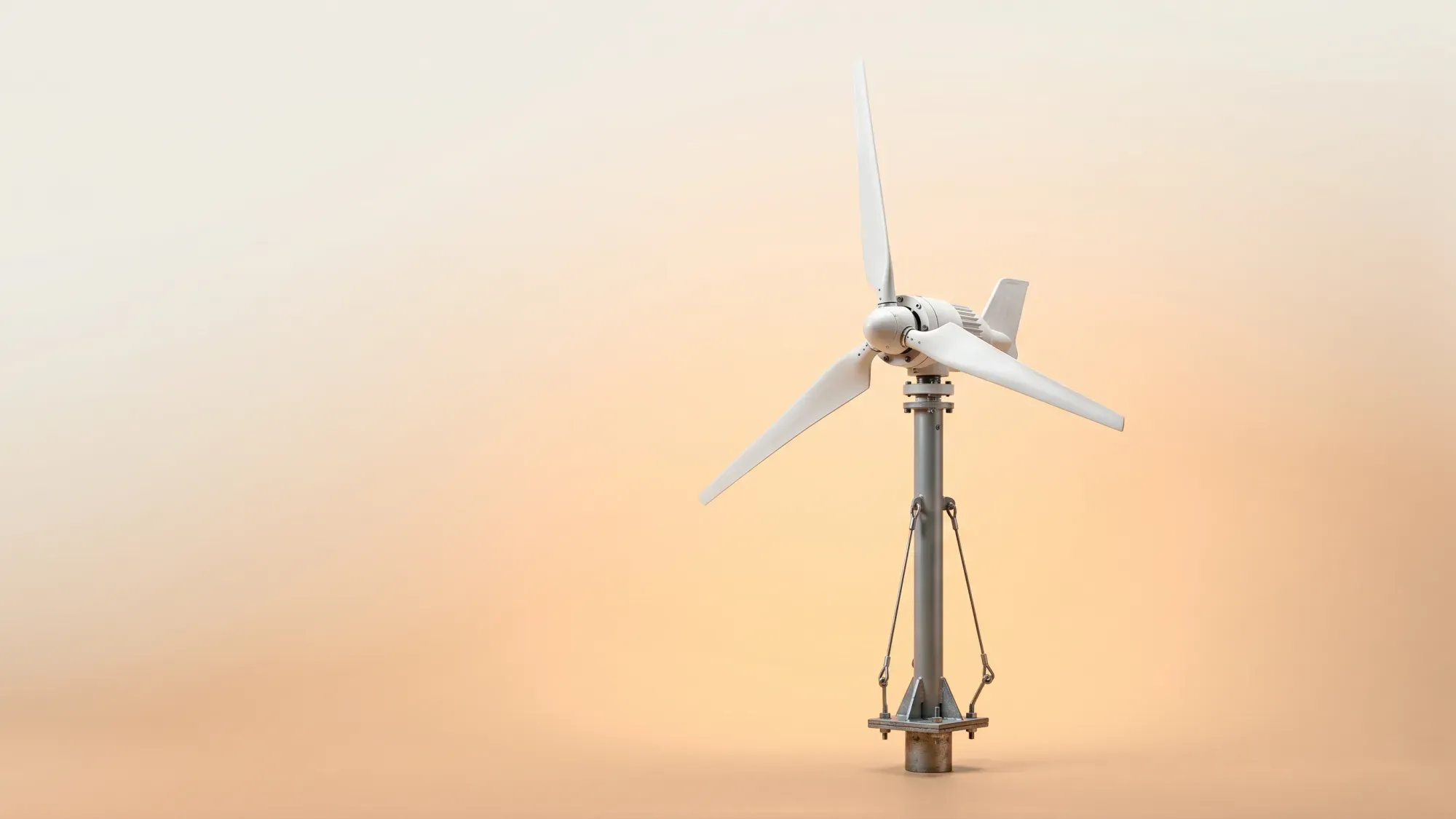
Considering a home wind generator can offer greater energy independence and reduced electricity bills for UK homeowners. However, understanding the practicalities, financial implications, and navigating the complexities of costs, planning permission, and site suitability are crucial for a successful installation. This guide provides clear information to help you determine if a home wind generator is right for your property.
If you are looking to make the most of your home wind generator, understanding your energy usage is key. Fuse Energy provides clear pricing and real-time usage data through its app, helping you manage your energy more effectively. Click here to switch to Fuse Energy today.
Enter your address to get a quote and see how much you could save
Understanding home wind generators
Domestic wind generators, often called home wind turbines, harness the kinetic energy of wind to produce electricity for your property. They offer a way to generate your own clean energy, reducing reliance on the National Grid.
What is a domestic wind turbine?
A domestic wind turbine is a scaled-down version of the larger turbines seen in wind farms, designed for residential use. These systems typically range in size from 1 kilowatt (kW) to 6 kW, according to RenewableUK. They are installed either on a mast in your garden or, less commonly, mounted on a roof.
How do small wind generators work?
Small wind generators operate on the same principles as their larger counterparts. Wind turns the turbine's blades, which are connected to a rotor. The rotor spins a generator, converting mechanical energy into electricity. This electricity can then be used directly in your home, stored in batteries, or, if in surplus, exported to the National Grid.
Benefits of domestic wind power
Installing a wind generator for your home can bring several advantages, from financial savings to environmental contributions.
Reducing electricity bills
Generating your own electricity directly reduces the amount you need to buy from the grid. A small 6 kW domestic turbine in a good location can produce roughly 9,000 kWh per year, which is more than three times the average UK home's annual electricity usage of around 2,500 kWh1. This significant output can drastically cut your electricity bills.
Achieving energy independence
With your own wind generator, you become less reliant on external energy suppliers and fluctuations in energy prices. This can provide a sense of security and control over your household's energy supply. For more ways to take control, consider exploring energy saving tips for your home.
Environmental advantages
Wind power is a clean, renewable energy source that produces no carbon emissions during operation. By choosing a domestic wind generator, you contribute to reducing your carbon footprint and supporting the transition to a more sustainable energy system. You can learn more about the benefits of renewable energy in general.
Types of home wind turbines
Domestic wind turbines generally fall into two main categories, each with distinct characteristics.
Horizontal axis wind turbines
Horizontal Axis Wind Turbines (HAWTs) are the most common design, resembling traditional large-scale wind farm turbines. They have blades that rotate around a horizontal axis, similar to a propeller. HAWTs are generally more efficient at capturing wind energy and are often preferred in locations with consistent wind speeds.
Vertical axis wind turbines
Vertical Axis Wind Turbines (VAWTs) have blades that rotate around a vertical axis. They are often more compact and can be more suitable for urban or suburban environments where wind conditions might be more turbulent or come from varying directions. While generally less efficient than HAWTs, their design can be less visually intrusive and they operate more quietly.
Choosing the right size and capacity
The appropriate size and capacity for your home wind turbine depend on your energy consumption, the available wind resource, and local planning regulations. A professional site assessment is crucial to determine the most suitable option for your property.
Site suitability for a wind generator
The performance and economic viability of a domestic wind turbine are highly dependent on site-specific conditions. A thorough assessment is essential before any investment.
Assessing average wind speed
Wind speed is the most critical factor for a wind generator's output. Turbines require a consistent average wind speed to operate efficiently. Properties in exposed locations, away from large obstructions, typically have better wind resources.
Impact of turbulence and obstacles
Turbulence, caused by nearby buildings, trees, or uneven terrain, can significantly reduce a turbine's efficiency and lifespan. Obstacles create wind shadows and unpredictable airflows. A site survey will identify potential sources of turbulence and recommend optimal turbine placement and height to minimise their impact.
Property location and surrounding environment
Rural properties with open land are generally more suitable for standalone wind turbines. Roof-mounted turbines might be an option for some homes, but they are typically smaller and less powerful. The proximity to neighbours and local landscape considerations also play a role in both performance and planning permission.
Costs and financial considerations
Installing a home wind generator involves a significant upfront investment. Understanding the various cost components and potential financial returns is key to making an informed decision.
Components of wind turbine cost
The total cost of a domestic wind turbine system varies widely. it includes the purchase price of the turbine itself, which differs based on its size, type, and manufacturer. Beyond the turbine, you must account for the cost of the mast or mounting system, the inverter, and any necessary battery storage.
Installation and maintenance expenses
Installation costs are a major factor, influenced by the complexity of the site, the height of the mast, and the need for groundworks or electrical upgrades. Connecting the system to your home's electricity supply and, if applicable, to the National Grid, also incurs costs. Ongoing maintenance, though generally minimal for modern turbines, should also be factored into your long-term financial planning.
Potential savings and payback period
The primary financial benefit comes from reducing the amount of electricity you purchase from the grid. Any surplus electricity generated can potentially be exported to the grid. While self-installed systems are generally not eligible for the Smart Export Guarantee (SEG), some suppliers may offer their own export tariffs outside the SEG scheme. Self-consumption remains the primary saving. The payback period for a domestic wind generator depends on the initial investment, the amount of electricity generated and consumed, and prevailing electricity prices. For more information on how export tariffs work, you can read about understanding the SEG.
UK planning permission and regulations
Navigating UK planning permission and regulatory requirements is a critical step for any homeowner considering a domestic wind turbine.
Permitted Development rights for domestic wind turbines
In some cases, smaller domestic wind turbines may fall under Permitted Development rights, meaning you might not need to apply for full planning permission. However, strict criteria apply regarding turbine size, height, location, and proximity to boundaries and other properties. These rights are often more restrictive in conservation areas, Areas of Outstanding Natural Beauty, or National Parks.
When full planning permission is required
If your proposed wind turbine does not meet the Permitted Development criteria, or if your property is in a protected area, you will need to apply for full planning permission from your local authority. This process involves detailed applications, environmental impact assessments, and public consultation.
Notifying your distribution network operator (G98)
Regardless of planning permission, you or your supplier must notify your Distribution Network Operator (DNO) of the installation of a microgeneration system, such as a domestic wind turbine, under G98 guidelines. This notification must be submitted within 28 days of commissioning the system. The DNO needs to be aware of any generation connected to their network to ensure safety and grid stability.
Integrating with home energy systems
A home wind generator can be a powerful addition to your property's energy infrastructure, especially when integrated effectively with existing systems.
Connecting to your home's electricity supply
The electricity generated by your wind turbine is fed into your home's consumer unit, where it can power your appliances. This reduces the amount of electricity you draw from the National Grid.
Battery storage and energy management
To maximise self-consumption and energy independence, many homeowners pair their wind generators with battery storage systems. Batteries store excess electricity generated during windy periods for use when the wind is low or demand is high. This can further reduce your reliance on grid electricity and optimise your energy usage. For more details, see our guide on home battery storage explained.
Optimising self-consumption with smart technology
Integrating your wind generator and battery storage with smart energy management systems can significantly enhance their effectiveness. Smart technology can monitor your energy generation and consumption in real-time, automatically directing power to where it's most needed - whether to appliances, battery storage, or even for export to the grid. This intelligent management helps you get the most out of your investment.
Is a home wind generator right for your UK property?
Deciding whether a home wind generator is suitable for your property requires careful consideration of various factors.
Weighing the pros and cons
On the one hand, domestic wind power offers potential for significant electricity bill reductions, increased energy independence, and environmental benefits. On the other hand, it involves substantial upfront costs, requires suitable site conditions with consistent wind, and necessitates navigating complex planning and regulatory hurdles. The UK onshore wind capacity factor averages around 27%, while offshore wind averages around 41%, highlighting the importance of location for efficient generation.
Next steps for interested homeowners
If you are considering a home wind generator, your first step should be a professional site survey to assess your property's wind resource and overall suitability. Research local planning permission requirements thoroughly and obtain detailed quotes from reputable suppliers and installers. Understanding how a wind generator integrates with your home's existing energy system and smart energy management will empower you to make an informed decision.
Fuse Energy is committed to empowering homeowners with knowledge to make informed energy choices. While we do not install wind turbines, our app helps you manage your overall energy usage, which is crucial for optimising the benefits of a home wind generator. We offer clear pricing, real-time usage data, and 24/7 human customer support to make managing your energy simple. Switching to Fuse Energy takes just a few minutes, so you can take control of your bills from day one. Click here to switch to Fuse Energy today. You can also learn more about our mission to build a sustainable energy future by clicking here.
References
Disclaimer
For the avoidance of doubt, this article is provided for informational purposes only and is not intended to constitute legal or financial advice. The author and/or Fuse Energy shall not be responsible for any losses arising out of any reliance on the information contained herein.