Virtual power plant: how UK homes boost the grid
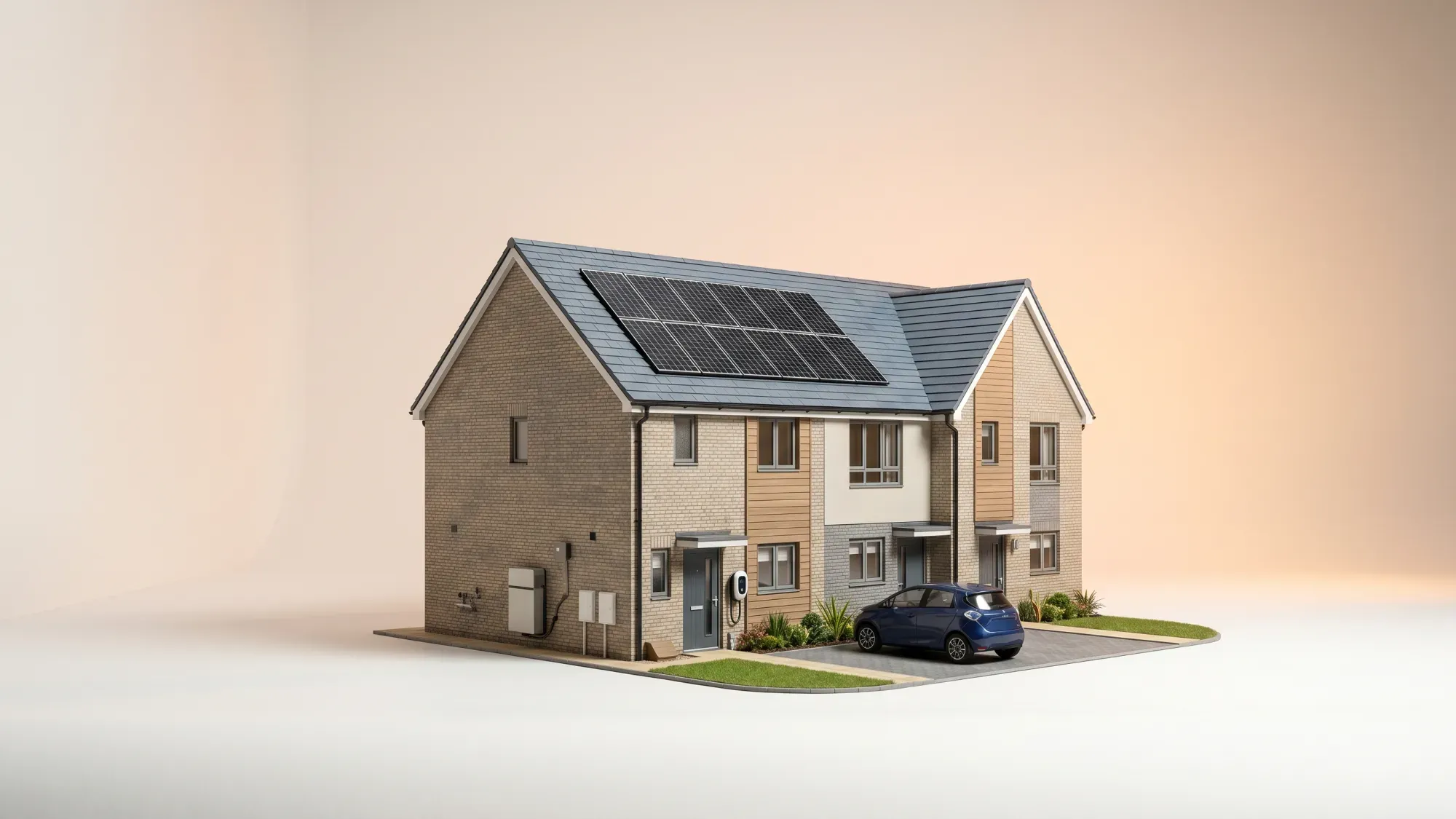
Virtual Power Plants (VPPs) are transforming how UK homeowners utilise their energy assets, turning solar panels and battery storage systems into active contributors to the national electricity grid. By bringing together these distributed energy resources (DERs), VPPs create a flexible power source that helps balance the grid, offering financial incentives for homeowners who participate. This guide explains what VPPs are, how they operate, and the tangible benefits for UK households.
Harnessing your home's energy assets can feel complex, but Fuse Energy aims to make managing your energy straightforward. We believe in empowering you with clear information and tools to understand your energy use. Click here to switch to Fuse Energy today.
Enter your address to get a quote and see how much you could save
What is a Virtual power plant (VPP)?
A Virtual Power Plant (VPP) is a network of decentralised energy resources, such as solar panels, wind turbines, and battery storage systems, managed as a single, cohesive power plant. Unlike traditional power stations that generate electricity from one large source, a VPP coordinates many smaller units to provide electricity and grid services, helping to manage the flow of energy across the National Grid more efficiently.
Aggregating home energy resources
VPPs operate by pooling thousands of distributed energy resources (DERs) together, creating a collective pool of electricity that acts as a unified power source. These DERs can include rooftop solar panels, home battery storage, and even electric vehicle (EV) chargers. Advanced software and control systems manage these diverse assets, optimising their output and consumption in real-time. This aggregation allows individual homeowners to contribute to grid stability in a way that would not be possible with standalone systems.
VPPs versus traditional power stations
Traditional power stations, often large, centralised facilities burning fossil fuels, generate a constant supply of electricity. VPPs, by contrast, are dynamic and distributed. They do not necessarily generate new electricity but rather manage existing energy flows, either by dispatching stored energy, reducing demand, or increasing generation from renewables when needed. This flexibility makes VPPs a crucial component for integrating more renewable energy into the grid, which often has intermittent generation patterns due to weather conditions.
How VPPs benefit UK homeowners
Participating in a VPP offers several advantages for UK homeowners, from financial gains to contributing to a more sustainable energy system.
Generating income from your energy assets
Homeowners can monetise their energy assets by participating in a VPP. This typically involves receiving payments for providing flexibility to the grid, rather than direct energy sales. For example, your home battery might discharge stored solar power to the grid during peak demand, or your EV charger might pause charging during periods of grid stress. These actions, coordinated by the VPP, help balance supply and demand, and in return, participants receive financial compensation. The specific earnings can vary based on market conditions and the services provided.
Reducing energy bills and increasing self-sufficiency
By optimising the use of your own generated or stored energy, VPP participation can lead to lower energy bills. For instance, a VPP can help you automatically charge your home battery when electricity prices are low and discharge it when prices are high, or when your solar panels are not generating. This intelligent management increases your home's energy self-sufficiency, reducing reliance on grid electricity during expensive periods.
Contributing to a greener, more stable grid
VPPs play a vital role in supporting the integration of renewable energy sources like solar and wind power into the National Grid. By providing balancing services, VPPs help manage the variability of these renewables, making the grid more stable and resilient. Your participation directly contributes to a more sustainable energy future for the UK, reducing the need for fossil fuel-based generation during peak times.
The mechanics of VPP participation
Understanding how VPPs operate at a household level involves recognising the role of smart technology and the types of energy assets that can be integrated.
Role of smart meters and home energy management systems
Smart meters are fundamental to VPP participation. They enable two-way communication, allowing real-time data exchange between your home and the VPP platform. This data is crucial for the VPP to monitor your energy generation, consumption, and storage, and to dispatch your DERs effectively. Home energy management systems (HEMS) further enhance this by providing intelligent control over your appliances and energy assets, optimising their operation based on VPP signals and your preferences.
Types of distributed energy resources (DERs)
A variety of DERs can be aggregated into a VPP:
- Solar panels: Generating clean electricity, especially during daylight hours.
- Battery storage: Storing excess solar power or cheap off-peak electricity for later use or export.
- Electric vehicle (EV) chargers: Smart charging can shift demand to off-peak periods or even allow vehicle-to-grid (V2G) capabilities to feed power back to the grid.
- Smart appliances: Devices that can adjust their energy consumption in response to grid signals.
Understanding grid services and payments
VPPs participate in various grid services that are crucial for maintaining grid stability. These include:
- Frequency response: Rapidly adjusting electricity supply or demand to keep the grid frequency stable (around 50 Hz).
- Balancing services: Helping National Grid ESO (Electricity System Operator) match electricity supply and demand in real-time.
- Demand-side response: Reducing electricity consumption during periods of high demand to alleviate grid stress.
Payments to homeowners are typically derived from the value these services provide to the grid. For instance, if your battery provides frequency response, the VPP operator receives a payment from the grid operator, a portion of which is passed on to you.
VPPs and the UK National Grid
VPPs are increasingly important for the UK's energy infrastructure, offering solutions to modern grid challenges.
Balancing supply and demand
The UK National Grid faces the constant challenge of balancing electricity supply and demand. VPPs contribute to this balance by intelligently managing distributed energy assets across many homes. During periods of high demand, VPPs can instruct connected batteries to discharge, or smart devices to reduce consumption, effectively acting as a collective power source to prevent strain on the grid. Conversely, during times of high renewable generation and low demand, VPPs can direct batteries to charge, absorbing excess energy.
Supporting renewable energy integration
The UK is committed to increasing its renewable energy capacity. However, sources like solar and wind are intermittent, meaning their output fluctuates. VPPs are vital for smoothing out these fluctuations, allowing more renewables to be integrated into the grid without compromising stability. By aggregating flexible DERs, VPPs can quickly respond to changes in renewable generation, ensuring a continuous and reliable power supply.
Enhancing grid resilience and stability
A distributed network of VPPs makes the grid more resilient to outages and disruptions. Instead of relying on a few large power stations, a VPP leverages thousands of smaller, geographically dispersed energy sources. If one part of the grid experiences an issue, the VPP can re-route power or adjust demand from other participating homes, enhancing overall grid stability and reducing the impact of localised problems.
Getting your home VPP-ready
If you are a UK homeowner with DERs, preparing your home for VPP participation involves a few key steps.
Assessing your current energy setup
Start by understanding your existing home energy assets. Do you have solar panels, a home battery, or an EV charger? Check if your smart meter is online and capable of two-way communication, as this is essential for VPP integration. The average UK home uses around 2,500 kWh of electricity per year, according to Ofgem1, so understanding your own consumption patterns can help you gauge your potential contribution.
Eligibility and participation pathways
Eligibility for VPPs typically depends on the type and capacity of your DERs. Most VPP providers require smart meters and compatible solar inverters, batteries, or EV chargers. It is important to note that homeowners or their suppliers must notify the Distribution Network Operator (DNO) under G98 within 28 days of installing certain microgeneration systems, such as plug-in solar, to ensure grid safety and compliance.
Connecting with a VPP provider
Research different VPP providers operating in the UK market. Compare their participation requirements, financial models, and the types of DERs they support. Once you have chosen a provider, you will typically connect your eligible DERs to their VPP platform, often through an app or online portal. This allows the provider to coordinate your assets with the wider VPP network.
The future of Virtual power Plants in the UK
VPPs are set to play an increasingly significant role in the UK's energy transition.
Growth and evolution of the VPP market
The UK energy market is evolving rapidly, with a growing emphasis on distributed energy and smart grid technologies. Ofgem, the UK's energy regulator, is establishing frameworks that enable VPP participation and grid services. This regulatory support, combined with advancements in technology and increasing adoption of DERs by homeowners, is driving the growth and evolution of the VPP market. We can expect more sophisticated VPP offerings and greater opportunities for homeowner participation in the coming years.
Empowering homeowners in the energy transition
VPPs empower homeowners by giving them an active role in the energy transition. Instead of being passive consumers, you become an active participant, contributing to grid stability and sustainability while potentially earning income. This shift aligns with Fuse Energy's vision of a future where homeowners can turn their energy assets into a source of flexibility and potential earnings, putting control into their hands.
What is the main financial benefit of VPPs for homeowners?
The primary financial benefit for homeowners participating in a VPP comes from payments received for providing flexibility and grid services, such as frequency response, rather than solely from direct energy sales. This allows you to monetise your distributed energy resources by helping to stabilise the national electricity grid.
Participating in a VPP is a strategic move for homeowners, enabling them to gain capability and surplus from their energy. Fuse Energy's commitment to smart energy solutions and app-based management provides the foundational tools for homeowners to become VPP-ready and optimise their energy contributions. With Fuse, you get clear pricing, real-time usage data, and 24/7 human customer support, all designed to make managing your energy simple and effective. Click here to switch to Fuse Energy today and explore how we are building the energy system of the future by visiting our mission page here.
References
Disclaimer
For the avoidance of doubt, this article is provided for informational purposes only and is not intended to constitute legal or financial advice. The author and/or Fuse Energy shall not be responsible for any losses arising out of any reliance on the information contained herein.