Underfloor heating: your UK home guide
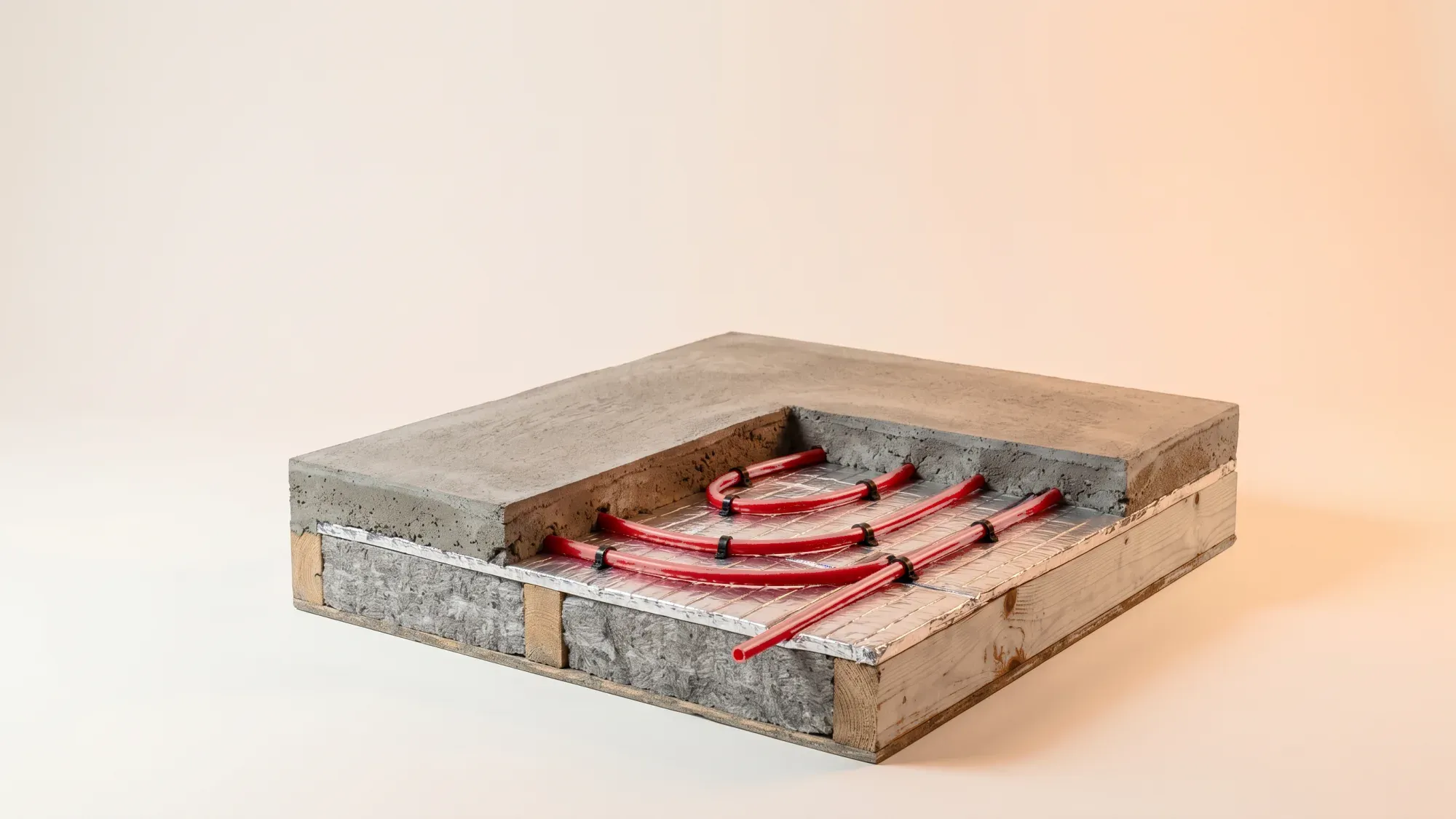
Underfloor heating (UFH) offers a comfortable and efficient way to warm your home, directly heating objects and people rather than just the air. This guide demystifies the technology, costs, and regulations for UK homeowners considering this heating solution.
Underfloor heating can significantly enhance your home's comfort and energy efficiency. While Fuse Energy does not install or supply underfloor heating systems, understanding how these systems work can help you optimise your overall energy usage and make informed decisions about your home's heating. Click here to see how Fuse Energy can help you manage your home energy.
Enter your address to get a quote and see how much you could save
What is underfloor heating and why consider it?
Underfloor heating provides warmth from the ground up, creating a consistent and pleasant indoor climate. It's a heating method that generates and distributes heat beneath your floors, offering an alternative to traditional radiators.
The appeal of radiant heat
Unlike radiators that heat the air, underfloor heating uses radiant heat. This warms surfaces, objects, and people directly, resulting in a more even distribution of warmth and fewer cold spots. This means you often feel comfortable at a lower thermostat setting than with conventional heating.
How underfloor heating works
There are two primary types of underfloor heating: wet (water-based) and electric. Both involve installing heating elements beneath your floor finish. Wet systems circulate warm water through a network of pipes connected to a heat source like a boiler or a heat pump. Electric systems use a series of heating wires or mats that warm up when electricity passes through them. The heat then radiates upwards through the floor into the room.
Key benefits of underfloor heating for UK homes
Underfloor heating offers several advantages that make it an attractive option for modern UK homes, from enhanced comfort to improved energy efficiency and design flexibility.
Enhanced comfort and warmth
The primary appeal of UFH is the superior comfort it provides. By heating from the floor up, it eliminates the cold spots often associated with radiators, creating a consistent temperature throughout the room. This gentle, even warmth can make your home feel cosier without needing to set the thermostat as high.
Improved energy efficiency
Underfloor heating operates at lower flow temperatures than traditional radiators, typically between 35-55°C for wet systems, compared to 60-80°C for radiators. This lower operating temperature means your heat source, whether a boiler or a heat pump, doesn't have to work as hard, leading to potential energy savings. Wet systems, in particular, are highly compatible with low-carbon heat sources like heat pumps, further enhancing overall energy efficiency. Underfloor heating can reduce energy consumption by 15-40% compared to radiators, due to lower operating temperatures and more even heat distribution.
Design freedom and aesthetics
With underfloor heating, bulky radiators are removed, freeing up wall space and offering greater flexibility in furniture placement and interior design. This can create a cleaner, more minimalist aesthetic, which is particularly appealing in contemporary homes.
Types of underfloor heating systems
Choosing the right underfloor heating system depends on your project's scope, budget, and existing heating infrastructure.
Wet (hydronic) underfloor heating
Wet underfloor heating systems use a network of pipes to circulate warm water, typically heated by a boiler or heat pump. These systems are generally more efficient for heating larger areas or entire homes due to the lower running costs associated with gas or heat pump-generated heat. While the upfront installation cost can be higher, their long-term running costs are often significantly lower than electric systems, especially for continuous use.
Electric underfloor heating
Electric underfloor heating systems consist of heating cables or mats laid beneath the floor finish. They are often favoured for smaller areas, such as bathrooms or kitchens, or for renovation projects where minimal floor height build-up is crucial. Electric systems are typically cheaper and quicker to install than wet systems. However, they are generally more expensive to run, particularly for whole-house heating, due to the higher cost of electricity per kilowatt-hour compared to gas.
Choosing the right system for your project
The decision between wet and electric UFH hinges on several factors. For new builds or major renovations covering large areas, wet systems are usually the more cost-effective choice in the long run due to lower running costs. For smaller rooms, single-room renovations, or where installation depth is a concern, electric UFH offers a simpler and less disruptive installation, despite higher running costs.
Installation considerations and process
Proper planning and installation are crucial for the efficient and effective operation of any underfloor heating system.
New builds vs renovations
Installing underfloor heating in a new build is often more straightforward and cost-effective, as the system can be integrated seamlessly into the construction timeline and floor structure. Retrofitting into an existing property can be more complex, often requiring the lifting of existing flooring and additional subfloor preparation, which can increase costs.
Floor build-up and insulation
Adequate floor and wall insulation is paramount for the efficient performance of underfloor heating. Without proper insulation, heat can escape downwards or sideways, leading to inefficient operation and higher running costs. Wet systems, in particular, can add significant floor height (15-50mm+), which needs to be considered for door clearances and overall room aesthetics.
Professional installation vs DIY kits
While some electric UFH kits are marketed for DIY installation, professional installation is generally recommended for both electric and wet systems to ensure compliance with building regulations and optimal performance. Professional installers can also provide certification and necessary documentation for Building Control.
Underfloor heating costs: installation and running
Understanding the financial implications of underfloor heating involves looking at both the upfront installation costs and the ongoing running costs.
Upfront installation costs
The cost of installing underfloor heating varies significantly based on the type of system and whether it's a new build or a retrofit project. For electric systems, installation costs typically range from £40 to £100 per square metre, including materials and labour. For new builds, electric UFH might cost between £50 and £75 per m², while renovations could be £60 to £85 per m².
Wet underfloor heating systems generally have higher installation costs, ranging from £55 to £190 per square metre, including materials and labour. For new builds, costs might be £85 to £100 per m², while retrofitting can be £95 to £110 per m². A full-property installation can range from £1,500 to £13,000, depending on the total floor area and complexity. These figures typically exclude the cost of floor finishes.
Understanding running costs
Electric underfloor heating is generally more expensive to run than wet systems, especially for whole-house heating, due to the higher cost of electricity per kWh compared to gas. For example, electric UFH can cost between £373 and £1,869 per year for a 10m² to 30m² room, while a wet system might be between £134 and £552 per year for a similar-sized room. Wet UFH is often three to four times cheaper to run than electric UFH.
How much can underfloor heating save on energy bills?
Underfloor heating can reduce energy consumption by 15-40% compared to radiators due to lower operating temperatures and more even heat distribution. This can lead to potential long-term savings on utility bills, though actual savings depend on factors like insulation and system design.
Comparing to traditional radiators
While the upfront installation of wet underfloor heating can be more expensive than traditional radiators, particularly in new builds, the running costs are often lower. Wet systems operate at significantly lower temperatures (35-45°C) compared to radiators (65-75°C), leading to greater efficiency. This can result in long-term savings on energy bills.
Demystifying UK underfloor heating regulations
Concerns about regulations can often deter homeowners, but the reality is that underfloor heating is well-supported by current UK standards.
Is underfloor heating banned in the UK?
No, underfloor heating is not banned in the UK, nor are there any plans to do so. Recent discussions have focused on updating Ecodesign standards for local space heating products, including electric underfloor heating, to improve energy efficiency. These proposals aim to ensure that new products meet higher efficiency and control requirements, but they do not affect existing installations or ban the technology itself.
Current building regulations and efficiency standards
Building Regulations Part L (Conservation of Fuel and Power) sets energy efficiency requirements for new builds and renovations. Underfloor heating, especially wet systems, aligns well with these regulations due to its ability to operate at lower temperatures and its compatibility with low-carbon heat sources. Part L also mandates proper insulation and controls to adjust operating temperatures.
For wet underfloor heating, compliance with BS EN 1264 standards is crucial. This European standard provides guidelines for the design, testing, and commissioning of water-based surface embedded heating and cooling systems, ensuring thermal comfort and efficiency. Homeowners often pair this with a smart meter installation to track usage and optimise their heating.
Future-proofing your heating system
Underfloor heating, particularly when paired with heat pumps, is considered an ideal solution for complying with future standards like the Future Homes Standard, which aims for significant reductions in carbon emissions for new homes. By choosing an efficient UFH system and ensuring proper insulation and controls, homeowners can future-proof their heating and contribute to decarbonisation goals. You can also explore heat pump grants UK to help with the upfront costs.
Making an informed decision for your home
Choosing underfloor heating is a significant investment that can greatly enhance your home's comfort and efficiency.
Integrating with low-carbon heat sources
Wet underfloor heating is particularly well-suited for integration with low-carbon heat sources such as air source and ground source heat pumps. Heat pumps operate most efficiently at the lower flow temperatures that UFH systems require, making them a highly effective and environmentally friendly pairing.
Long-term value and comfort
While the initial outlay for underfloor heating can be higher than traditional radiators, the long-term benefits often outweigh the costs. These include reduced energy bills, enhanced comfort, and increased property value. With proper design, installation, and insulation, underfloor heating can provide reliable, efficient warmth for decades.
Making your home more energy efficient is a smart move, and Fuse Energy is here to support you with clear, transparent energy supply. We offer straightforward pricing and 24/7 human customer support to help you understand and manage your energy usage. Switching to Fuse Energy is quick and easy, allowing you to take control of your bills from day one.
Disclaimer
For the avoidance of doubt, this article is provided for informational purposes only and is not intended to constitute legal or financial advice. The author and/or Fuse Energy shall not be responsible for any losses arising out of any reliance on the information contained herein.