Installation and running costs of underfloor heating
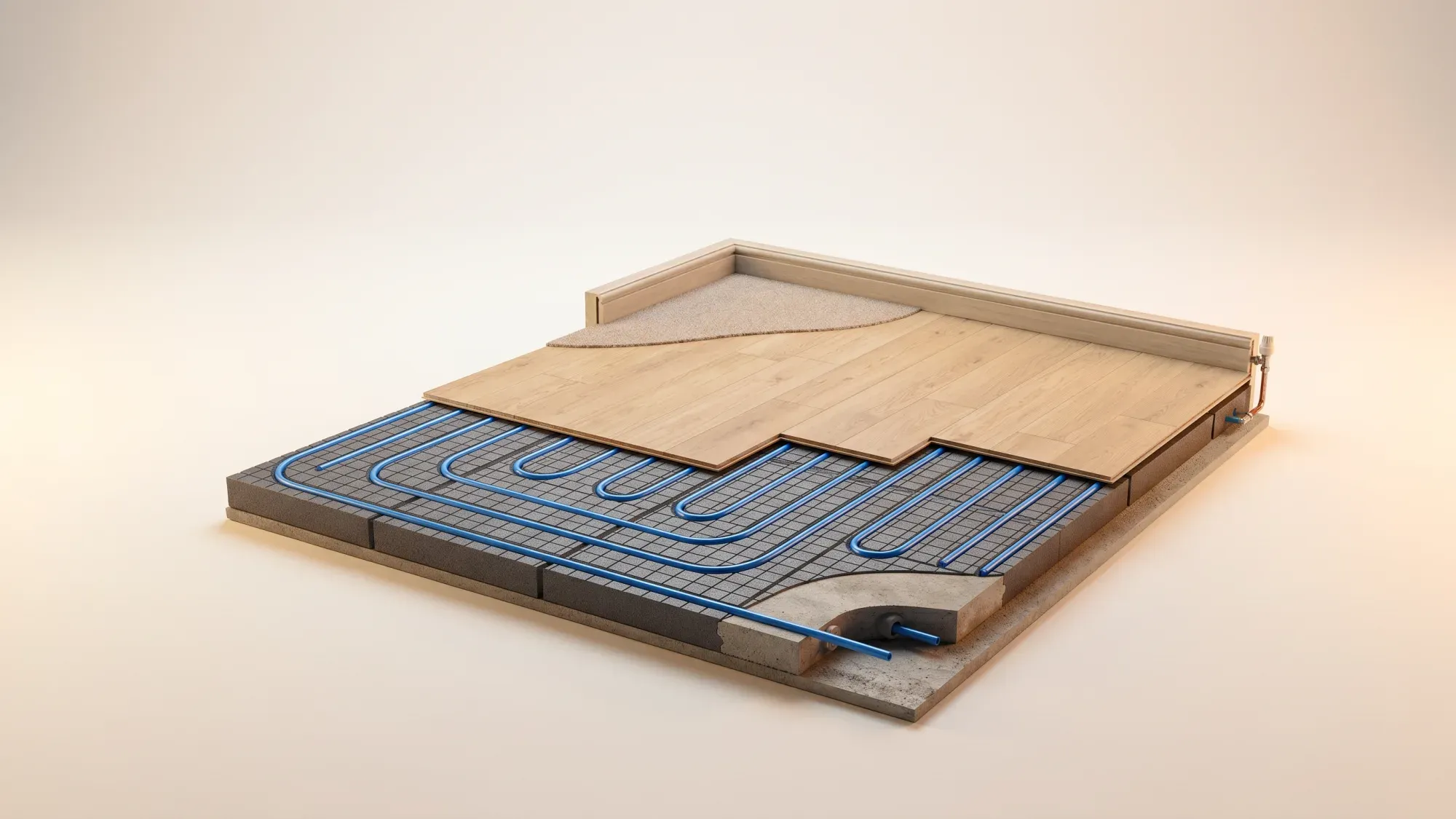
Underfloor heating offers a comfortable warmth, but understanding its full financial picture - from installation to ongoing running costs - is essential for any homeowner. The upfront investment and subsequent energy consumption vary significantly, making a clear breakdown crucial for budgeting and informed decision-making.
Managing your home's energy usage, including your underfloor heating, can be made simpler with Fuse Energy. We help you manage your energy usage efficiently, ensuring you get the most out of your heating system. Click here to switch to Fuse Energy today.
Enter your address to get a quote and see how much you could save
How much does underfloor heating cost to install?
Installing underfloor heating in the UK typically costs between £50 and £150 per square metre, with the exact price heavily influenced by the system type and complexity. This range reflects whether you are installing in a new build or retrofitting an existing property, and your choice between electric or wet systems.
Factors influencing installation price
Several factors dictate the final installation cost. Property size is a primary driver, as larger areas naturally require more materials and labour. The type of floor construction also plays a significant role; installing into a new build with a standard screed solution can be more straightforward and cheaper than retrofitting, which might involve lifting existing floors or more complex structural work. Labour costs, regional variations, and the chosen installer's experience also contribute to the overall price.
Electric underfloor heating costs
Electric underfloor heating systems, often known as 'dry' systems, typically involve heating mats or cables laid directly under the floor finish. These are generally cheaper to install than wet systems, especially for smaller areas like bathrooms or conservatories. Installation is quicker, as it does not require plumbing work or connection to a boiler. However, their running costs can be higher due to electricity's unit price compared to gas.
Wet underfloor heating costs
Wet underfloor heating, or 'hydronic' systems, circulate warm water through pipes laid under the floor. While the installation is more complex and thus more expensive, requiring a boiler connection and often a screed layer, these systems are generally more energy-efficient and cheaper to run, particularly in larger spaces. They integrate well with heat pumps, offering further long-term savings.
New build vs retrofit installation
The scenario of installation significantly impacts the cost. In a new build, underfloor heating can be designed into the property's structure from the outset, often laid within the screed during construction. This streamlines the process and minimises disruption. Retrofitting an existing property, however, can be more challenging. It may involve raising floor levels, excavating existing floors, or using 'overlay' systems that sit on top of the subfloor. These methods add to both material and labour costs, making retrofits generally more expensive and disruptive.
Understanding underfloor heating running costs
The ongoing cost of running underfloor heating is often a greater concern than the initial installation price, as it impacts your household budget year after year. These costs are primarily influenced by how efficiently your system operates and how much energy it consumes.
Key factors affecting energy consumption
Several elements determine how much energy your underfloor heating uses. The quality of your home's insulation is paramount; a well-insulated property retains heat more effectively, reducing the demand on the heating system. The system's efficiency itself, whether electric or wet, also plays a role. Electric systems convert almost all electricity to heat, but electricity is typically more expensive per unit. Wet systems, especially when paired with efficient boilers or heat pumps, can distribute heat more economically. Your energy tariff and how you use the system (e.g., setting temperatures, heating schedules) are also critical.
Estimating daily and annual running costs
To estimate running costs, consider your system's power output (in kilowatts), how many hours it runs per day, and your energy unit rate. For example, the average UK home uses around 2,500 kWh of electricity per year. With the electricity unit rate under the Ofgem Price Cap1 at 26.11p per kWh from 1 July 2026, you can calculate the cost of each kWh consumed by your underfloor heating system. Wet systems, often powered by gas, will have different unit rates.
What is the average UK electricity consumption?
The average UK home uses around 2,500 kWh of electricity per year. This figure, effective from 1 July 2026, is based on Ofgem's medium typical domestic consumption value (TDCV) and serves as a useful baseline for estimating household energy use and comparing appliance consumption.
Impact of insulation and property efficiency
Insulation is the silent hero of efficient underfloor heating. Good floor, wall, and loft insulation prevents heat from escaping, meaning your underfloor heating system does not have to work as hard or for as long to maintain a comfortable temperature. This directly translates to lower energy bills. Property efficiency also includes factors like double glazing and draught-proofing, all contributing to a warmer home and reduced running costs for your underfloor heating.
Optimising underfloor heating costs with smart energy management
Smart energy management is not just about saving money; it is about using energy more intelligently to maximise comfort while minimising waste. Integrating smart technology with your underfloor heating can significantly reduce its running costs.
The role of smart meters and thermostats
Smart meters provide granular insights into your energy consumption, allowing you to see exactly how much energy your underfloor heating is using and when. This visibility empowers you to make informed decisions about your heating habits. Smart thermostats go a step further, offering precise control over your heating schedules and temperatures, often learning your preferences and optimising performance automatically. They can be controlled remotely via an app, ensuring you only heat your home when necessary.
Leveraging energy tariffs for savings
Modern energy tariffs, particularly those with variable rates throughout the day, can be leveraged to your advantage. By programming your underfloor heating to run more during off-peak hours when electricity is cheaper, you can significantly reduce your running costs. Smart thermostats can often integrate with these tariffs, automating the process and ensuring your home is warm when you need it, without paying peak prices.
Fuse Energy: your partner in energy efficiency
Fuse Energy helps homeowners manage underfloor heating energy consumption more effectively, shifting focus from 'using less' to 'using smarter' to enjoy comfortable warmth. Fuse's smart meter technology and app provide granular insights into energy usage, empowering homeowners to understand and control the energy used by their underfloor heating system. By offering efficient tariffs and smart insights, Fuse helps reduce the long-term financial impact of underfloor heating, making it a more economical choice within a broader energy strategy. Fuse also offers 24/7 human customer support to assist homeowners with understanding and optimising their energy usage, providing practical help beyond just billing.
Is underfloor heating a worthwhile investment?
Deciding whether underfloor heating is a worthwhile investment involves looking beyond the immediate costs to consider the long-term benefits for your home and lifestyle.
Long-term savings and property value
While the initial installation cost can be substantial, the long-term running costs of underfloor heating can be lower than traditional radiator systems, especially with efficient wet systems and smart management. This is due to the even distribution of heat, which often allows for lower thermostat settings. Furthermore, underfloor heating can add value to your property, making it a more attractive feature for potential buyers due to its modern appeal and comfort benefits.
Environmental benefits and comfort
Underfloor heating operates at lower temperatures than radiators, making it more compatible with renewable energy sources like heat pumps, which contributes to a lower carbon footprint. The comfort it provides is unparalleled, offering a consistent, radiant warmth throughout your home without cold spots or draughts. This creates a healthier and more pleasant living environment.
Making an informed decision
Making an informed decision about underfloor heating requires a holistic view of installation, running costs, and long-term benefits. Consider your property's specific characteristics, your budget, and your desire for comfort and energy efficiency. By understanding all the factors involved, you can confidently choose a heating solution that enhances your home for years to come.
Managing your home's energy can feel complex, but it does not have to be. Fuse Energy offers clear pricing, real-time usage data through our app, and 24/7 human customer support to help you make the most of your energy. Switching is quick and easy, so you can start taking control of your bills today. Click here to switch to Fuse Energy and discover a smarter way to power your home. You can also learn more about our mission to make energy abundant and affordable by clicking here.
References
Disclaimer
For the avoidance of doubt, this article is provided for informational purposes only and is not intended to constitute legal or financial advice. The author and/or Fuse Energy shall not be responsible for any losses arising out of any reliance on the information contained herein.