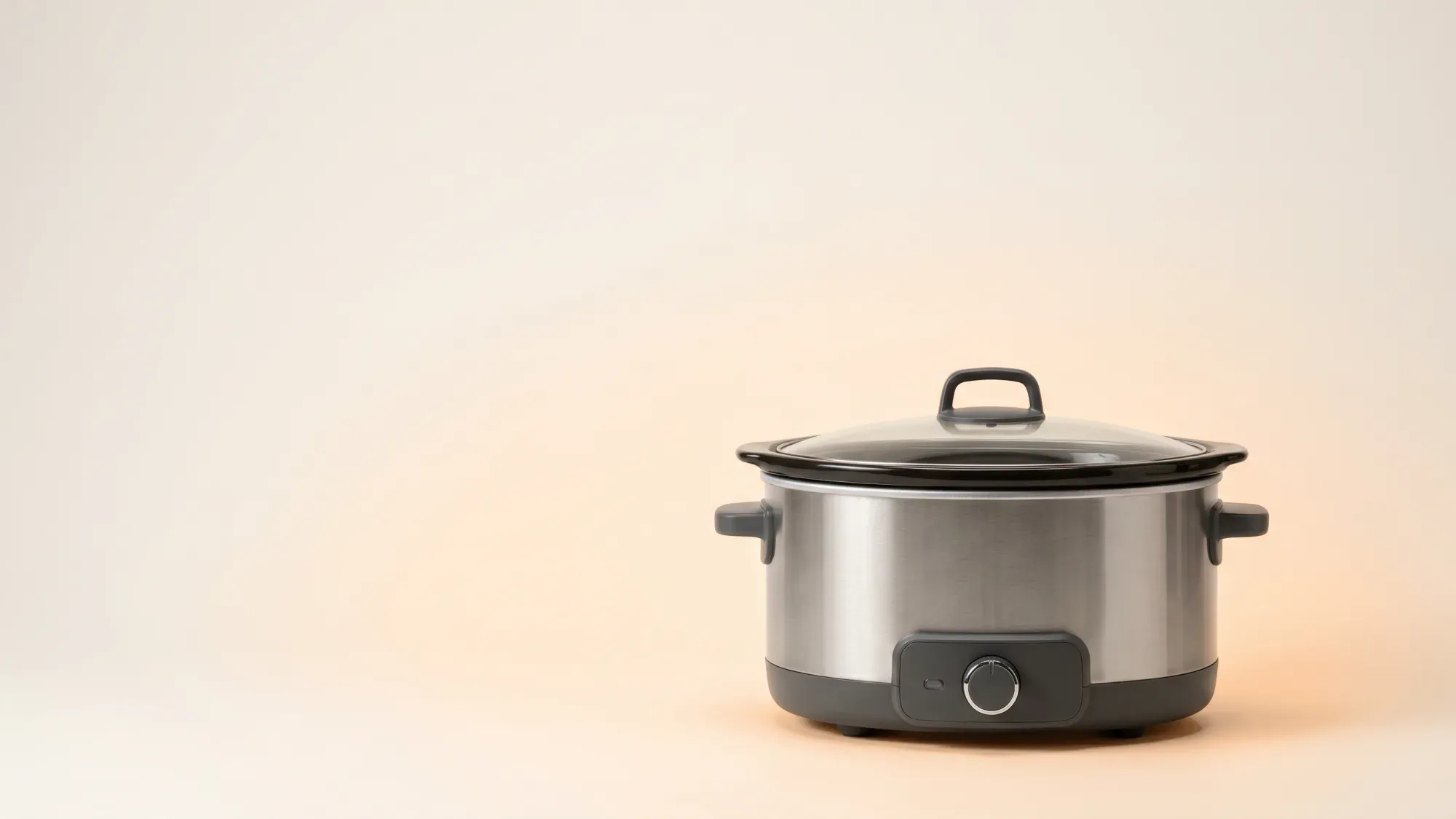
Understanding the electricity cost of running a slow cooker is essential for UK households looking to manage their energy bills. As of 1 July 2026, the typical electricity unit rate for Direct Debit customers on an Ofgem price-cap default tariff is 26.11p per kilowatt-hour (kWh), inclusive of 5% VAT. This means cooking a meal in a slow cooker for several hours can be a cost-effective option compared to higher-wattage appliances.
Managing your energy use for cooking can help you keep bills down. Fuse Energy empowers customers with the knowledge and tools to understand, control, and optimise their energy use, allowing them to enjoy their slow cookers without worrying about hidden costs. Click here to switch to Fuse Energy today.
The amount of electricity a slow cooker uses primarily depends on its wattage and how long it is switched on. Unlike traditional ovens, slow cookers operate at a much lower power, making them a more energy-efficient choice for longer cooking durations.
Understanding slow cooker wattage
A typical slow cooker uses between 100W and 300W of electricity, depending on the model and setting. This wattage range is significantly lower than many other kitchen appliances. For comparison, most domestic electric ovens operate between 2,000W and 5,000W, making them considerably more expensive to run per hour.
Average consumption for different sizes
While the 100W to 300W range covers most models, larger slow cookers or those with more advanced features might sit at the higher end of this spectrum. Smaller models, often used for individual portions, generally consume less power. Always check the specific wattage listed on your appliance or in its manual for the most accurate figure.
Calculating the running cost of your slow cooker is straightforward once you know its wattage and your electricity unit rate. This transparency helps you make informed decisions about your cooking habits.
Current UK electricity unit rates
The current UK electricity unit rate for a typical Direct Debit customer on the Ofgem price-cap default tariff is 26.11p per kWh, inclusive of 5% VAT, effective from 1 July 2026. This rate is reviewed quarterly by Ofgem, the UK's energy regulator, to reflect changes in wholesale energy costs.
Step-by-step cost calculation
To calculate the cost of running your slow cooker:
- Find your slow cooker's wattage: This is usually printed on the appliance or in its manual (e.g., 200W).
- Convert watts to kilowatts (kW): Divide the wattage by 1,000 (e.g., 200W / 1,000 = 0.2 kW).
- Determine usage time: How many hours will you run it for (e.g., 8 hours)?
- Calculate total kWh used: Multiply kilowatts by hours (e.g., 0.2 kW * 8 hours = 1.6 kWh).
- Calculate the cost: Multiply the total kWh by your electricity unit rate (e.g., 1.6 kWh * £0.2611/kWh = approximately 41.78p).
Using an electricity usage calculator
Many online electricity usage calculators can help you estimate appliance running costs. You simply input the appliance's wattage, how many hours it is used per day, and your electricity unit rate. These tools can provide a quick estimate and help you understand the energy consumption of various household items. For more ways to manage your energy consumption, explore our energy saving tips.
When considering energy efficiency, slow cookers often come out favourably, especially for meals requiring extended cooking times.
Slow cooker vs oven running cost
Traditional electric ovens typically consume between 2,000W and 5,000W. This makes slow cookers significantly more economical for dishes that simmer for several hours, as their lower wattage (100W to 300W) means a much lower hourly running cost.
Slow cooker vs air fryer efficiency
Air fryers are generally more energy-efficient than traditional ovens for smaller portions and quicker cooking tasks due to their concentrated heat and smaller size. However, for meals that require hours of cooking, a slow cooker's consistent low wattage often makes it the more economical choice. The best appliance depends on the specific meal and cooking duration.
Comparing washing machine and tumble dryer costs
While not direct cooking comparisons, understanding the costs of other major appliances like washing machines and tumble dryers can provide context. A washing machine's energy consumption varies greatly with its cycle and temperature, but a typical cycle might use 0.3 kWh to 2.0 kWh. Tumble dryers are known for being energy-intensive, often using 1.2 kWh to 5 kWh per cycle, making them one of the more expensive household appliances to run. The average UK home uses around 2,500 kWh of electricity per year. Understanding your energy bill can help you identify where your household uses the most electricity.
Even with an energy-efficient appliance like a slow cooker, there are ways to optimise its use and further reduce your energy consumption.
Optimising cooking times
Follow recipe guidelines for cooking times, but be mindful that opening the lid releases heat and can extend cooking duration, thus using more electricity. Use the "low" setting when possible; while it takes longer, it often uses slightly less energy overall than the "high" setting for the same dish.
Batch cooking for efficiency
Cooking larger quantities in your slow cooker allows you to prepare multiple meals at once. This not only saves energy compared to cooking individual meals but also reduces the need to use other, more energy-intensive appliances for reheating later. Freeze portions for quick, economical meals throughout the week.
Maintaining your appliance
Ensure your slow cooker's lid fits snugly to prevent heat from escaping. Keep the exterior and interior clean, as built-up grime can sometimes affect efficiency. A well-maintained appliance will operate more effectively and last longer.
How much does a coffee machine use?
Coffee machines vary widely in their energy consumption. Drip coffee makers might use around 600W to 1,200W during brewing, while espresso machines, particularly those with steam wands, can draw more power, sometimes up to 1,800W or more. The cost per use is generally low due to short operating times.
What about a DVD player or fan?
Appliances like DVD players and fans consume very little electricity. A DVD player typically uses around 10W to 20W, making its running cost negligible. A standard electric fan might use 20W to 100W, depending on its size and speed setting. Even running a fan for several hours would only add a few pence to your electricity bill. These small appliances contribute minimally to overall household electricity bills.
Are slow cookers energy efficient?
Yes, slow cookers are generally considered energy-efficient, especially for meals that require long cooking times. Their low wattage (typically 100W to 300W) means they consume less electricity per hour compared to traditional ovens, which operate at much higher wattages. This makes them an excellent choice for cost-conscious cooking, allowing you to prepare delicious meals without significantly impacting your energy bill.
Managing your household energy doesn't have to be complicated. Fuse Energy offers clear pricing, real-time usage data through our app, and 24/7 human customer support to help you understand and control your energy consumption. Switching is quick and easy, so you can start making smarter energy choices today. Click here to switch to Fuse Energy and take control of your energy bills.