Thermostatic radiator valves explained
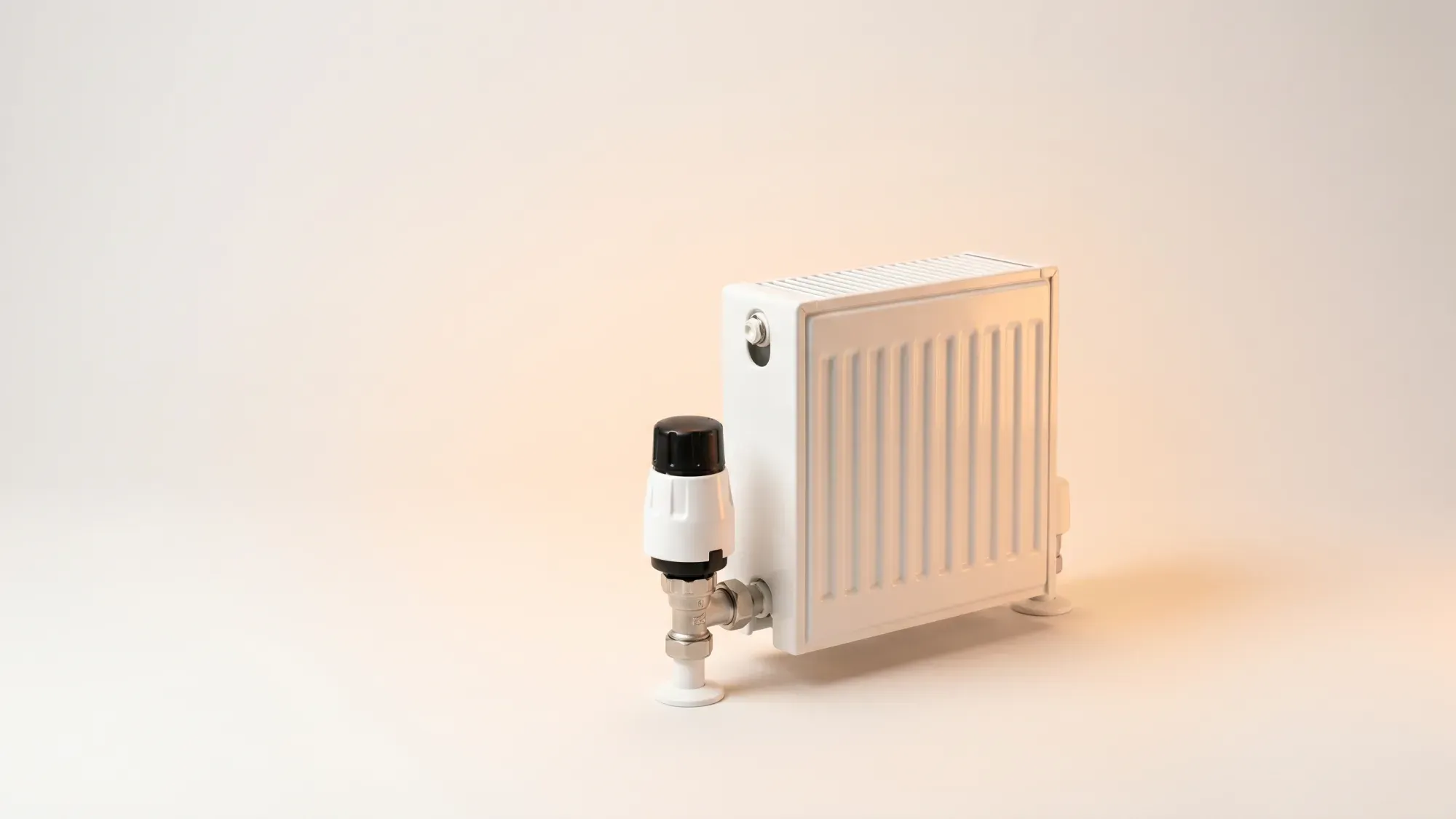
Thermostatic radiator valves (TRVs) regulate the temperature of individual rooms by controlling the flow of hot water to the radiator. These devices operate independently of your main central thermostat, allowing for effective zoned heating within your home.
Making your home's heating more efficient can lead to noticeable savings on your energy bills. Fuse Energy offers clear pricing and in-app usage data to help you understand and manage your energy consumption. Click here to switch to Fuse Energy today.
Enter your address to get a quote and see how much you could save
What is a thermostatic radiator valve?
Understanding the basics of TRVs
A thermostatic radiator valve (TRV) is a self-regulating device fitted to a radiator that automatically adjusts the amount of hot water flowing through it based on the temperature in that specific room. Instead of simply turning a radiator on or off, a TRV allows you to set a desired temperature. The valve then opens or closes to maintain that level of warmth. This means radiators do not constantly run at full heat, helping to keep rooms comfortable and avoid wasted energy.
Why TRVs are essential for modern heating
TRVs are essential for modern UK homes because they address a common problem: uneven heating. This occurs when some rooms become uncomfortably hot while others remain cold, leading to wasted energy and higher bills. By providing room-by-room temperature control, TRVs allow you to tailor heating to how you actually use different spaces, ensuring comfort where needed and preventing overheating in unused areas. This targeted approach significantly improves heating efficiency and comfort throughout your home.
How thermostatic radiator valves work
The internal mechanism: sensing and regulating
A TRV works by sensing the air temperature around it and adjusting a pin that controls the flow of hot water into the radiator. Inside the TRV head is a sensor element, typically filled with a liquid or wax, that expands and contracts with changes in room temperature. When the room warms up, this material expands, pushing a pin downwards to close the valve and reduce the hot water flow to the radiator. Conversely, as the room temperature drops, the material contracts, the pin retracts, and more hot water flows through to compensate. This continuous, automatic adjustment maintains your chosen temperature without manual intervention.
TRV settings: what the numbers mean
Most TRVs have numbered settings from 0 to 5, sometimes with additional symbols like a snowflake or asterisk. These numbers do not represent specific temperature degrees, but rather approximate temperature ranges. For example:
- 0: Valve is off, no heating.
- Snowflake/Asterisk: Frost protection, typically around 5-7°C.
- 1: Around 10-12°C, suitable for cooler rooms.
- 2: Around 15-16°C, often used for spare rooms.
- 3: Around 18-20°C, a comfortable living temperature for most.
- 4: Around 22°C, for warmer rooms.
- 5: Around 25°C, for very warm rooms, or fully open with no temperature regulation.
These are ballpark figures, and the exact temperature achieved can vary based on room size, insulation, and external factors.
Benefits of using TRVs for UK homes
Achieving zoned heating and comfort
TRVs allow you to create heating zones within your home, ensuring that each room is heated only to its specific requirements. This means you can maintain a comfortable 20°C in your living room, a cooler 16°C in a bedroom for sleeping, and even lower temperatures in rarely used guest rooms. This flexibility enhances comfort for everyone in the household.
Reducing energy waste and lowering bills
Using thermostatic radiator valves effectively can significantly reduce energy consumption. Studies by the University of Salford and BEAMA indicate that the average energy saving potential for TRVs in homes is 18% of heating costs. The average UK home uses around 9,500 kWh of gas per year for heating, so even a modest reduction can lead to tangible savings. TRVs achieve this by preventing overheating and ensuring you are not paying to heat empty spaces to full temperature.
How much can TRVs save on heating bills?
Proper use of thermostatic radiator valves can reduce heating costs by up to 18% annually. For an average UK home using around 9,500 kWh of gas per year for heating, this translates into a noticeable reduction in energy waste and lower utility bills, allowing you to heat your home more efficiently.
Enhancing home heating control
TRVs empower homeowners to precisely control their heating, giving them genuine control over their comfort and energy usage. This accessible upgrade allows you to optimise your heating for maximum comfort and efficiency, rather than simply rationing warmth. It is an easy home energy upgrade that puts you in charge of your heating zones.
Types of thermostatic radiator valves
Manual vs thermostatic valves
The key difference between manual and thermostatic radiator valves lies in their control capabilities. Manual valves offer limited options - a radiator is either on or off, with heat output controlled solely by the main thermostat. In contrast, TRVs automatically adjust the flow of hot water based on room temperature, allowing you to set and maintain a specific warmth level in individual rooms.
Traditional TRVs vs smart TRVs
Traditional TRVs are mechanically operated, relying on a wax or liquid sensor to expand and contract, manually adjusted via a numbered dial. Smart TRVs, however, offer enhanced control and automation. These can often be controlled via a smartphone app, integrated into smart home systems, and programmed with schedules, providing even greater flexibility and energy management capabilities.
Choosing the right TRV for your home
When choosing TRVs, consider your budget, desired level of control, and whether you want to integrate them into a smart home system. Traditional TRVs are a cost-effective way to gain basic room-by-room control, while smart TRVs offer advanced features like remote control and scheduling, aligning with modern home energy management.
How to use and optimise your TRVs for efficiency
Setting TRVs for different rooms
To get the most out of your TRVs, follow these steps:
- Identify room usage: Determine which rooms are used frequently and which are not.
- Set your main room thermostat: Set this to the desired temperature for your primary living area, typically where you spend most of your time.
- Adjust TRVs in other rooms: Lower settings in unused or cooler spaces. For example, a living room might be set to 3 (around 20°C), while a spare bedroom could be set to 1 or 2 (10-15°C).
- Experiment: Fine-tune settings over a few days to find the ideal comfort level for each room.
Tips for maximising TRV performance
- Keep them clear: Ensure TRVs are not obstructed by furniture, heavy curtains, or other objects. Obstructions can prevent them from accurately sensing room temperature, leading to inefficient heating.
- Regular checks: Periodically check and adjust TRV settings as seasons change or room usage varies.
- Do not over-set: Turning a TRV to its highest setting (e.g., 5) will not heat the room faster; it just means the radiator will stay on longer to reach a higher target temperature. Set it to the desired comfort level and let the valve do its work.
Common mistakes to avoid
- Setting all TRVs to maximum: This negates their energy-saving potential, as all radiators will try to heat to their highest setting, wasting energy.
- Obstructing TRVs: As mentioned, this prevents accurate temperature sensing and can lead to rooms being too hot or too cold.
- Confusing numbered settings with actual temperature degrees: Remember the numbers are approximate ranges, not precise degrees Celsius.
- Not understanding interaction with the main room thermostat: TRVs work with your main thermostat, not against it.
TRVs and your main thermostat: working together
Coordinating your heating controls
TRVs and your main thermostat work together to create an efficient heating system. Your main thermostat should be located in your primary living area and set to the desired temperature for that space. TRVs then allow you to control the temperature in all other rooms independently. This creates a zoned system where your boiler only fires up when the main thermostat calls for heat, and TRVs then distribute that heat appropriately to individual radiators.
Preventing conflicting settings
To prevent inefficiencies, ensure your main thermostat is set to a temperature that is at least as high as, or slightly higher than, the highest TRV setting in any occupied room. If the main thermostat is set lower than a TRV's desired temperature, the boiler may not activate, and rooms with TRVs set higher will not receive heat.
Common TRV issues and troubleshooting
Radiator not heating up
If a radiator with a TRV is not heating up, first check the TRV setting - ensure it is not on '0' or a very low number. The internal pin might also be stuck in the closed position, which can often be freed by gently tapping the valve body or by removing the TRV head and manually moving the pin.
TRV stuck or leaking
A stuck TRV pin can prevent proper temperature regulation. If the pin is stuck, it may need to be lubricated or gently worked free. Leaking TRVs usually indicate a faulty seal or a crack in the valve body, which typically requires replacement of the valve.
When to consider a replacement
Consider replacing a TRV if it is consistently failing to regulate temperature, is leaking, or if the pin remains stuck despite troubleshooting. Upgrading to smart TRVs is also an option for those seeking enhanced control, automation, and integration with modern home energy management systems.
Understanding and optimising your home's heating system with TRVs is a smart step towards greater energy efficiency. Fuse Energy is committed to making energy management simple and transparent. With clear pricing, real-time usage data in the app, and 24/7 human support, we help you take control of your energy bills. Switching is quick and easy, so you can start making smarter energy choices today. Click here to switch to Fuse Energy and discover a better way to manage your home's energy. You can also learn more about our mission to make energy fair and sustainable by clicking here.
Disclaimer
For the avoidance of doubt, this article is provided for informational purposes only and is not intended to constitute legal or financial advice. The author and/or Fuse Energy shall not be responsible for any losses arising out of any reliance on the information contained herein.