Solar tree: design and energy generation
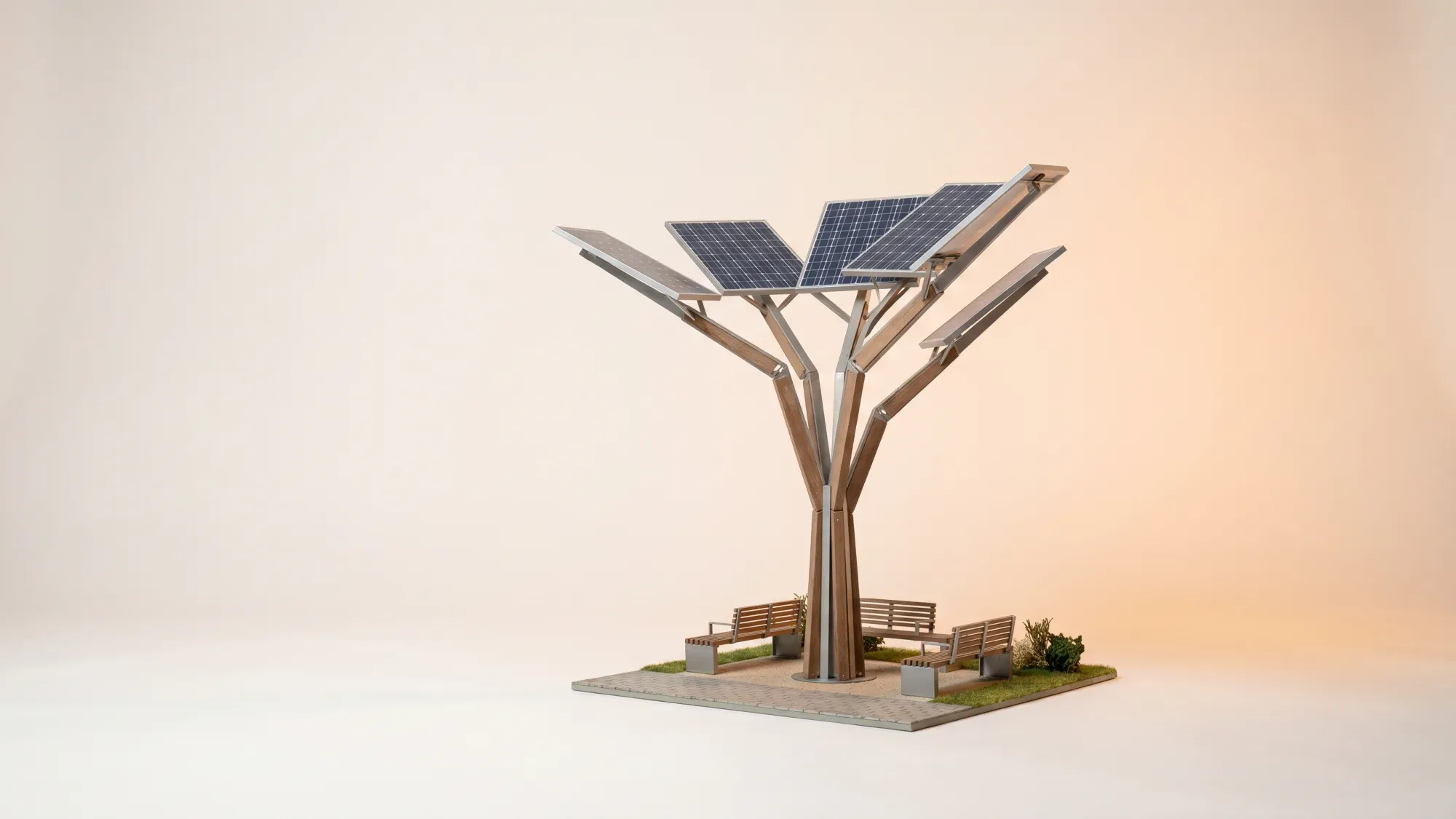
Solar trees offer a fresh perspective on renewable energy, combining functional solar power generation with striking design. For UK homeowners, these structures present an intriguing option for generating electricity, particularly where traditional rooftop solar might not be suitable. They represent a step towards more decentralised energy generation, fitting seamlessly into urban and suburban environments.
Considering a solar tree for your home? Generating your own electricity is a smart move towards energy independence. Fuse Energy is committed to making energy clear and accessible, helping you understand your usage and manage your bills. Click here to switch to Fuse Energy today and take control of your home's energy.
Enter your address to get a quote and see how much you could save
What exactly is a solar tree?
A solar tree is an innovative structure that integrates solar panels into a design mimicking the form of a natural tree. Instead of leaves, these "trees" feature photovoltaic (PV) panels that capture sunlight and convert it into electricity. They are engineered not just for energy capture but also for visual appeal, often serving as artistic installations or landmarks.
More than just a garden ornament
While some solar trees are purely decorative, many are designed for practical energy generation. Their unique, often vertical, design allows them to occupy less ground space than traditional flat solar panel arrays, making them suitable for smaller gardens or urban settings. This space efficiency, combined with their aesthetic appeal, means they can enhance a property's visual charm while contributing to its energy needs.
Key components of a solar tree
A typical solar tree consists of a central "trunk" supporting multiple "branches" on which the solar panels are mounted. These panels are often designed to resemble leaves or petals. The system also includes an inverter to convert the direct current (DC) electricity generated by the panels into alternating current (AC) suitable for household use, along with necessary wiring and a foundation for stability. Advanced designs may even incorporate mechanisms to track the sun's movement for optimal energy capture.
How solar trees work to generate power
Solar trees function on the same fundamental principles as conventional solar panels, but with a design optimised for specific environments and aesthetic considerations.
Capturing sunlight efficiently
The photovoltaic panels on a solar tree absorb photons from sunlight, which excites electrons within the panel's semiconductor material, generating a direct electrical current. Some advanced solar trees feature panels that can adjust their angle to track the sun throughout the day, maximising the amount of sunlight captured and, consequently, the energy generated. This can lead to more efficient energy production from a smaller footprint.
Converting energy for your home
The DC electricity produced by the solar panels is then fed into a microinverter, which converts it into usable AC electricity. This AC power can then be fed directly into your home's electrical system, reducing your reliance on grid electricity. Any excess electricity generated that isn't immediately used by your home can be exported back to the National Grid.
Benefits of solar trees for UK homeowners
For UK homeowners, solar trees offer a blend of practical and aesthetic advantages that set them apart from more conventional solar solutions.
Aesthetic appeal and space saving
One of the most compelling benefits of solar trees is their design. They can be visually striking, transforming a functional energy system into an attractive garden feature or a statement piece for your property. Their vertical orientation also means they require significantly less ground space compared to a sprawling array of traditional solar panels, making them ideal for smaller UK gardens or properties where roof space is limited or unsuitable.
Contributing to energy independence
By generating your own electricity, a solar tree can help reduce your household's dependence on the National Grid and insulate you from fluctuating energy prices. While they may not fully power a large home, they can significantly offset daily electricity consumption, particularly for base-load appliances. The average UK home uses around 2,500 kWh of electricity per year1. Depending on their size and efficiency, a solar tree could generate a significant portion of this demand. For instance, a domestic solar PV system ranging from 3kW to 6kW can typically produce between 2,400 and 5,000 kWh annually.
Environmental advantages
Solar trees produce clean, renewable energy, reducing your carbon footprint and contributing to a more sustainable future. By harnessing solar power, they help decrease reliance on fossil fuels, which in turn lowers greenhouse gas emissions. This environmental benefit aligns with the UK's broader goals for decarbonisation and offers homeowners a tangible way to participate in the green energy transition.
Practical considerations for UK properties
While solar trees offer exciting possibilities, UK homeowners should consider several practical aspects before investing.
Assessing your garden or balcony
The effectiveness of a solar tree, like any solar installation, depends heavily on its location. You'll need to assess your property for available space and, crucially, direct sunlight exposure throughout the day. Shading from nearby buildings or existing trees can significantly reduce energy output. Positioning the solar tree to face south will generally yield the best results.
Understanding energy output and needs
Solar trees come in various sizes and power outputs. Smaller plug-in solar trees, for example, might have an AC output of up to 800W and generate around 400 kWh per year. Larger, more substantial solar tree installations, similar to typical domestic solar PV systems, can range from 3kW to 6kW in power, potentially generating between 2,400 and 5,000 kWh annually. It's important to match the potential output of a solar tree with your household's actual energy consumption patterns. While a solar tree can contribute significantly, it's unlikely to replace all your energy needs, especially for larger households or those with high energy demands.
Installation and maintenance
Installation typically involves securing the structure to a solid foundation and connecting it to your home's electrical system. Smaller, compliant plug-in solar trees can often be self-installed, as permitted by recent UK legislation. However, larger energy-generating solar trees that are not designed as plug-in systems will require professional installation. Maintenance generally involves keeping the panels clean from dirt and debris to ensure optimal performance.
UK regulations for small-scale solar
Navigating the regulatory landscape is crucial for UK homeowners considering small-scale solar generation, including solar trees.
Plug-in solar and microgeneration rules
As of 27 August 2026, Statutory Instrument (SI) 2026/848 has legalised compliant standalone plug-in solar systems in Great Britain. These systems are limited to an 800W AC export per device, though the connected solar panels can have a combined DC input of up to 2,000W. For now, only one compliant plug-in solar device is permitted per property. It's important to note that plug-in batteries and hybrid solar-battery kits are not covered by this legislation.
What is the 800W AC export limit for plug-in solar?
Compliant plug-in solar systems in the UK are limited to 800W AC export per device, meaning the microinverter cannot feed more than 800 watts of alternating current into your home's electrical circuit. This limit is the maximum AC export permitted per device, established after government safety testing.
Notifying your distribution network operator
Even for compliant plug-in solar systems, you or your supplier must notify your Distribution Network Operator (DNO) under G98 within 28 days of installation. This notification ensures the DNO is aware of generation connected to their network, which is essential for grid stability and safety. This is a notification process, not an application that requires prior approval for systems under the G98 threshold.
The future of solar trees in the UK
Solar trees are an evolving technology, and their role in the UK's energy landscape is likely to grow.
Evolving technology and design
The technology behind solar trees is continuously advancing, with improvements in panel efficiency, energy storage integration, and smart controls. Future designs may offer even greater power output, more compact footprints, and enhanced aesthetic features, making them even more attractive for homeowners. As manufacturing processes become more efficient, costs may also decrease, making them more accessible.
Integrating with smart home systems
As smart home technology becomes more prevalent, solar trees could integrate seamlessly with existing home energy management systems. This would allow homeowners to monitor their energy generation in real-time, optimise energy consumption based on solar output, and potentially manage battery storage to maximise self-consumption or take advantage of time-of-use tariffs. This integration would provide homeowners with greater control over their energy usage and generation.
Ready to explore how renewable energy can benefit your home? While Fuse Energy doesn't install solar trees, we're here to help you manage your energy usage efficiently and make the most of any generation you produce. Our clear pricing, in-app usage data, and 24/7 human support are designed to give you greater control over your energy bills. Switch to Fuse Energy today and join a community focused on a smarter, more sustainable energy future. Click here to get started, or learn more about our mission here.
References
Disclaimer
For the avoidance of doubt, this article is provided for informational purposes only and is not intended to constitute legal or financial advice. The author and/or Fuse Energy shall not be responsible for any losses arising out of any reliance on the information contained herein.