Solar savings for homeowners
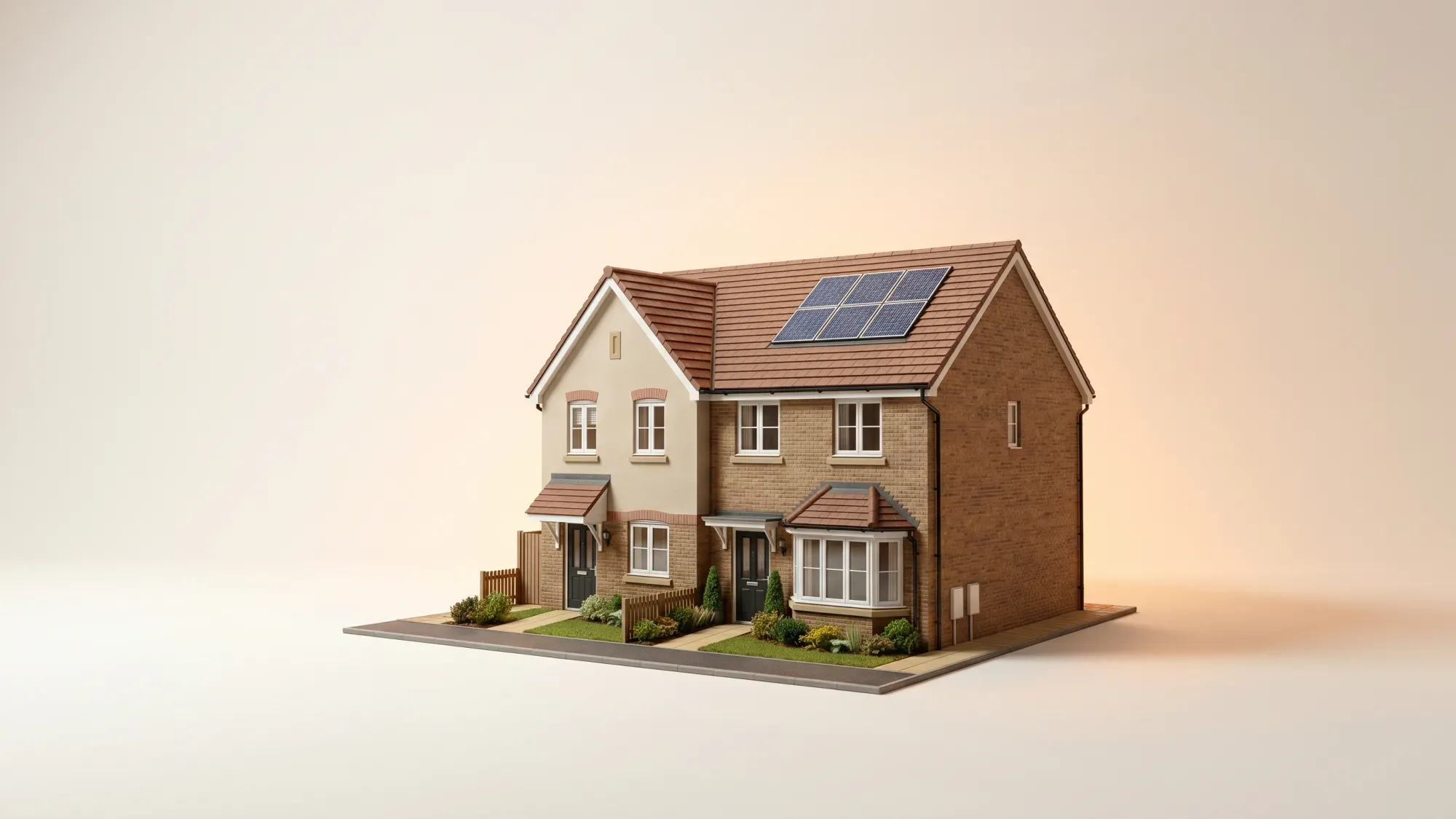
Solar panels can significantly cut your electricity bills and offer financial returns, putting you in charge of your home's energy. For homeowners, understanding how solar works and how to maximise its benefits is key to making a smart investment.
Considering solar panels for your home? Fuse Energy offers smart tariffs and tools to help you make the most of your generated electricity and manage your energy usage efficiently. Click here to see how Fuse can support your energy independence.
Enter your address to get a quote and see how much you could save
Understanding your solar savings potential
Generating your own electricity with solar panels means less reliance on the grid and more control over your energy costs. The financial benefits come from two main avenues: directly reducing your electricity purchases and earning from any surplus energy you export.
How solar panels reduce your electricity bills
When your solar panels generate electricity, your home uses that power first, directly offsetting the electricity you would otherwise buy from your supplier. This is known as self-consumption. With the electricity unit rate under the Ofgem Price Cap at 26.11p per kWh from 1 July to 30 September 2026, every unit of solar electricity you use yourself is a direct saving on your bill. The average home uses around 2,500 kWh of electricity per year, so even a modest solar installation can make a noticeable difference to your outgoings.
Earning from exported solar energy (SEG)
If your solar panels generate more electricity than your home is using at that moment, the surplus can be exported back to the National Grid. For eligible installations, you can earn payments for this exported energy through the Smart Export Guarantee (SEG). The SEG mandates that energy suppliers offer tariffs for renewable electricity exported from certified installations, providing an additional income stream. However, it is important to note that the SEG is available for MCS-certified solar installations, but not for self-installed plug-in solar kits. Even without SEG eligibility, some suppliers may offer their own export tariffs outside the SEG scheme for unused generation.
The impact of battery storage on savings
While exporting surplus energy can earn you money, maximising the electricity you use yourself often leads to greater overall savings. This is where battery storage comes in. A home battery allows you to store excess solar electricity generated during the day and use it later, for example, in the evening when your panels are no longer producing. This significantly increases the percentage of self-consumed solar energy, reducing your reliance on grid imports during peak times when electricity might be more expensive.
How does battery storage increase solar savings?
Battery storage allows homeowners to save excess solar electricity generated during the day for later use, such as in the evenings. This boosts self-consumption, meaning less electricity is bought from the grid, especially during peak hours, and more of your own generated power is utilised, leading to greater overall savings on energy bills.
Key factors influencing solar panel savings
The actual savings you achieve from solar panels depend on several variables unique to your home and energy habits.
System size and your energy consumption
The size of your solar panel system, typically measured in kilowatts peak (kWp), directly impacts how much electricity it can generate. A larger system will produce more power, but it is crucial to match this with your household's energy consumption. An oversized system might generate a lot of surplus electricity that you export at a lower rate than you pay for imports, while an undersized system might not cover enough of your daily needs. Evaluating your current energy usage (the average home uses around 2,500 kWh of electricity per year) is the first step to determining the ideal system size.
Roof orientation and shading
For rooftop solar, the orientation and pitch of your roof play a significant role in how much sunlight your panels receive throughout the day. South-facing roofs generally offer the best performance in the UK, but east and west-facing installations can also be highly effective by capturing morning and afternoon sun. Shading from trees, neighbouring buildings, or even chimneys can reduce a system's efficiency, so this is a critical factor to assess.
Current energy prices and tariffs
The amount you save is directly linked to the price you pay for electricity. When electricity unit rates are high, as they have been recently (26.11p per kWh under the Ofgem Price Cap from 1 July to 30 September 2026), the financial benefit of generating your own power increases significantly. Your specific electricity tariff also matters; some tariffs might offer cheaper off-peak rates, which could influence how you manage your solar generation and battery storage.
Maximising your solar panel savings
Getting solar panels installed is just the first step; actively managing your energy usage can further boost your savings.
Optimising self-consumption with smart habits
The more solar electricity you use directly in your home, the more you save. This means shifting your energy-intensive activities to when your panels are generating power. For example, running washing machines, dishwashers, or charging electric vehicles during the sunniest parts of the day can significantly increase your self-consumption. Smart home devices and energy management systems can help automate this process, ensuring appliances run when solar generation is at its peak.
Choosing the right export tariff
If you have an MCS-certified solar installation, researching and choosing the best SEG tariff from an energy supplier can enhance your earnings from exported electricity. While the SEG ensures you get paid for surplus energy, the rates offered can vary between suppliers, so it pays to compare.
Leveraging government incentives
The UK government has introduced incentives to make solar more affordable. One significant benefit is the 0% VAT on the installation of energy-saving materials, including solar panels. This can reduce the upfront cost of your system, making the investment more attractive and speeding up your return on investment.
Plug-in solar: an accessible path to savings
For many homeowners, traditional rooftop solar is not always an option due to cost, property type, or rental agreements. Plug-in solar offers a more accessible entry point into generating your own clean energy.
What is plug-in solar and how does it work?
Plug-in solar involves a small solar panel and a microinverter system that connects directly to a standard wall socket. These systems are designed for self-installation and can be placed in outdoor spaces like gardens, balconies, or patios. The solar panel generates direct current (DC) electricity, which the microinverter then converts into alternating current (AC) that matches your home's supply and synchronises with the grid. This AC electricity feeds into your home's consumer unit, powering appliances and reducing the amount of electricity you draw from the grid. It is particularly effective at offsetting your home's "base load" - the constant background energy draw from devices like refrigerators and routers.
Legal framework and savings for plug-in systems
Recent legislation has made compliant plug-in solar more straightforward for homeowners. SI 2026/848, which came into effect on 27 August 2026, legalises compliant plug-in solar systems with an 800W AC export limit when plugged into a standard socket. This means you can install these devices yourself without needing a professional electrician for the connection. However, it is crucial to understand that SI 2026/848 applies only to standalone plug-in solar systems; plug-in batteries or hybrid solar-battery kits are not covered by this legislation. For plug-in solar, the primary financial benefit comes from self-consumption - using the electricity you generate directly in your home - as these systems are not eligible for the SEG. The consumer or their supplier must notify the Distribution Network Operator (DNO) under G98 within 28 days of installation.
Comparing plug-in vs traditional rooftop solar
Plug-in solar offers a lower entry cost and easier, DIY installation compared to traditional rooftop systems, making it ideal for renters or those with smaller budgets. It provides a tangible reduction in electricity bills by offsetting your base load. However, rooftop solar typically offers higher generation capacity, is eligible for the SEG, and can significantly reduce your overall grid reliance. While plug-in solar is a great starting point for energy independence, traditional rooftop systems generally offer greater long-term savings and export potential.
Is solar worth it for your home?
Deciding whether solar panels are right for you involves looking beyond just the immediate financial figures.
Assessing your return on investment
The return on investment (ROI) for solar panels can be attractive, especially with rising energy prices and incentives like 0% VAT on installation. Factors such as your system size, energy consumption patterns, and the amount of sunlight your home receives will all influence how quickly your investment pays off. While specific savings figures depend on individual circumstances, solar panels offer a clear path to reducing a significant portion of your electricity bill.
Beyond financial savings: control and sustainability
Beyond the financial returns, solar panels provide a sense of control over your energy supply. You become less vulnerable to fluctuating energy prices and gain greater energy independence. For many, the environmental benefit of generating clean, renewable energy and reducing their carbon footprint is also a significant motivator. This shift empowers homeowners to generate their own electricity, moving from energy scarcity to abundance.
Next steps to explore solar for your home
If you are considering solar for your home, start by evaluating your current energy consumption and household needs. Research suitable solar panel options, including both rooftop and plug-in systems, to see what best fits your property and budget. Obtain quotes and assess the financial viability for your specific home, and consider how battery storage could further maximise your self-consumption. Fuse Energy offers smart tariffs and tools to help homeowners with solar installations manage their energy and work towards greater energy independence. Our 24/7 human customer support is available for homeowners navigating their energy journey.
Managing your energy bills should be clear and easy to understand. Fuse Energy focuses on straightforward pricing, so you can see exactly what you are paying without unnecessary complexity. If you have a smart meter, you can view detailed usage data through the app or website, helping you understand how you can lower your bills. If you do not have a smart meter, Fuse Energy can upgrade your non-smart meter, completely for free. This can make it easier to track spending and make informed decisions about your energy use. Our 24/7 human support team is always on hand with fast response times whenever you need help. Click here to switch to Fuse Energy today. Find out about our mission by clicking here.
Disclaimer
For the avoidance of doubt, this article is provided for informational purposes only and is not intended to constitute legal or financial advice. The author and/or Fuse Energy shall not be responsible for any losses arising out of any reliance on the information contained herein.