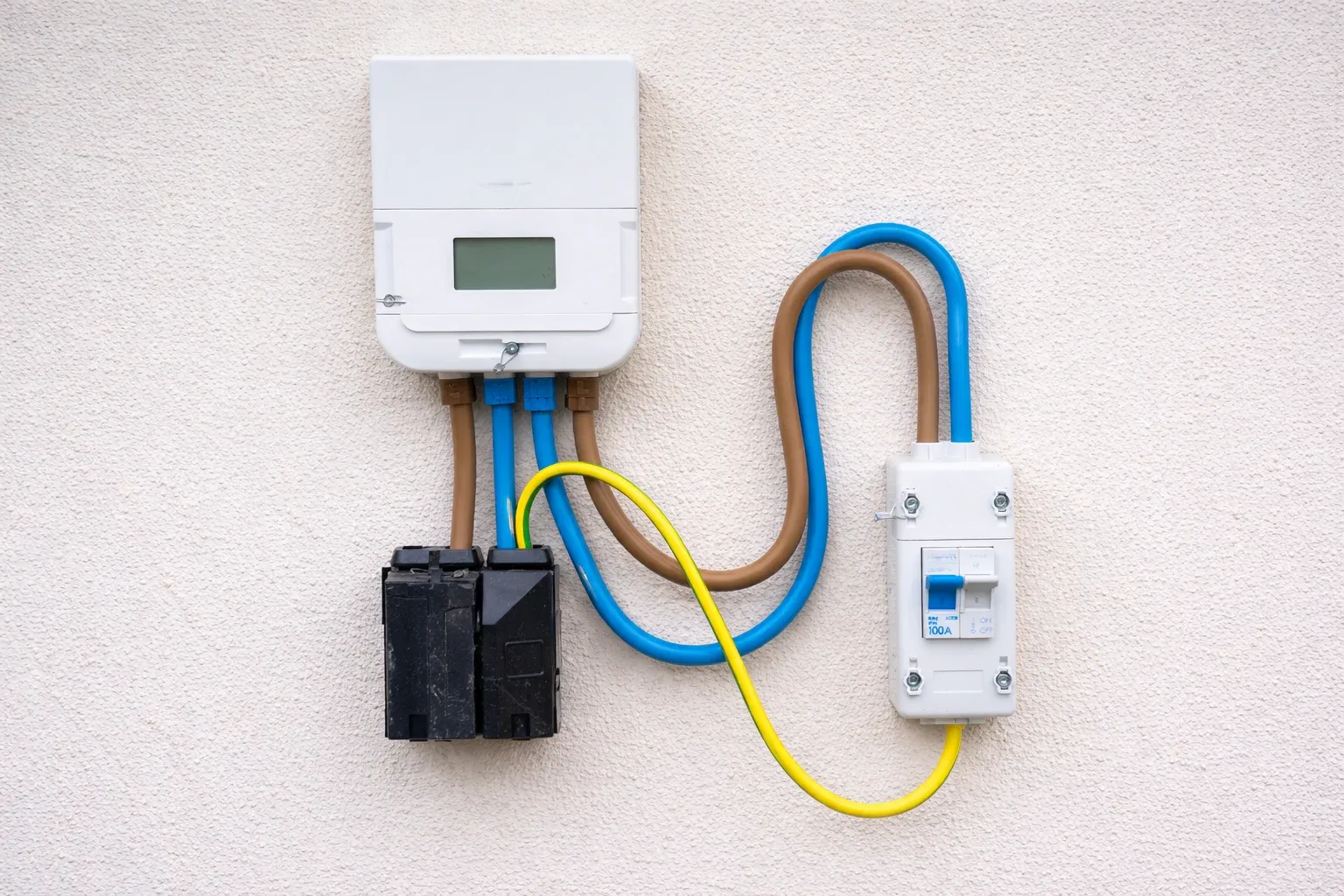
Smart meters automatically send readings, enabling accurate billing and eliminating manual submissions. This guide explains what smart meters are, how they work, and their benefits, addressing common concerns and showcasing how Fuse leverages smart meter data to provide insights, accurate billing, and help you manage your energy.
Understanding your energy usage is key to managing your bills. With Fuse Energy, your smart meter data is put to work, offering clear insights directly through our app. Click here to switch to Fuse Energy today.
A smart meter is the next generation of gas and electricity meter, designed to measure your energy consumption and automatically send readings to your energy supplier. Unlike traditional meters that require manual checks, smart meters use a secure data network to communicate wirelessly, typically every 30 minutes for electricity and daily for gas, ensuring you receive accurate bills.
Beyond the traditional meter
Smart meters replace older mechanical meters, offering a significant upgrade in how energy usage is tracked and reported. They record electricity use in near real-time and gas use typically daily, sending this data to your supplier and often to an in-home display. This automated process means a significant reduction in estimated bills or needing to submit readings yourself.
The role of the in-home display (IHD)
Most smart meter installations include an in-home display (IHD), a small portable screen that connects wirelessly to your smart meter. The IHD shows your energy usage in pounds and pence, as well as in kilowatt-hours (kWh), providing near real-time insights into your consumption. This allows you to see how much energy you are using and how much it is costing you, helping you identify where you might be able to cut back.
Smart meters for gas and electricity
Smart meters are available for both gas and electricity supplies. Electricity readings are typically provided in kWh, while gas readings are measured in cubic metres (m³) or cubic feet (ft³) and then converted to kWh using industry-standard factors. Smart gas meters typically provide daily cumulative readings, while electricity meters can provide more frequent data.
Smart meters offer several advantages that put you in greater control of your energy consumption and billing.
Accurate billing and fewer estimates
One of the most significant benefits of a smart meter is a significant reduction in estimated bills. Because your smart meter automatically sends your usage data to your supplier, you only pay for the energy you actually use. This eliminates the guesswork and helps ensure your bills accurately reflect your consumption.
Understanding your energy usage
The in-home display (IHD) and associated energy apps provide near real-time data on your energy consumption, allowing you to monitor your usage in pounds and pence. This transparency helps you understand how different appliances affect your energy costs, empowering you to make informed decisions about your energy habits and potentially reduce your usage.
Supporting a smarter energy grid
Smart meters are crucial for building a modern, efficient energy system. The detailed, frequent data they provide helps energy suppliers and network operators balance supply and demand more effectively, especially as more renewable energy sources integrate into the grid. This supports a greener and more reliable energy network for everyone.
Concerns about smart meters are common, but many are based on misunderstandings. Here is a look at the facts.
Are smart meters compulsory?
No, smart meters are not compulsory. While energy suppliers are working to offer smart meters to every eligible home in Great Britain, you have the choice to accept or refuse an installation. However, if your existing traditional meter is faulty or reaches the end of its life, it may need to be replaced with a smart meter, as traditional meters are becoming less available.
Data privacy and security explained
Smart meters are designed with security and privacy in mind. They only collect information on how much energy is used and when, not personal data such as your name, address, or bank details. This data is encrypted and transmitted over a secure, dedicated network, not your home Wi-Fi, making the risk of hacking very low. You also have control over how often your energy usage data is shared with your supplier.
What about older meters like radio Teleswitch (RTS)?
Radio Teleswitch Service (RTS) meters are an older type of electricity meter that uses a longwave radio signal to switch between peak and off-peak rates. This service is being phased out across the industry, with the phase-out that began on 30 June 2025. If you have an RTS meter, your current energy supplier will contact you to arrange a free smart meter upgrade to avoid disruption to your heating and hot water supply. Once your supplier has replaced your RTS meter with a smart meter, you can then switch to a modern energy provider like Fuse.
Upgrading to a smart meter is a straightforward process, and it is typically free for eligible homes.
Eligibility and installation process
Smart meter installation is generally free for eligible homes in Great Britain. To get one, simply contact your energy supplier. They will arrange an appointment for a qualified engineer to install the new meters at your property.
What to expect during installation
An engineer will replace your old meters with new smart meters and set up your in-home display (IHD). They will also show you how to use your IHD and answer any questions you have about your new meters.
Connecting your smart meter to your energy app
Once your smart meter is installed, you can connect it to your energy supplier's app, such as the Fuse app. This allows you to access detailed insights into your energy usage, track costs, and manage your account directly from your smartphone. Fuse leverages smart meter data to provide unparalleled insights and accurate billing directly through its digital-first app experience.
Having a smart meter is the first step; actively engaging with the data it provides is how you unlock its full potential.
Using your in-home display effectively
Your IHD is a powerful tool for understanding your energy consumption. Use it to:
- Monitor in real-time: See how much energy you are using in pounds and pence as you switch appliances on and off. This can help you identify energy-intensive devices.
- Track trends: Review daily, weekly, and monthly usage to spot patterns and areas where you could reduce consumption.
- Set budgets: Many IHDs allow you to set a budget and alert you if you are exceeding it, helping you stay on track with your spending.
Leveraging app insights for savings
Connecting your smart meter to an energy app like Fuse's provides even deeper insights. The app can analyse your usage patterns, offer personalised tips, and help you identify opportunities to save energy. By actively engaging with this data, you can make informed decisions to manage your consumption more effectively.
Smart tariffs and future energy management
Smart meters enable access to flexible tariffs, often called "smart tariffs" or "time-of-use tariffs". These tariffs offer different prices for electricity at various times of the day, typically with cheaper rates during off-peak hours. If you can shift energy-intensive tasks, like charging an electric vehicle or running appliances, to these cheaper periods, you could significantly reduce your energy bills.
How often do smart meters send readings?
Most smart meters installed in Great Britain are set to transmit consumption data to the energy supplier every 30 minutes for electricity and daily for gas.
Can I switch suppliers with a smart meter?
Yes, you can switch energy suppliers with a smart meter, just as you would with a traditional meter. Second-generation smart meters (SMETS2) are designed to maintain their smart functionality when you switch. If you have an older, first-generation smart meter (SMETS1), it might temporarily lose some smart functionality, meaning you might need to provide manual readings until it is reconnected to the national infrastructure.
What if my smart meter goes offline?
If your smart meter temporarily loses connection, it will still record your energy usage accurately, but it will stop sending readings automatically. In such cases, you might need to submit manual readings until the connection is restored. Connection issues are often temporary and can sometimes be resolved remotely by your supplier. If your in-home display stops working, try moving it closer to your electricity meter.