Selling electricity back to the grid: your price per kWh
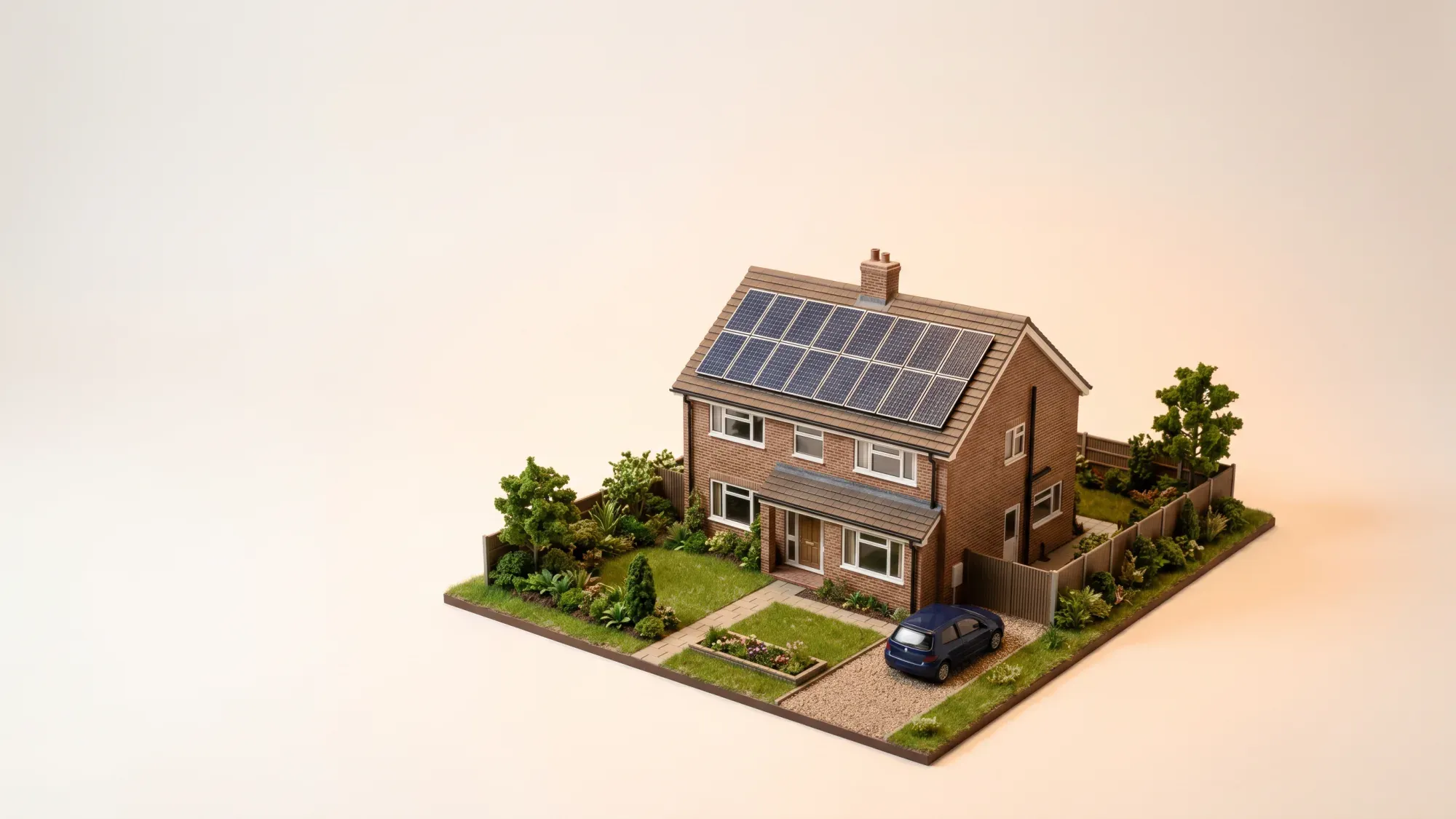
Homeowners in the UK with solar panels or other renewable energy systems can turn their surplus electricity into tangible value by selling it back to the grid. This guide explains how to maximise those earnings, focusing on the Smart Export Guarantee (SEG) and the factors that influence how much you get paid per kilowatt-hour (kWh).
If you're looking to sell your surplus electricity back to the grid, Fuse Energy offers a clear and competitive path. Our SEG tariff pays you for every unit you export, and our app makes tracking your earnings simple. Click here to see how easy it is to get started with Fuse Energy.
Enter your address to get a quote and see how much you could save
Understanding the Smart Export Guarantee (SEG)
The SEG is a UK government-backed scheme that requires certain licensed electricity suppliers to pay small-scale, low-carbon generators for the electricity they export to the National Grid. Ofgem, the UK's energy regulator, oversees the SEG scheme. According to Ofgem, licensed electricity suppliers with 150,000 or more domestic electricity customers are mandated to offer at least one SEG tariff, while smaller suppliers can choose to offer them voluntarily. These tariffs must offer a rate above zero for every kilowatt-hour (kWh) exported.
What is the SEG and how does it work?
The SEG ensures that if you generate your own electricity - typically through solar panels, but also wind turbines or hydroelectricity - and produce more than you use, you can sell that excess back to the grid. The scheme works by requiring suppliers to provide tariffs for exported electricity, meaning you receive a payment for each unit you contribute. This encourages microgeneration and helps the UK transition to a low-carbon energy system.
What is the SEG?
The SEG is a UK government scheme requiring licensed electricity suppliers to pay homeowners for surplus low-carbon electricity exported to the grid. It ensures a payment rate above zero for every kWh, encouraging microgeneration and supporting the UK's renewable energy goals.
SEG versus Feed-in Tariff (FiT)
The SEG scheme replaced the Feed-in Tariff (FiT) scheme in January 2020. While both schemes aimed to support small-scale renewable electricity generation, there are key differences. FiT offered generation tariffs (payments for all electricity generated, whether used or exported) and export tariffs (payments for exported electricity). The SEG, however, focuses solely on payments for exported electricity. If you were on FiT before it closed, your tariff will continue as per your original agreement.
Eligibility for selling electricity to the grid
To sell electricity back to the grid, you need to meet specific criteria related to your microgeneration system, metering, and network notification.
Microgeneration system requirements
Your microgeneration system must be capable of exporting electricity to the grid. For most installations, particularly solar panels, this means your system should be certified under the Microgeneration Certification Scheme (MCS) or an equivalent standard. This certification confirms that your installation meets industry standards for quality and safety.
The importance of an export MPAN
An energised export Meter Point Administration Number (MPAN) is essential for selling electricity back to the grid. This unique 21-digit reference number identifies your electricity export supply point. Without an energised export MPAN, your supplier cannot accurately measure and pay you for the electricity you export.
If you don't have an existing, energised export MPAN, you'll need to arrange for one. Fuse can help you generate the export MPAN shell by forwarding your Distribution Network Operator (DNO) connection approval (G98/G99 paperwork) and MCS certificate to the relevant DNO. However, Fuse cannot energise this MPAN itself. You must first switch to another supplier to get your export MPAN energised, and then you can switch to Fuse for your SEG tariff.
DNO notification (G98/G99)
Notification to your DNO is a mandatory step for microgeneration installations. This is typically done under G98 or G99 regulations, depending on the size and type of your system. Your installer will usually handle this notification, but it's crucial to ensure it's completed. The DNO needs to be aware of any generation connected to their network to maintain grid stability and safety. This notification must be completed within 28 days of installation, and either you or your supplier may complete it.
How much can you earn? SEG rates explained
The amount you can earn from selling electricity back to the grid varies. SEG tariffs must offer a rate above zero, but suppliers are free to set their own competitive rates.
Factors influencing price per kWh
Several factors influence the price per kWh you can earn:
- Supplier's SEG tariff: Different energy suppliers offer varying rates. It pays to compare to find the best SEG tariff.
- Tariff type: Some tariffs offer a fixed rate for a set period, while others are variable and can change.
- Smart meter requirements: Many of the most competitive SEG tariffs require a smart meter to accurately measure your exports.
- Import customer status: Some suppliers offer better export rates to their existing electricity import customers.
Typical SEG rates across the UK
SEG rates can range from just above zero to over 20p per kWh, depending on the supplier and tariff terms. While there isn't a single "solar plate rate" or "solar panel rate," comparing different suppliers' offerings is crucial to maximise your earnings. Websites like Uswitch often provide comparisons of the best SEG tariff options.
Variable versus fixed SEG tariffs
Just like import tariffs, SEG tariffs can be variable or fixed. A variable SEG tariff means the rate you receive per kWh can go up or down with market conditions. A fixed SEG tariff locks in your price per kWh for a set period, offering more predictability in your earnings. The choice depends on your preference for stability versus potential for higher (or lower) rates.
The process of selling electricity back to the grid
Selling your surplus electricity involves a few key steps, especially if you're new to exporting.
Step-by-step guide for new exporters
- Install and certify your microgeneration system: Ensure your system (e.g., solar panels) is installed by a certified professional and meets standards like MCS.
- Obtain and energise an export MPAN: If you don't have an existing, energised export MPAN, you'll need to arrange for one. Fuse can help generate the export MPAN shell, but it must first be energised by another supplier before you can join a SEG tariff provider.
- Notify your DNO: Your installer should typically handle the G98 or G99 notification to your DNO within 28 days of installation.
- Compare SEG tariffs: Look at offerings from various licensed electricity suppliers to find the best solar export tariff UK.
- Apply for a SEG tariff: Once you've chosen a supplier, apply for their SEG tariff, providing all necessary documentation, including your MCS certificate and export MPAN.
Applying for a SEG tariff
When applying for a SEG tariff, you'll typically need to provide:
- Proof of your microgeneration system's installation and certification (e.g., MCS certificate).
- Your energised export MPAN.
- Details of your DNO notification.
- Your smart meter details, if required by the tariff.
The application process can vary between suppliers, so check their specific requirements.
Maximising your export earnings
Beyond choosing a competitive SEG tariff, there are other strategies to help you get the most from your exported electricity.
Optimising self-consumption
The electricity you use directly from your own generation is usually more valuable than the rate you get for exporting it. This is because you avoid paying your import tariff rate. Consider shifting high-energy activities, like running washing machines or dishwashers, to times when your solar panels are generating the most electricity.
Considering battery storage
Battery storage systems allow you to store surplus electricity generated during the day and use it later, for example, in the evening. This further reduces your reliance on grid imports and can increase your overall savings, even if it doesn't directly increase your export earnings. Note that current UK legislation (SI 2026/848) covers standalone plug-in solar only and does not apply to plug-in batteries or hybrid solar and battery systems.
Comparing supplier offerings
Regularly compare SEG tariffs. Rates can change, and new, more competitive offerings may become available. Websites like Uswitch and MoneySavingExpert energy can help you compare different options to ensure you're always getting the best energy deal.
Choosing the right SEG tariff and supplier
Selecting the right SEG tariff and supplier is key to making the most of your microgeneration system.
Key considerations for selection
When choosing a SEG tariff, consider not just the price per kWh, but also:
- Contract length and terms: Is it a fixed or variable rate? Are there any exit fees?
- Payment frequency: How often will you receive your payments?
- Eligibility criteria: Do you meet all the requirements, including meter type?
- Customer support: How easy is it to manage your account and get assistance?
Managing your export with Fuse Energy
Fuse Energy offers a transparent and competitive SEG tariff for eligible customers, paying 13p for every kWh of electricity you export to the grid. Our approach empowers homeowners to turn surplus energy into financial value. The Fuse app simplifies tracking export earnings and managing the export process, providing clear visibility and control over your contributions. Our 24/7 human support team is always on hand to assist with any questions about exporting electricity or your SEG tariff.
Ready to start earning from your exported electricity? Fuse Energy makes it simple to switch and manage your SEG tariff. Click here to sign up today and take control of your energy exports. You can also learn more about our mission to make energy simpler and greener by clicking here.
Disclaimer
For the avoidance of doubt, this article is provided for informational purposes only and is not intended to constitute legal or financial advice. The author and/or Fuse Energy shall not be responsible for any losses arising out of any reliance on the information contained herein.