Low boiler pressure often means no heating or hot water, leaving your home cold and uncomfortable. The good news is that restoring your boiler's pressure is a common task many UK homeowners can safely manage themselves. This guide will walk you through the process, ensuring you can get your heating system back up and running.
Understanding your boiler pressure
Your domestic boiler relies on a specific water pressure to circulate hot water efficiently through your central heating system. When this pressure drops too low, your boiler may stop working, often displaying an error code or simply failing to provide heat.
What low pressure means for your heating
If your boiler pressure falls below the recommended level, you'll likely experience a loss of heating and hot water. This happens because the system can't effectively push water around your radiators and to your taps. In some cases, the boiler might shut down completely as a safety precaution to prevent damage.
How to check your boiler's pressure gauge
Most boilers have a pressure gauge on the front panel, which can be either a physical dial with a needle or a digital display. The optimal operating pressure for most domestic boilers is between 1 and 1.5 bar when the system is cold. If the reading is below 1 bar, your boiler pressure is too low and needs repressurising.
Step-by-step guide to repressurising your boiler
Repressurising your boiler involves safely adding water to the sealed central heating system. Always consult your boiler's manufacturer manual for specific instructions, as procedures can vary between models.
Safety first: preparing your boiler for repressurisation
Before you begin, always turn off your boiler and allow it to cool down completely to prevent injury. This ensures the entire heating system is cold, giving you an accurate pressure reading and making the process safer.
Identifying your boiler's filling loop (internal vs external)
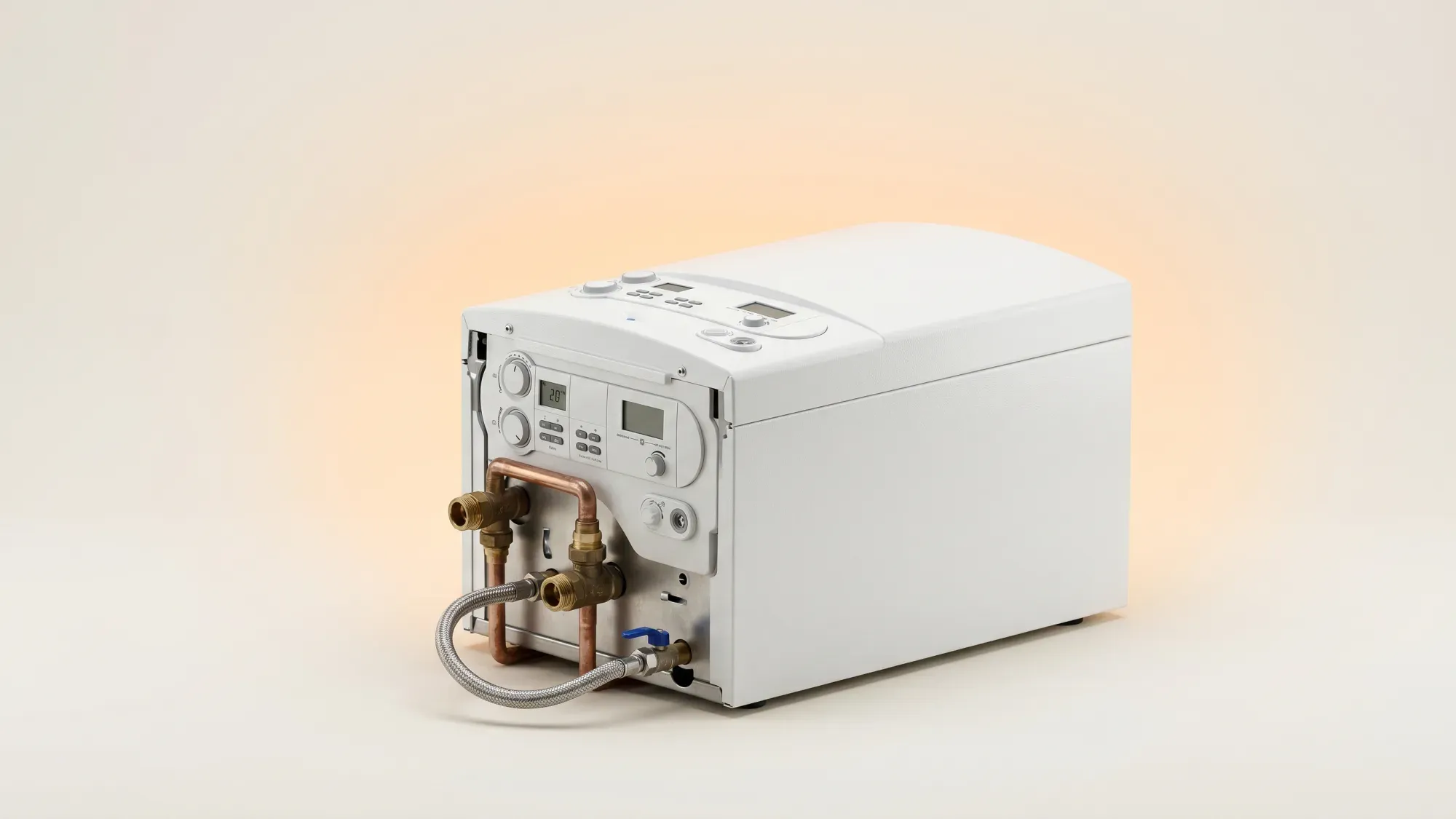
Locate the filling loop, which connects the mains water supply to your central heating system. This is typically a flexible, silver braided hose with a valve at either end, often found underneath or near your boiler. Some newer boilers may have an integrated (internal) filling loop, while others use an external hose.
Slowly adding water to the central heating system
Once you've located the filling loop and ensured it's securely attached, slowly open the valves on the filling loop. You should hear water entering the system. Keep a close eye on the pressure gauge as water flows in.
Securing the filling loop and restarting your boiler
Once the pressure gauge reaches the recommended level (typically 1 to 1.5 bar), close both filling loop valves tightly. It's crucial to close both valves to prevent over-pressurisation and potential leaks. After securing the valves, you can restart your boiler. Check for any leaks around the filling loop connections.
Specific guidance for Vaillant ecotec Plus boilers
Fuse specialises in installing Vaillant ecoTEC Plus boilers, which feature an integrated filling loop for ease of use.
Locating the integrated filling loop on Vaillant models
On Vaillant ecoTEC Plus models, the filling loop is often integrated and may consist of two black taps underneath the boiler. The pressure gauge is usually displayed on the LCD screen in the right-hand corner of your boiler.
Vaillant-specific pressure recommendations and error codes
For a Vaillant ecoTEC Plus boiler, the pressure gauge reading should be between 1 and 1.5 bar for optimal function. If the pressure drops below this, the boiler will need repressurising. A flashing zero or an F22 fault code on the LCD screen often indicates low system pressure.
How do I repressurise a Vaillant ecoTEC Plus boiler?
Turn off your Vaillant ecoTEC Plus boiler and let it cool. Locate the two black taps (isolation valves) underneath. Open the first valve 90 degrees anti-clockwise, then slowly open the second valve while watching the digital pressure display. Close the second valve when the pressure reaches 1.2 to 1.5 bar, then close the first valve.
Why your boiler might be losing pressure
While repressurising your boiler can resolve an immediate issue, persistent or frequent drops in pressure usually signal an underlying problem that needs investigation.
Common causes of recurring pressure drops
The most common reasons for a boiler to lose pressure include leaks in the central heating system (such as from radiators, pipework, or valves), or air being released when bleeding radiators. Even a small, slow leak can gradually reduce pressure. Other potential causes include a faulty pressure relief valve or a problem with the expansion vessel.
Simple troubleshooting for minor issues
If you've recently bled your radiators, a slight drop in pressure is normal, and repressurising should fix it. However, if the pressure keeps dropping after repressurising, check for visible signs of leaks around radiators, pipes, and the boiler itself, such as damp patches or water droplets.
When to call a professional heating engineer
While repressurisation is a DIY task, knowing when to call in an expert is crucial for safety and to prevent further damage.
Persistent pressure loss or visible leaks
If your boiler frequently loses pressure, it indicates a fault within the system, such as a leak, which requires a Gas Safe registered engineer. Do not attempt to fix leaks yourself, especially if they are inside the boiler. If you notice a leak, contact a qualified engineer immediately.
If you are unsure or uncomfortable with the process
If you are unsure about any step of the repressurisation process or feel uncomfortable performing it, it's always better to seek professional help. Your safety is paramount. Fuse offers 24/7 human customer support as a crucial safety net if you are unsure or encounter difficulties during repressurisation.
The importance of a gas Safe registered engineer
All work involving gas appliances, beyond simple repressurisation, must be carried out by a Gas Safe registered engineer. These engineers are qualified to diagnose and fix complex boiler issues, ensuring your system operates safely and efficiently. Ignoring recurring pressure drops or attempting repairs beyond your expertise can be dangerous.
For the avoidance of doubt, this article is provided for informational purposes only and is not intended to constitute legal or financial advice. The author and/or Fuse Energy shall not be responsible for any losses arising out of any reliance on the information contained herein.