Is underfloor heating expensive to run?
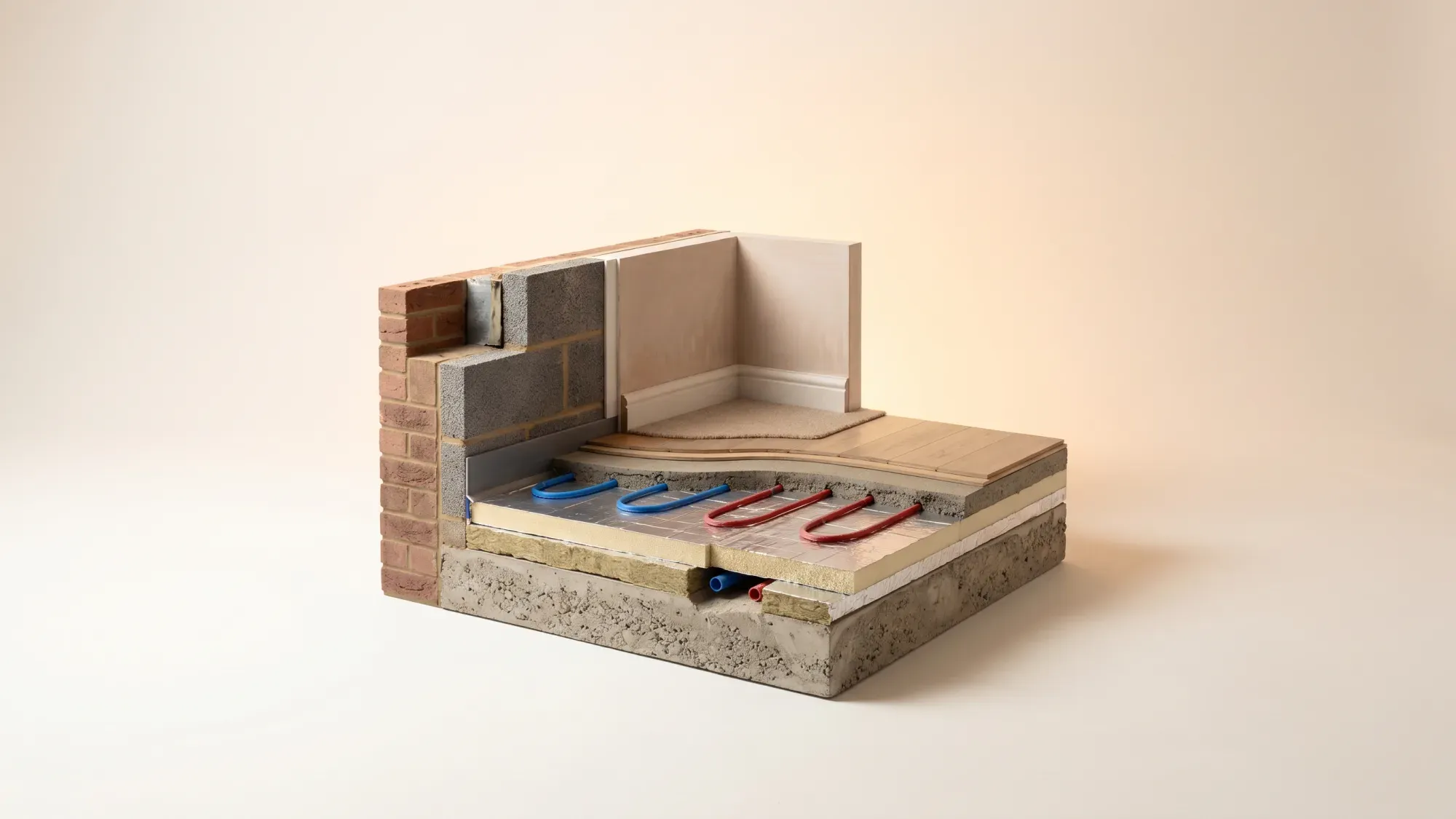
Underfloor heating (UFH) provides a comfortable way to warm your home, but many homeowners wonder about its running costs. Whether UFH proves expensive depends on several factors, including the system type, your home's insulation, and how you control it. Fuse Energy helps homeowners manage their energy consumption effectively, offering clear pricing and smart tools to understand usage.
Understanding your energy use is key to managing costs. Fuse Energy offers clear pricing and smart tools to help you track and optimise your home's energy consumption. Click here to switch to Fuse Energy and take control of your bills.
Enter your address to get a quote and see how much you could save
Understanding underfloor heating: wet vs electric systems
Underfloor heating systems distribute warmth evenly across a room by heating the floor itself. There are two primary types: wet (hydronic) and electric. Understanding how each works is key to grasping their respective running costs.
How wet underfloor heating works
Wet underfloor heating systems circulate warm water through a network of pipes installed beneath your floor. These systems connect to your home's main heat source, such as a gas boiler or a heat pump. They operate at lower flow temperatures, typically around 35-55°C, compared to traditional radiators which often require water temperatures of 60-70°C. This lower operating temperature can contribute to greater energy efficiency. Wet systems are generally more economical to run, especially when paired with a gas boiler or a heat pump. You can learn more about these systems in our heat pumps: the ultimate guide.
How electric underfloor heating works
Electric underfloor heating systems use a series of electric cables or heating mats laid beneath the floor. These systems are powered directly by your home's electricity supply. Electric UFH is often simpler and quicker to install, making it a popular choice for smaller areas like bathrooms or for renovations. However, due to the higher unit price of electricity compared to gas, electric UFH typically has higher running costs than wet systems.
Key factors influencing underfloor heating running costs
The running costs of any underfloor heating system are not static; they fluctuate based on several critical elements within your home and how you manage your heating.
Home insulation and heat loss
The most significant factor influencing UFH running costs is your home's insulation. Without adequate insulation, a substantial amount of heat generated by your UFH system can escape downwards into the subfloor or foundations, or outwards through walls and windows. This means you're effectively paying to heat areas beyond your living space, forcing the system to work harder and consume more energy. High-quality insulation boards installed directly beneath the heating elements are crucial for directing heat upwards into the room, significantly improving efficiency and reducing heat-up times.
Energy source and unit prices
The cost of the energy you use directly impacts your bills. In the UK, electricity is considerably more expensive per unit than gas. For the period of 1 July to 30 September 2026, the average UK electricity unit rate for a Direct Debit customer on the Ofgem price-cap default tariff is 26.11p per kWh. The average gas unit rate for the same period is 7.33p per kWh. This disparity means that electric UFH will inherently be more expensive to run per hour than wet UFH connected to a gas boiler, assuming similar heat output.
System control and usage patterns
How you control and use your underfloor heating system plays a vital role in its efficiency. Leaving UFH on constantly at a high temperature, or failing to use smart controls, can lead to unnecessary energy consumption. Effective use of thermostats, especially smart models, and zoning can significantly reduce waste by heating only the areas you need, when you need them.
Room size and floor coverings
Larger rooms naturally require more energy to heat. The type of floor covering also affects efficiency; materials like tile and stone conduct heat very well, while thick carpets or underlays can act as insulators, requiring the system to work harder to achieve the desired room temperature.
Underfloor heating running costs: electric vs wet comparison
Comparing the running costs of electric and wet underfloor heating systems highlights their fundamental differences in efficiency and suitability for various applications.
Estimated costs for electric underfloor heating
Electric UFH systems are generally best suited for smaller areas or rooms where intermittent heating is required, such as bathrooms. For example, a typical electric UFH system might consume between 100W and 200W per square metre. Running a 3m² bathroom system at 150W per square metre (0.45 kW) for two hours a day, using the current average electricity unit rate of 26.11p per kWh, would cost approximately 23.5p per day, or around £85.78 per year. For a larger 15m² area, running for six hours a day, the annual cost could be around £1,286.75. These figures are illustrative and will vary based on actual usage and specific system efficiency.
Is electric underfloor heating always expensive to run?
No, electric underfloor heating is not always a poor choice. While electricity's higher unit cost makes it more expensive per hour than gas, it can be cost-effective for small rooms like bathrooms, or areas used intermittently. Its lower installation cost and suitability for renovations can make it a practical option when used strategically with good insulation and smart controls.
Estimated costs for wet underfloor heating
Wet UFH systems are typically more cost-effective to run, especially for larger areas or whole-house heating, due to gas being cheaper per kWh and their lower operating temperatures. A wet UFH system might typically require between 40W and 100W per square metre. For a 3m² bathroom, a wet UFH system requiring 0.3 kW could cost around 2.2p per hour, or approximately £16.05 per year, based on the current average gas unit rate of 7.33p per kWh. For a 15m² area, running for six hours a day, the annual cost could be around £240.75. These figures are illustrative and will vary based on actual usage and specific system efficiency.
Underfloor heating vs radiators: a cost comparison
When considering a new heating system, many homeowners weigh UFH against traditional radiators. Both have different upfront and long-term cost implications.
Initial installation costs
Radiators generally have lower upfront installation costs, making them quicker and cheaper to fit, especially when replacing existing units. Electric UFH typically has a lower installation cost than wet UFH, ranging from £60-£85 per m² for renovations, compared to £95-£110 per m² for wet systems in renovations. Wet UFH, being more complex to install, often has higher initial costs, particularly in retrofits where existing flooring may need to be lifted.
Long-term running costs and efficiency
Wet underfloor heating systems are often cheaper to run than radiators in the long term. This is primarily because UFH operates at lower temperatures and distributes heat more evenly, reducing heat loss and providing a consistent warmth that can make a room feel comfortable at a lower thermostat setting. Some estimates suggest wet UFH can be up to 25% more efficient than standard radiators, or even 40% more efficient when installed with a heat pump. Electric underfloor heating, however, is generally more expensive to run than radiators due to the higher unit cost of electricity.
Optimising your underfloor heating for lower bills
Once installed, there are several strategies you can implement to ensure your underfloor heating system runs as efficiently as possible, keeping your energy bills manageable.
Maximising insulation and draught proofing
Effective insulation is paramount for UFH efficiency. Ensure that your home, especially the subfloor, is well-insulated to prevent heat from escaping downwards. Addressing draughts around windows, doors, and floorboards can also significantly reduce heat loss, allowing your UFH system to maintain comfortable temperatures with less effort. For more ways to keep your home warm, check out our energy efficiency tips for your home.
Smart thermostats and zoning
Upgrading to smart thermostats can transform your UFH efficiency. These devices allow precise control, often via smartphone apps, and can learn your heating habits, adjusting schedules automatically. Zoning, which involves controlling different areas of your home independently, is particularly effective with UFH. It allows you to heat only the rooms you are using, preventing energy waste in unoccupied spaces. Smart thermostats can potentially save 10-30% on heating bills. You can find out more about how these devices work in our article on smart meters: your questions answered.
Understanding heat-up and cool-down times
Underfloor heating systems have a slower response time compared to radiators due to their thermal mass; they take longer to heat up and cool down. Understanding this characteristic is crucial for efficient use. Instead of turning the system off completely when you leave a room for a short period, it's often more efficient to set it to a lower "setback" temperature. This prevents the system from having to work hard to bring the room back up to temperature from cold.
Regular system maintenance
While electric UFH systems require minimal maintenance, wet UFH systems benefit from annual servicing to ensure components like the manifold, pump, and boiler connections are working correctly. Regular checks can help identify and address any issues that could impact efficiency, helping to prolong the system's lifespan and prevent unexpected costs.
Making an informed decision
Understanding the nuances of underfloor heating costs and efficiency empowers you to make choices that suit your home and budget. By focusing on insulation, choosing the right system for your needs, and utilising smart controls, you can enjoy the comfort of UFH without the worry of excessive bills.
Managing your home's energy should be simple and transparent. Fuse Energy offers straightforward pricing and an intuitive app to help you understand your usage and keep your bills manageable. Our 24/7 human support team is always ready to help. Switch to Fuse Energy today and experience a modern approach to home energy. Click here to get started.
Disclaimer
For the avoidance of doubt, this article is provided for informational purposes only and is not intended to constitute legal or financial advice. The author and/or Fuse Energy shall not be responsible for any losses arising out of any reliance on the information contained herein.