Is your UK home suitable for solar panels?
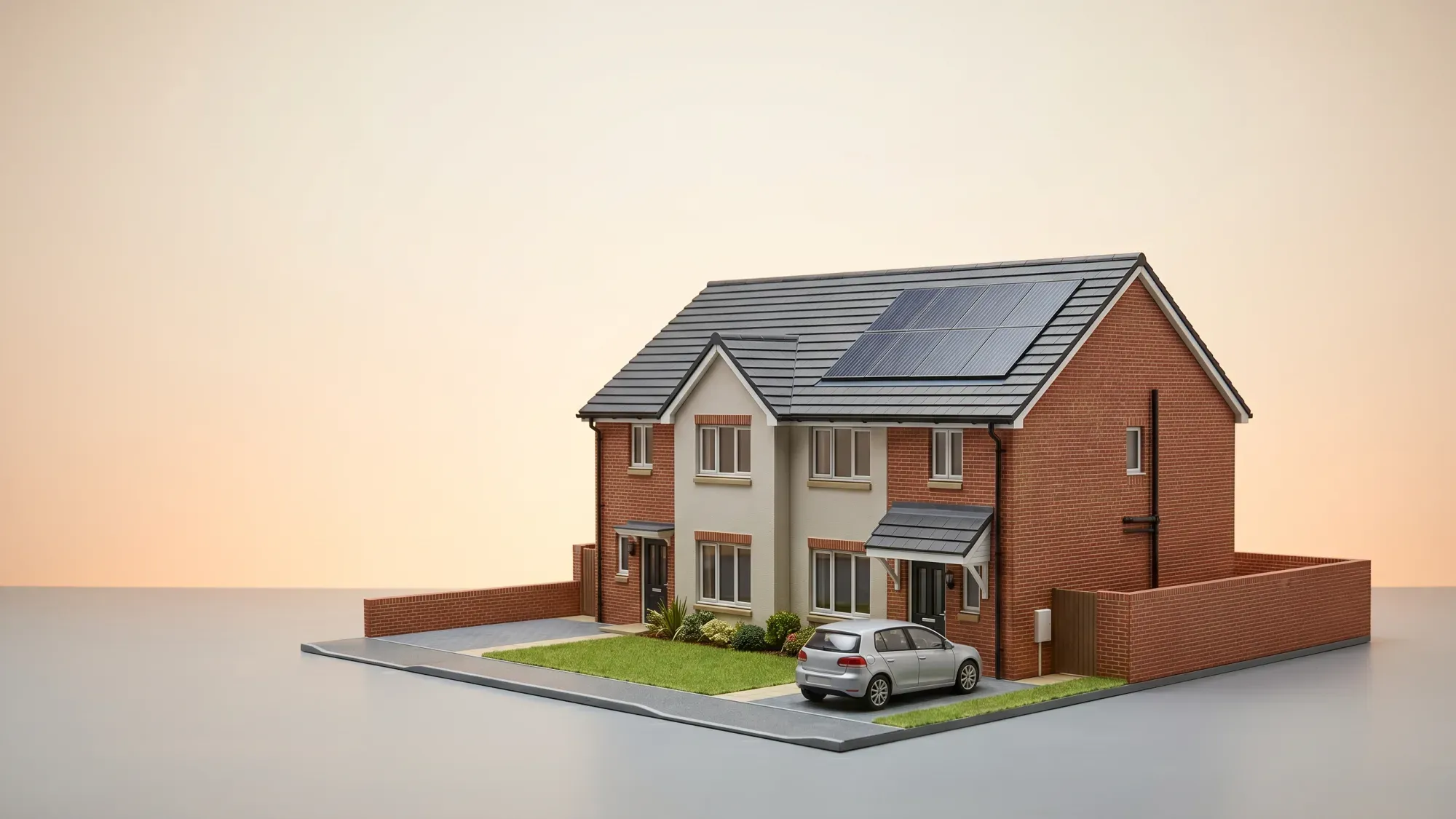
Deciding whether your home is right for solar panels involves more than just looking at your roof. It's about understanding your property's unique characteristics, local regulations, and how solar energy can fit into your household's energy use. This guide will walk you through the essential factors to consider, helping you determine if solar panels are a viable and valuable investment for your UK home.
Initial roof assessment for solar panels
The journey to solar power begins with your roof. Its characteristics are fundamental to how much electricity your panels can generate.
Roof orientation and pitch
For optimal performance in the UK, solar panels are best installed on a south-facing roof. This orientation allows them to capture the most direct sunlight throughout the day, maximising annual electricity generation. However, roofs facing south-east or south-west are also highly effective, typically achieving around 94% of the output of a due south-facing system. East and west-facing roofs can still be productive, generating approximately 80-85% of the energy produced by south-facing panels, and can be particularly beneficial if your energy demand peaks in the morning or evening. North-facing roofs are generally not recommended for solar panel installation due to significantly lower sunlight exposure.
Alongside orientation, the angle or "pitch" of your roof plays a crucial role. A roof pitch between 30 and 45 degrees is generally considered ideal for solar panel efficiency in the UK. Fortunately, most UK pitched roofs naturally fall within a suitable range, often between 30 and 50 degrees. Even if your roof's pitch isn't perfectly within this ideal range, modern installation techniques and panel technology can often optimise performance.
Available roof space and condition
Consider the amount of unobstructed roof space available. Solar panels require a clear area to be effective. The overall condition of your roof is also vital; it should be structurally sound and in good repair to support the weight of the panels for their lifespan, which can be 20-25 years or more. Any necessary roof repairs or replacements should ideally be carried out before solar panel installation.
Impact of shading from trees and buildings
Shading is a significant factor that can drastically reduce solar panel efficiency. Even partial shading from nearby trees, chimneys, satellite dishes, or neighbouring buildings can impact the output of an entire string of panels. Modern inverter technology, such as optimisers or micro-inverters, can help mitigate the effects of shading by allowing individual panels to perform independently, but minimising shading remains crucial for maximum generation.
Structural integrity and roof material
Your roof needs to be robust enough to safely hold the solar panel system.
Assessing your roof's strength
A professional solar survey will include an assessment of your roof's structural integrity. This is essential to ensure it can bear the additional weight of the panels and mounting system, especially during adverse weather conditions like high winds or heavy snowfall. Older properties or those with signs of existing roof issues may require structural reinforcement before installation.
Suitable roof materials for installation
Most common UK roof materials, such as slate and tile, are suitable for solar panel installation. Mounting systems are designed to integrate securely without compromising the roof's weatherproofing. Flat roofs are also surprisingly suitable, as specialised mounting systems can tilt panels to the optimal angle and allow for flexible positioning. Less common or fragile materials, such as certain types of corrugated sheeting or very old, brittle tiles, might require alternative mounting solutions or a more detailed assessment.
Planning permission and UK regulations
Navigating planning rules is a key step for any UK homeowner considering solar panels.
Permitted development rights
Many solar panel installations on residential properties in England, Scotland, and Wales fall under "permitted development rights". This means you generally won't need to apply for full planning permission, provided certain conditions are met. These conditions typically relate to the size and placement of the panels, ensuring they don't protrude significantly from the roof or extend beyond the highest part of the roof (excluding the chimney).
When planning permission is required
Planning permission may be required if your property is in a conservation area, is a listed building, or if the proposed installation significantly alters the appearance of the building or exceeds permitted development limits. For example, panels that are visible from a public highway in a conservation area might require consent. It is always best to check with your local planning authority or consult the Planning Portal for specific guidance related to your property and proposed installation.
Conservation areas and listed buildings
Properties in conservation areas or those that are listed buildings have stricter rules to protect their architectural or historical character. In such cases, planning permission is almost always required, and the design and placement of solar panels will be scrutinised carefully. Early engagement with your local planning department is advisable if your home falls into one of these categories.
Your energy consumption and financial benefits
Understanding your household's energy habits and the financial incentives available is crucial for evaluating solar panel viability.
Understanding your household's electricity use
The average UK home uses around 2,500 kWh of electricity per year . Knowing your household's typical electricity consumption helps determine the size of the solar panel system you might need and the potential savings you could achieve. A larger system might generate more electricity than you use, allowing you to export the surplus, while a smaller system might cover a significant portion of your daily needs. Analysing your energy bills can provide a clear picture of your consumption patterns.
Maximising savings and export tariffs
Solar panels can significantly reduce your electricity bills by generating your own power. Any electricity you generate and use directly in your home means less electricity you need to buy from the grid. Furthermore, the Smart Export Guarantee (SEG) ensures you get paid for any surplus electricity you generate and export back to the National Grid. Licensed electricity suppliers are mandated to offer tariffs for this exported energy, and these tariffs must be above zero. This provides an additional financial benefit, turning your roof into a potential revenue stream.
The professional assessment process
A thorough professional assessment is indispensable for an accurate evaluation of your home's solar potential.
Why a solar survey is essential
While a self-assessment provides a good starting point, a professional solar survey offers a detailed evaluation of your roof's suitability. This includes a precise analysis of orientation, pitch, shading patterns throughout the year, and the structural integrity of your roof. Surveyors can also assess your electrical system to ensure it can safely integrate with a solar installation. This comprehensive assessment ensures the proposed system is correctly sized and positioned for maximum efficiency and safety.
Choosing an MCS-certified installer
To be eligible for the SEG and any potential grants, your solar panel installation must be carried out by an MCS-certified installer. The Microgeneration Certification Scheme (MCS) is a quality assurance scheme that certifies microgeneration products and installers in the UK. Choosing an MCS-certified installer ensures that your system meets industry standards for quality, safety, and performance, and that you can access the financial benefits of exporting electricity.
What is MCS certification?
MCS is a quality assurance scheme for microgeneration products and installers in the UK. It ensures that renewable energy installations, such as solar panels, meet high standards of quality and performance, making homeowners eligible for government-backed incentives like the SEG.
Making the most of your solar power with Fuse Energy
Once you've determined your home is suitable for solar panels and they are installed, Fuse Energy empowers you to maximise your investment.
Smart tariffs for solar homeowners
Fuse's smart tariffs are designed to help you get the most out of your solar panels. These tariffs can optimise your energy usage by encouraging you to use more electricity when solar generation is high or when grid prices are low, and to export surplus energy when prices are favourable. This transparency and control over your energy usage allows you to make informed decisions, turning your generated power into a tangible asset.
Earning with the Smart Export Guarantee (SEG)
Fuse Energy participates in the SEG scheme, ensuring you receive payments for the renewable electricity you export back to the grid. This means that any excess energy your solar panels produce, beyond what your home consumes, can earn you money. Fuse's app provides the tools to track your generation and export, giving you "power to play with" your energy supply and rewarding you for contributing to a greener grid.
Disclaimer
For the avoidance of doubt, this article is provided for informational purposes only and is not intended to constitute legal or financial advice. The author and/or Fuse Energy shall not be responsible for any losses arising out of any reliance on the information contained herein.