Is gas cheaper than electricity?
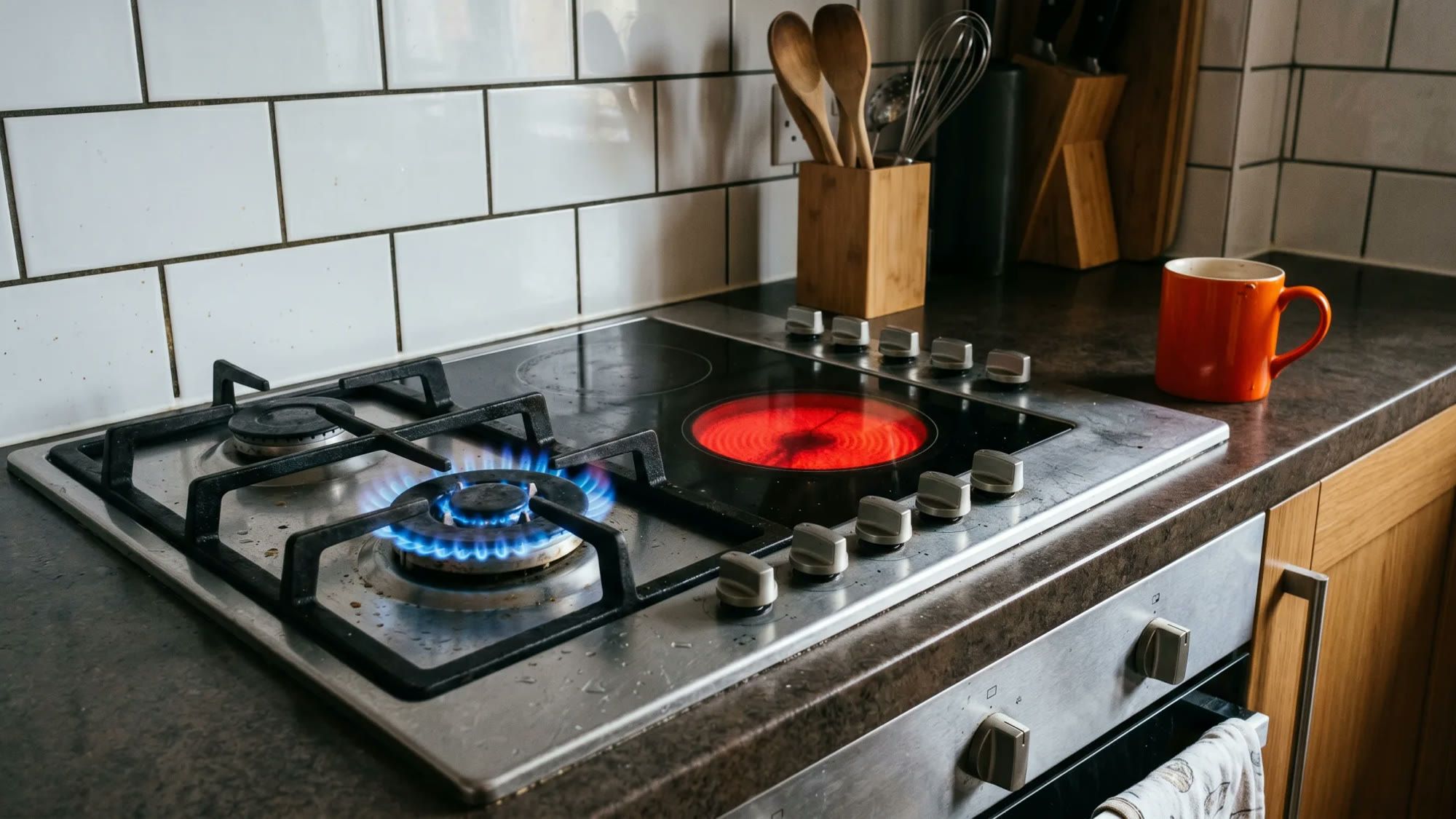
Understanding your home energy costs in the UK can be complex. Many householders ask a fundamental question: is gas cheaper than electricity for powering their homes? The answer involves more than just comparing unit rates; it depends on how you use energy, the efficiency of your appliances, and the long-term trends in the UK's energy landscape. This guide will help you make informed decisions and gain greater control over your energy bills.
Managing your energy should be straightforward. Fuse Energy offers clear pricing, real-time usage data, and 24/7 human customer support to help you understand and manage your energy consumption. Click here to switch to Fuse Energy today.
Enter your address to get a quote and see how much you could save
Understanding current UK energy prices
Ofgem, the energy regulator, sets a price cap to limit the maximum rates suppliers can charge for gas and electricity on standard variable tariffs. This cap is reviewed every three months and influences costs for millions of households.
Gas and electricity unit rates explained
For the period of 1 July to 30 September 2026, the average electricity unit rate for customers paying by Direct Debit under the Ofgem Price Cap is 26.11 pence per kilowatt-hour (kWh). In contrast, the average gas unit rate stands at 7.33 pence per kWh. These figures clearly show that, on a per-unit basis, electricity is significantly more expensive than gas.
Standing charges: the daily fixed cost
Beyond the unit rates, energy bills also include a daily standing charge. This fixed daily fee covers the cost of supplying energy to your home, regardless of how much you use. For the same period (1 July to 30 September 2026), the average daily standing charge for electricity is 57.19 pence, while for gas it is 29.04 pence. These charges add up over the year, contributing to your overall bill even before you switch on a light or boil a kettle.
The impact of the energy price cap
The energy price cap limits the maximum amount energy suppliers can charge for each unit of gas or electricity used, as well as the daily standing charge. For a typical dual-fuel household paying by Direct Debit, Ofgem's illustrative annual figure for 1 July to 30 September 2026 is £1,862 per year. It is crucial to remember that this is a cap on unit rates, not a cap on your total bill; using more energy will still result in a higher cost.
Gas vs electricity for home heating
Heating accounts for a substantial portion of household energy consumption. The choice between gas and electric heating systems has a significant impact on your bills and carbon footprint.
Boiler efficiency vs electric heating systems
Modern gas boilers are highly efficient, converting a large percentage of gas energy into heat. Electric heating systems, such as electric radiators or storage heaters, also convert nearly all the electricity they consume into heat. However, the higher unit rate of electricity often makes electric resistance heating more expensive to run than gas, despite its efficiency.
The role of heat pumps in future heating
Heat pumps offer a compelling alternative to traditional heating methods. They are highly efficient, capable of producing three to four times more heat energy than the electrical energy they consume. This means they can be 300% or more efficient, significantly outperforming gas boilers because they move existing heat rather than generating it by burning fuel. While the upfront installation cost for a heat pump can be higher, grants like the Boiler Upgrade Scheme (BUS) can help offset this. The standard BUS grant is £7,500 for air source and ground source heat pumps.
Are heat pumps cheaper to run than gas boilers?
For most well-insulated UK homes, heat pumps can be marginally cheaper to run than gas boilers, especially with the £7,500 BUS grant. At current price cap rates (July-September 2026), a heat pump with a Seasonal Coefficient of Performance (SCOP) of 3.5 delivers heat at about 7.5p/kWh, slightly below a gas boiler at 8.0p/kWh.
Despite electricity's higher unit rate, the superior efficiency of heat pumps means their running costs can be comparable to, or even lower than, gas boilers, particularly in well-insulated homes or when paired with specialist tariffs. The UK government is actively promoting the transition to electric heating, especially heat pumps, as part of its decarbonisation strategy.
Insulation and overall home efficiency
Regardless of your heating system, the efficiency of your home plays a critical role in how much energy you consume. Good insulation, double glazing, and draught-proofing reduce heat loss, meaning your heating system does not have to work as hard, leading to lower bills. Investing in these improvements can significantly cut your overall energy costs, making your home more comfortable and less reliant on constant heating.
Comparing costs for cooking and hot water
Beyond heating, gas and electricity are also used for cooking and providing hot water.
Gas cookers and ovens vs electric alternatives
Gas hobs and ovens are often favoured by cooks for their instant heat and precise temperature control. While the unit cost of gas is lower, the overall running cost depends on usage habits and appliance efficiency. Electric cookers and ovens, including induction hobs, can be very energy-efficient. Induction hobs, for example, heat cookware directly through electromagnetic fields, reducing wasted heat and cooking times. For many, the choice between gas and electric cooking comes down to personal preference, but modern electric appliances can be very cost-effective.
Electric showers and immersion heaters
Electric showers heat water on demand, using electricity only when needed. Immersion heaters, on the other hand, heat a tank of water, which can then be used throughout the day. While convenient, immersion heaters can be expensive to run if the water is heated and then left to cool, or if the tank is not well insulated. For hot water, a gas boiler heating a cylinder or a combi boiler providing instant hot water is often more economical than electric immersion heating, given the current unit rates. However, for households without a gas supply, or those looking to reduce their gas consumption, efficient electric water heating solutions are available.
Long-term outlook: the future of energy costs
The energy market is dynamic, influenced by global events, policy decisions, and technological advancements. Understanding these trends is key to future-proofing your home's energy strategy.
Decarbonisation and the shift to electrification
The UK is committed to achieving net-zero carbon emissions, which involves a significant shift away from fossil fuels like natural gas. This decarbonisation drive will increasingly favour electricity, particularly from renewable sources. As the electricity grid becomes greener, the environmental benefits of electric heating and transport will grow. Government policies and grants are already in place to encourage this transition, making electric options more attractive over time.
Renewable energy and grid stability
The expansion of renewable energy sources like wind and solar is a cornerstone of the UK's energy future. As more clean energy comes online, the cost of generating electricity could stabilise or even fall in the long term. Smart grid technologies are also evolving to manage the intermittent nature of renewables, ensuring grid stability and potentially offering consumers more flexible tariffs that reward off-peak usage.
How smart technology can future-proof your home
Smart technology is central to navigating the evolving energy landscape. Smart meters, for instance, provide half-hourly consumption data, giving you a detailed view of your energy usage. This granular data allows for more precise energy management, helping you identify energy-intensive habits and optimise appliance use. Looking ahead, integrating smart home systems with renewable energy generation and storage could offer even greater control and savings.
Taking control of your energy bills
Amidst changing prices and evolving technologies, householders have more opportunities than ever to take an active role in managing their energy consumption and costs.
Monitoring your usage with smart meters
Smart meters are a powerful tool for understanding your energy consumption. They send readings directly to your supplier, ensuring accurate bills and eliminating the need for manual meter readings. Crucially, they can provide half-hourly data, which, when combined with an intuitive app, allows you to see exactly when and how you are using energy. This transparency is the first step towards making informed changes to your energy habits.
Optimising appliance use for savings
With detailed usage data, you can identify which appliances are consuming the most energy and at what times. For example, running high-energy appliances like washing machines or dishwashers during off-peak hours, if you are on a time-of-use tariff, can lead to savings. Simple changes, such as switching off lights in empty rooms or unplugging devices when not in use, also contribute to reducing your overall consumption.
Exploring home generation and storage options
Generating your own energy can significantly reduce your reliance on the grid. Plug-in solar kits, for example, offer an accessible way to start generating electricity at home. These systems have an 800W alternating current (AC) export limit per device and can be easily installed, making them a viable option for many households, including renters. While plug-in solar does not qualify for the Smart Export Guarantee (SEG), the primary saving comes from self-consumption, offsetting the electricity you would otherwise buy from your supplier.
For those looking for even greater independence, home battery storage systems can store excess solar generation or charge during cheaper off-peak periods, allowing you to use that energy later when prices are higher. However, current UK legislation (SI 2026/848) covers standalone plug-in solar only, and does not yet cover plug-in batteries or hybrid solar-battery kits.
By embracing smart technology and exploring options for home energy generation, you can gain a significant advantage over rising costs and contribute to a more sustainable energy future.
Fuse Energy is committed to making energy simple and transparent for your home. With our clear tariffs, smart meter integration, and dedicated 24/7 human support, you can take control of your energy usage and bills. Switching to Fuse is quick and easy, helping you manage your home's energy more effectively. Click here to switch to Fuse Energy today. You can also learn more about our mission to power a sustainable future here.
Disclaimer
For the avoidance of doubt, this article is provided for informational purposes only and is not intended to constitute legal or financial advice. The author and/or Fuse Energy shall not be responsible for any losses arising out of any reliance on the information contained herein.