Home renewable energy investment
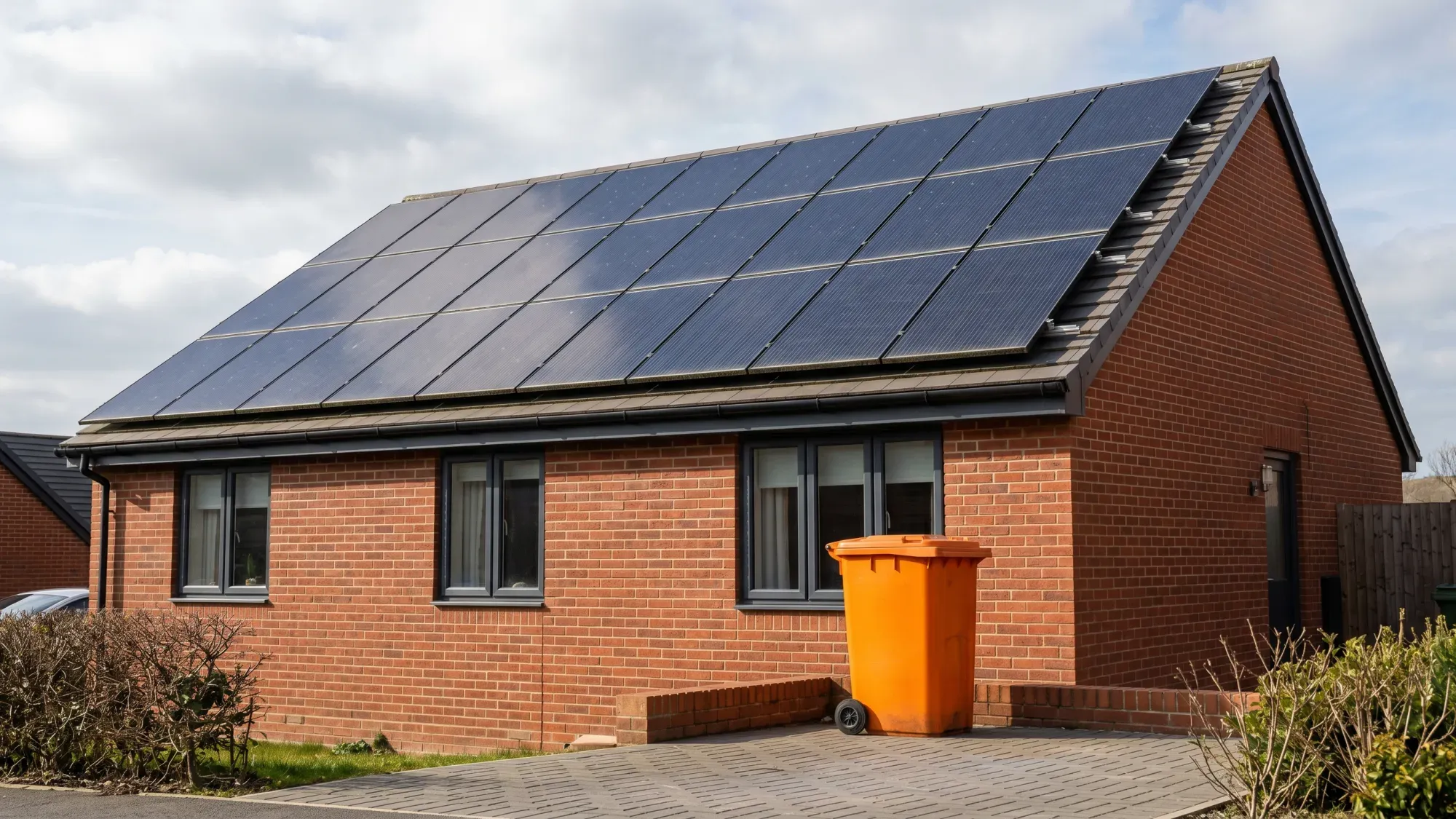
Investing in renewable energy for your home offers a tangible path to reducing energy bills, increasing energy independence, and enhancing your property's value. For homeowners, this means looking beyond financial market investments and focusing on practical, on-property solutions like solar panels, home battery storage, and EV chargers. These upgrades allow you to generate your own power, giving you more control over your energy future.
Making your home more energy efficient with renewables can significantly cut your bills. Fuse Energy provides clear pricing and real-time usage data through our app, helping you manage your energy consumption effectively. Click here to see how Fuse Energy can support your renewable energy journey.
Enter your address to get a quote and see how much you could save
Why invest in home renewable energy?
Generating your own clean electricity directly at home provides multiple benefits, from immediate financial savings to long-term environmental contributions.
Reduce energy bills and achieve independence
By installing renewable energy systems, you can significantly cut down on the amount of electricity you purchase from the grid. According to Ofgem's medium typical domestic consumption value, the average UK home uses around 2,500 kWh of electricity per year. With the Ofgem Price Cap for electricity at 26.11p per kWh (inclusive of 5% VAT) for 1 July to 30 September 2026, generating your own power can lead to substantial savings on your energy bills. This also provides a buffer against future energy price fluctuations, offering greater energy independence.
Increase property value
Homes equipped with renewable energy systems are often more attractive to buyers. Features like solar panels, EV charging points, and home battery storage can increase a property's market value and appeal, making your home a more desirable asset.
Contribute to a greener future
Beyond the personal financial gains, investing in home renewable energy plays a crucial role in reducing your carbon footprint. By generating clean electricity, you contribute to a lower demand for fossil fuels and support the UK's transition to a more sustainable energy system.
Practical renewable energy options for homeowners
A range of technologies is available for homeowners looking to integrate renewable energy into their properties, including solar panels, home battery storage, and electric vehicle (EV) chargers. Air source heat pumps, for instance, can achieve efficiencies of 300% or more, moving existing heat rather than burning fuel.
Solar panels and plug-in solar
Rooftop solar panels are a well-established method for generating electricity. However, for those seeking a more accessible entry point, plug-in solar technology is now legally permitted in the UK. Since 27 August 2026, SI 2026/848 has applied to compliant plug-in solar systems, allowing them to connect via a standard wall socket. These kits have an 800W alternating current (AC) export limit per device.
What is plug-in solar?
Plug-in solar is a small solar panel and inverter system that connects to a standard wall socket, making it portable and suitable for various outdoor spaces like balconies or gardens. It converts sunlight into electricity for immediate home use, reducing reliance on grid power without needing professional installation.
After installing a plug-in solar system, the consumer or their supplier must notify the Distribution Network Operator (DNO) under G98 regulations within 28 days of installation. This notification ensures the network operator is aware of the generation connected to the grid. It's important to note that SI 2026/848 covers standalone plug-in solar only and does not extend to plug-in batteries or hybrid solar-battery systems.
Home battery storage
Pairing solar panels with home battery storage allows you to store excess electricity generated during the day for use later, such as in the evening or during peak demand. This maximises your self-consumption of renewable energy, further reducing your reliance on the grid and potentially lowering bills. Batteries can also be charged during off-peak hours when electricity is cheaper, providing additional savings.
Electric vehicle (EV) chargers
Installing an EV charger at home offers convenience and can integrate with your renewable energy system. If you have solar panels and battery storage, you can charge your electric vehicle with self-generated clean energy, enhancing your home's energy ecosystem. Fuse Energy offers installation of the Easee One EV charger for £899, including full installation and a 3-year warranty.
UK grants and incentives for home renewables
The UK government provides various grants and incentives to encourage the adoption of home renewable energy technologies.
Government schemes for solar and batteries
While specific grants for general home solar and battery installations can vary, it's worth researching schemes like the Smart Export Guarantee (SEG). However, self-installed plug-in solar kits do not qualify for SEG, as it requires Microgeneration Certification Scheme (MCS) certification. Even without SEG, unused generation can still be paid under a supplier export tariff outside the SEG scheme, though self-consumption remains the primary saving.
EV Chargepoint grants
The Office for Zero Emission Vehicles (OZEV) offers grants to support the installation of electric vehicle chargepoints. The EV Chargepoint Grant for renters and flat owners provides up to £500 towards installation costs, as specified by OZEV. This grant is specifically for those who own and live in a flat, or rent any residential property, and have private off-street parking. It's crucial to understand that typical homeowners who own and live in a house with off-street parking are not eligible for this particular domestic grant.
Understanding grid export payments
When your home renewable energy system generates more electricity than you consume, the surplus can be exported to the grid. While self-installed plug-in solar systems are not eligible for the SEG, some energy suppliers may offer their own export tariffs for this excess generation. The main financial benefit, however, comes from consuming the electricity you generate yourself, thereby reducing the amount you need to buy from your supplier.
Your step-by-step guide to investing in home renewables
Making the switch to home renewable energy is a process that involves assessment, selection, and compliance.
Assess your home's potential
Begin by evaluating your home's suitability for different renewable technologies. Consider factors like roof orientation and shading for solar panels, available space for battery storage, and electrical capacity for EV chargers. You might also want to analyse the running cost of an air source heat pump if you're considering that technology.
Choose the right technology and installer
Research the renewable energy options that best fit your needs and budget. For more complex installations like rooftop solar or wired battery systems, select a reputable installer. For plug-in solar, you can consider self-installation, but ensure the product is compliant with UK regulations. If you're exploring options for efficient heating, understanding the air source heat pump grant can be beneficial.
Navigate regulations and notifications
Understand the regulatory requirements for your chosen system. For plug-in solar, remember to notify your DNO under G98 within 28 days of installation. For larger systems, different regulations may apply.
Maximise your investment
Once installed, monitor your energy generation and consumption to ensure you are maximising your savings. Adjust your energy usage patterns to align with your generation, such as running appliances when your solar panels are producing electricity. This proactive approach helps you get the most out of your home renewable energy investment.
Ready to take control of your home energy? Fuse Energy offers smart tariffs and an intuitive app to help you make the most of your renewable energy investments. Our clear pricing and 24/7 human support make managing your energy simple. Switch to Fuse Energy today and start optimising your energy usage. Click here to get started. You can also learn more about our mission to provide sustainable energy by clicking here.
Disclaimer
For the avoidance of doubt, this article is provided for informational purposes only and is not intended to constitute legal or financial advice. The author and/or Fuse Energy shall not be responsible for any losses arising out of any reliance on the information contained herein.