Investing in green energy for your home
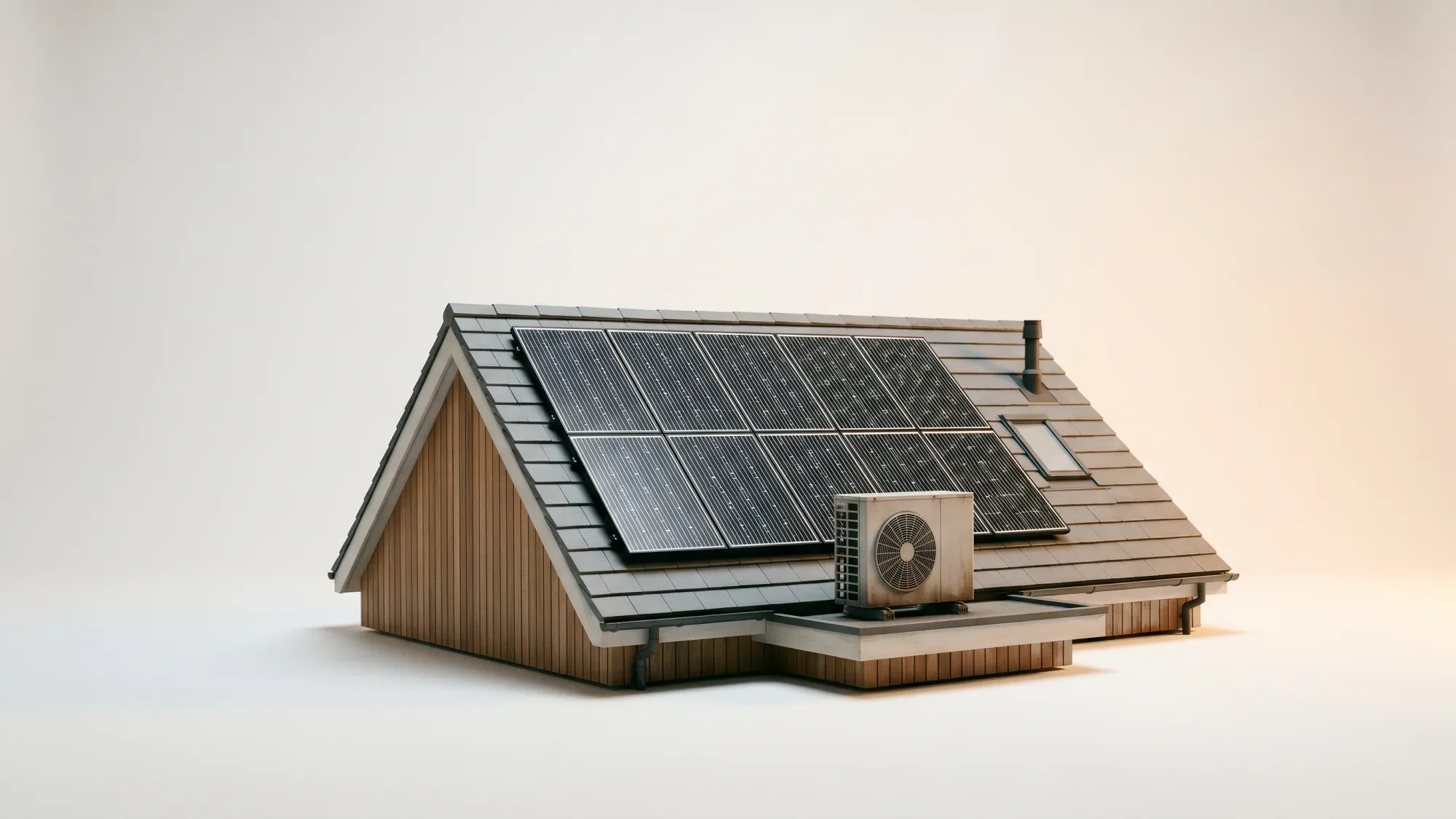
Investing in green energy offers homeowners both financial returns and significant environmental benefits. This article outlines practical home-based solutions and broader financial avenues, empowering you to make informed decisions for a sustainable future.
If you are considering home energy upgrades, understanding your energy usage is key. Fuse Energy provides clear pricing and in-App usage data to help you manage your home's energy.
Thinking about Investing in green energy for your home? With Fuse Energy, you get clear pricing, real-time usage data, 24/7 human customer support, and a modern energy experience designed around you. Signing up takes just a few minutes, so you can take control of your bills from day one. Click here to switch to Fuse Energy today and start saving.
Enter your address to get a quote and see how much you could save
Why invest in green energy?
Choosing to invest in green energy is a strategic decision that extends beyond environmental stewardship. It provides a pathway to financial resilience and greater energy independence for your home. The UK's energy market is actively transitioning towards sustainable solutions, creating direct opportunities for domestic investment.
Environmental impact and sustainability
Directly reducing your carbon footprint is a primary benefit of green energy investment. By supporting renewable sources, you contribute to national and global efforts to combat climate change, lessening reliance on fossil fuels and promoting cleaner air. This commitment helps foster a broader societal shift towards sustainability.
Financial returns and energy independence
Green energy investments can deliver tangible financial returns. Home-based solutions, such as solar panels, can significantly reduce your electricity bills. The average UK home uses around 2,500 kWh of electricity per year. With the Ofgem price-cap default tariff for electricity from 1 July to 30 September 2026 at 26.11p per kWh, reducing grid reliance translates directly into savings. Furthermore, these upgrades can increase your property's value and provide greater control over your energy supply, shielding you from market fluctuations.
Home-based green energy investments
Home-based green energy solutions offer a direct and effective way to invest in your energy future, providing immediate benefits and increased control over your consumption.
Solar panels and battery storage
Installing solar panels on your roof allows you to generate your own electricity, reducing your reliance on the grid. Pairing solar with battery storage enables you to store excess energy generated during the day for use in the evenings or when generation is low. This maximises self-consumption and further reduces your electricity bills. While rooftop solar requires professional installation, the long-term savings and increased energy independence make it a compelling investment.
Electric vehicle (EV) chargers
For electric vehicle owners, installing a home EV charger is a practical green energy investment. It offers convenience and can significantly reduce running costs, especially when paired with a dual-rate variable tariff that benefits EV charging. Fuse Energy offers installation of the Easee One EV charger, which can be purchased through the Fuse App or website for £899, including full installation and a 3-year warranty.
Plug-in solar for accessible energy generation
Plug-in solar offers an accessible entry point into home energy generation. These small solar panel and inverter systems plug into a standard wall socket, requiring no electrician or permanent installation. They are portable and suitable for various outdoor spaces like gardens, balconies, or patios. SI 2026/848 has applied to compliant plug-in solar since 27 August 2026, allowing connection via a standard BS 1363 plug with an 800W AC export limit per device. This legal change permits self-installation, making green energy generation more widely available. You or your supplier must notify your Distribution Network Operator (DNO) under G98 within 28 days of installation.
What is plug-in solar?
Plug-in solar is a compact solar panel system that connects directly to a standard wall socket, allowing homeowners to generate their own electricity without complex installation. It helps offset base-load energy consumption, reducing reliance on grid electricity. The legal framework for compliant plug-in solar in the UK was established on 27 August 2026.
Government support and grants for home energy upgrades
The UK government offers various incentives to encourage homeowners to adopt green energy technologies, making these investments more financially viable.
Smart Export Guarantee (SEG)
The Smart Export Guarantee (SEG) provides payments for electricity exported to the grid from eligible renewable energy systems, such as rooftop solar panels. While plug-in solar systems do not typically qualify for SEG due to certification requirements, some energy suppliers may offer their own export tariffs for unused generation. Self-consumption, however, remains the primary saving for plug-in solar users.
EV chargepoint grants
The Office for Zero Emission Vehicles (OZEV) provides grants to support the installation of EV chargepoints. The EV Chargepoint Grant for renters and flat owners offers up to £500 towards installing a chargepoint, provided they have private off-street parking. There are also grants for households with on-street parking, landlords, and workplaces. It is important to note that a generic domestic OZEV grant is no longer available for all homeowners with off-street parking; eligibility criteria are specific.
Other potential incentives
Beyond SEG and EV chargepoint grants, other incentives may be available depending on your location and specific circumstances. You might also find support for specific technologies, such as an air source heat pump grant. These can include local authority schemes or broader government programmes aimed at improving home energy efficiency. Always check the latest eligibility criteria and application processes for any grants or support.
Broader financial investments in green energy
For those looking to invest in green energy beyond their home, the financial markets offer several avenues to support the sector's growth.
Stocks and shares
Investing in individual companies within the green energy sector, such as renewable energy developers, technology providers, or sustainable infrastructure firms, allows you to directly support their growth. This approach requires careful research into company performance, market trends, and risk factors.
Green funds and ETFs
Green funds and Exchange Traded Funds (ETFs) offer a diversified way to invest in the green energy sector. These funds pool money from multiple investors to buy shares in a range of companies involved in renewable energy, clean technology, and sustainable practices. This diversification can help mitigate risk compared to investing in single stocks.
Green bonds
Green bonds are debt instruments issued by governments, organisations, or companies to finance environmentally friendly projects. Investing in green bonds allows you to support specific green initiatives while potentially earning a fixed return. They are a way to contribute to sustainable development through fixed-income investments.
Optimising your green energy investments
Making the most of your green energy investments requires a strategic approach, focusing on understanding your energy patterns and planning for the long term.
Understanding your energy usage
To effectively optimise your green energy investments, you need a clear picture of your home's energy consumption. Analysing your usage patterns helps you determine the most suitable technologies and how to maximise their benefits. Understanding your home's energy profile, including factors like air source heat pump efficiency, is crucial for making informed decisions. For instance, understanding when you use the most electricity can inform the sizing of a solar and battery system.
Maximising self-consumption
For home-based generation like solar, maximising self-consumption is key to financial returns. This means using the electricity you generate directly in your home rather than exporting it to the grid. Strategies include running appliances during daylight hours when solar panels are most active or using battery storage to save excess generation for later.
Long-term planning and property value
Green energy investments are a long-term commitment. Planning for future energy needs, such as acquiring an EV or installing a heat pump, can help you integrate your green energy systems more effectively. Considering the running costs of an air source heat pump can help you plan for future energy needs. These upgrades not only reduce your running costs but also enhance your property's value and appeal in an increasingly sustainability-conscious market. A 2 MW onshore wind turbine, for example, operating at a 27% capacity factor, produces approximately 4,700 MWh (4,700,000 kWh) per year, enough to power around 1,880 average UK homes (based on 2,500 kWh per home per year). This illustrates the significant potential of renewable energy to meet demand.
Taking control of your home's energy and making smarter green investments is easier with the right support. Fuse Energy offers clear pricing, real-time usage data, and 24/7 human customer support to help you manage your energy effectively. Switch to Fuse Energy today and start your journey towards a more sustainable and cost-efficient home. Click here to get started.
Disclaimer
For the avoidance of doubt, this article is provided for informational purposes only and is not intended to constitute legal or financial advice. The author and/or Fuse Energy shall not be responsible for any losses arising out of any reliance on the information contained herein.