Insulation board: your guide to a warmer, cheaper home
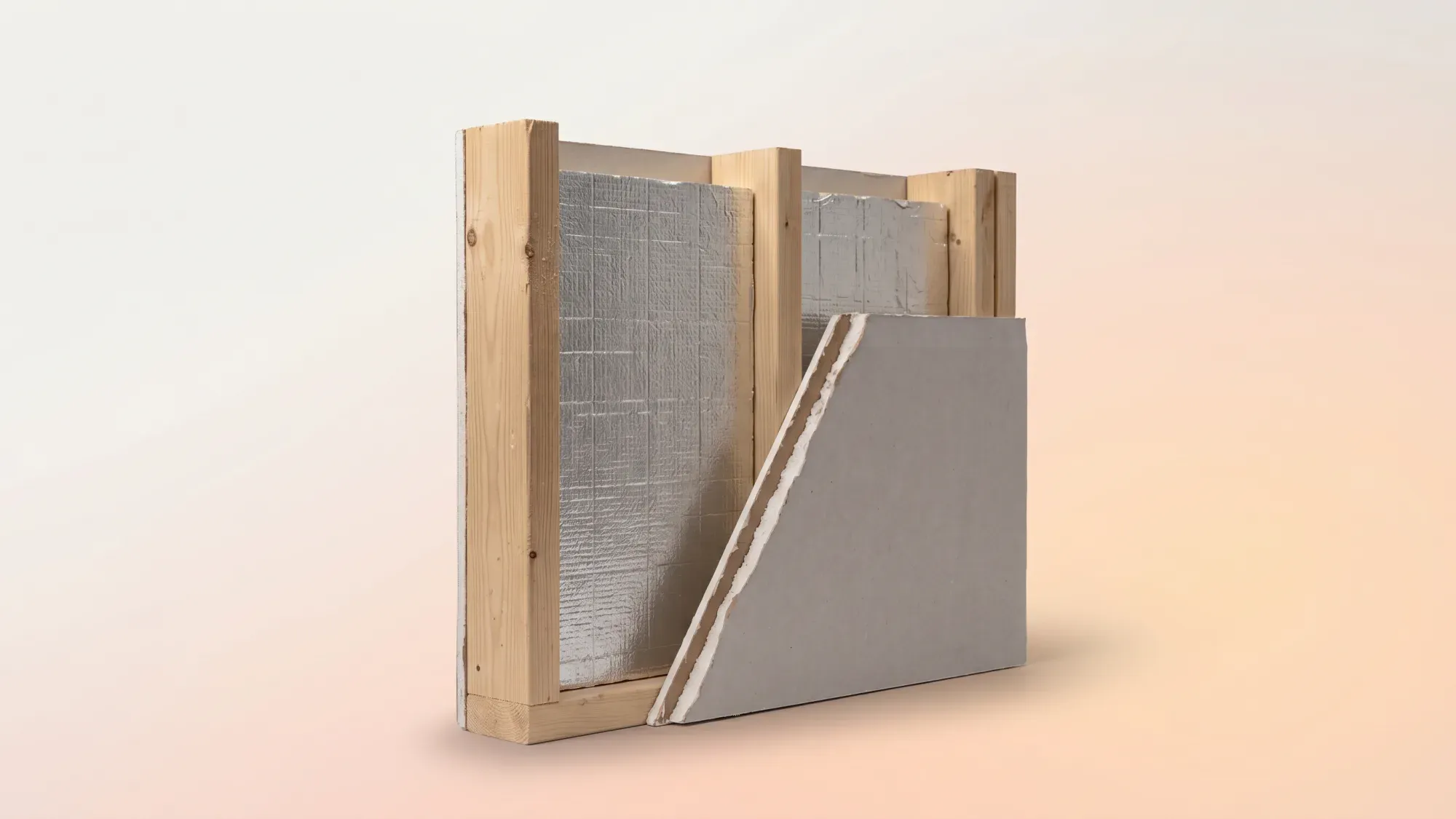
Insulating your home well is crucial for maintaining comfortable temperatures and ensuring energy efficiency, directly impacting your heating bills. Insulation boards offer a rigid, effective solution for various areas of your home, from roofs and walls to floors.
Improving your home's energy efficiency, starting with good insulation, can lead to significant savings on your energy bills. Fuse Energy offers clear pricing and smart tools to help you manage your energy use effectively. Click here to switch to Fuse Energy today.
Enter your address to get a quote and see how much you could save
Understanding insulation board for UK homes
What is insulation board and how does it work?
Insulation board, also known as rigid foam insulation, consists of stiff panels typically made from materials such as polyisocyanurate (PIR), expanded polystyrene (EPS), or extruded polystyrene (XPS). These boards are designed to create a barrier that reduces heat transfer through building elements like walls, floors, and roofs. Their closed-cell structure traps air, slowing the movement of heat and helping to keep indoor spaces warmer in winter and cooler in summer. This process works by resisting heat transfer through conduction (direct contact), convection (movement of fluids like air), and radiation (electromagnetic waves).
Why home insulation is crucial for energy efficiency
Effective home insulation is a cornerstone of energy efficiency, helping to reduce heat loss and lower energy consumption. Without adequate insulation, a significant amount of heat can escape from a home, forcing heating systems to work harder to maintain a comfortable indoor temperature. For example, an uninsulated home can lose around 25% of its heat through the roof and up to 35% through the walls, according to the Energy Saving Trust. Improving insulation can lead to substantial reductions in heating costs and a more stable indoor climate, making your home feel warmer for longer.
Types of insulation board explained
Insulation boards come in various types, each with distinct properties suited for different applications. The most common rigid insulation boards in the UK are PIR, XPS, and EPS.
PIR insulation board: high performance for various applications
Polyisocyanurate (PIR) insulation boards are a popular choice due to their high thermal efficiency. They are made by reacting two liquid chemicals with a blowing agent, creating a closed-cell foam structure. PIR boards typically have a low thermal conductivity, making them highly effective at preventing heat transfer. This high performance means that PIR can achieve good thermal resistance with less thickness compared to some other insulation types, making it ideal for applications where space is limited. PIR boards are versatile and can be used for insulating roofs, walls, and floors.
XPS insulation board: ideal for damp environments and load-bearing
Extruded polystyrene (XPS) insulation boards are characterised by their uniform closed-cell structure, which gives them high compressive strength and excellent moisture resistance. This makes XPS particularly suitable for applications where it might be exposed to moisture, such as below-ground insulation for basement walls or beneath floor slabs. XPS boards typically offer a compressive strength of 200-700 kPa, depending on the grade, allowing them to withstand significant pressure.
EPS insulation board: cost-effective and versatile
Expanded polystyrene (EPS) insulation boards are a lightweight and cost-effective option. They are made from expanded foam beads, resulting in a distinctive structure that is easy to handle and cut. While generally offering moderate thermal performance compared to PIR, EPS can still provide effective insulation when installed correctly and in appropriate thicknesses. EPS is often chosen for solid wall insulation systems, floor insulation, and filling cavities.
Comparing insulation board types: PIR vs XPS vs EPS
When selecting an insulation board, understanding the differences between PIR, XPS, and EPS is key. PIR generally offers the best thermal performance per millimetre, making it efficient for space-constrained areas. XPS excels in moisture resistance and compressive strength, making it ideal for damp or load-bearing applications. EPS is typically the most economical choice, suitable for projects where budget is a primary concern and thickness is less restricted.
What is the R-value of 100mm PIR insulation?
For 100mm PIR insulation, the R-value is approximately 4.50 m²K/W. This figure indicates its thermal resistance, with higher R-values signifying better insulating properties. It's a common choice for effective insulation in the UK, offering a good balance of performance and thickness.
Benefits of effective insulation board
Significant reductions in heating bills and energy consumption
One of the most compelling benefits of installing effective insulation board is the potential for significant reductions in heating bills. By minimising heat loss, your heating system doesn't need to work as hard, leading to lower energy consumption. Improving home insulation can reduce annual heating bills by hundreds of pounds for an average UK household, though the exact savings depend on the property and existing efficiency. For instance, cavity wall insulation could save around £200 a year, according to the Energy Saving Trust.
Enhancing indoor comfort and reducing draughts
Beyond financial savings, insulation boards contribute to a more comfortable living environment. They help maintain stable indoor temperatures, making rooms feel warmer in winter and cooler in summer. This consistent temperature reduces the need for constant heating adjustments and can significantly cut down on draughts, creating a cosier home.
Contributing to a more sustainable home
By reducing energy consumption, effective insulation also plays a vital role in making your home more sustainable. Lower energy use means a smaller carbon footprint, contributing to a greener future. This aligns with broader efforts to reduce domestic energy use and its environmental impact.
Choosing the right insulation board for your project
Selecting the appropriate insulation board involves considering several factors specific to your home and project.
Key factors: r-value, u-value, and thickness
The effectiveness of an insulation board is primarily measured by its R-value (thermal resistance) and U-value (overall heat transfer coefficient). A higher R-value indicates better insulating properties, meaning the material resists heat flow more effectively. Conversely, a lower U-value signifies less heat loss through a building component. The thickness of the insulation board directly impacts its R-value; generally, a thicker board will have a higher R-value.
Applications: wall insulation, floor insulation, and roof insulation
Different areas of your home have varying insulation needs:
- Wall insulation: Up to 35% of heat can be lost through uninsulated walls in a typical UK home. Insulation boards are effective for both internal and external wall applications, helping to significantly reduce this heat loss.
- Floor insulation: XPS boards, with their high compressive strength and moisture resistance, are often chosen for floor insulation, especially in areas prone to dampness or where load-bearing is a concern.
- Roof insulation: Insulation boards are widely used for roofs, helping to prevent the significant heat loss that can occur through this area of a home.
Considering fire safety and moisture resistance
Fire safety is a critical consideration for any insulation material. Some insulation boards, such as PIR, offer good fire resistance. Other options like gypsum-based or mineral wool boards are specifically designed for enhanced fire safety. Moisture resistance is also crucial, particularly for areas like basements or foundations. XPS insulation boards are known for their ability to resist moisture absorption, making them suitable for damp environments.
Installation considerations and best practices
Proper installation is as important as choosing the right insulation board to ensure optimal performance.
DIY vs professional installation: what to consider
While some insulation tasks, like topping up loft insulation, might be suitable for a confident DIYer, more complex installations, such as wall or floor insulation, often benefit from professional expertise. Incorrect installation, including leaving gaps or failing to seal joints, can create thermal bridges that reduce the overall effectiveness of the insulation. It is always advisable to consult manufacturer guidelines or consider hiring a qualified professional for optimal results.
Addressing common challenges: thermal bridging and vapour control
Thermal bridging occurs when there are breaks in the insulation layer, allowing heat to bypass the insulating material. This can happen at junctions between building elements or around windows and doors. Proper detailing and sealing are essential to minimise thermal bridging. Vapour control layers may also be necessary in certain applications to manage moisture movement through the building structure, preventing condensation and potential damp issues.
Compliance with UK building regulations (Part l)
All insulation installations in the UK must comply with Part L of the Building Regulations. These regulations set standards for the conservation of fuel and power in new and existing buildings, ensuring that insulation measures meet specific energy efficiency targets. Adhering to these regulations is not only a legal requirement but also ensures that your insulation performs effectively.
Maximising your home's overall energy efficiency
Insulation board is a powerful tool, but it's most effective when integrated into a broader strategy for home energy efficiency.
Integrating insulation with other home improvements
Consider insulation as a foundational step. Once your home is well-insulated, other energy-Saving measures, such as upgrading to efficient windows and doors, improving heating systems, or installing smart energy management controls, will perform even better. This holistic approach ensures that your home retains heat effectively and uses energy wisely.
The long-term value of a well-insulated home
A well-insulated home offers long-term benefits that extend beyond immediate energy savings. It contributes to increased property value, a more comfortable living space, and reduced maintenance costs associated with dampness or condensation. Furthermore, improving your home's energy efficiency can make it more attractive to potential buyers and aligns with the UK's commitment to sustainability.
Conclusion
Choosing the right insulation board for your UK home is a significant step towards a warmer, more energy-efficient future. By understanding the different types of insulation board, their benefits, and key installation considerations, you can make informed decisions that reduce your heating bills, enhance your comfort, and contribute to a more sustainable home. This foundational improvement empowers you to have more control over your energy use, aligning with a future where you have power to play with.
Managing your energy bills should be clear and easy to understand. Fuse Energy focuses on straightforward pricing, so you can see exactly what you're paying without unnecessary complexity. If you have a smart meter, you can view detailed usage data through the app or website, helping you understand how you can lower your bills. Our 24/7 human support team is always on hand with fast response times whenever you need help. Click here to switch to Fuse Energy today. Find out about our mission by clicking here.
Disclaimer
For the avoidance of doubt, this article is provided for informational purposes only and is not intended to constitute legal or financial advice. The author and/or Fuse Energy shall not be responsible for any losses arising out of any reliance on the information contained herein.