How many solar panels do I need?
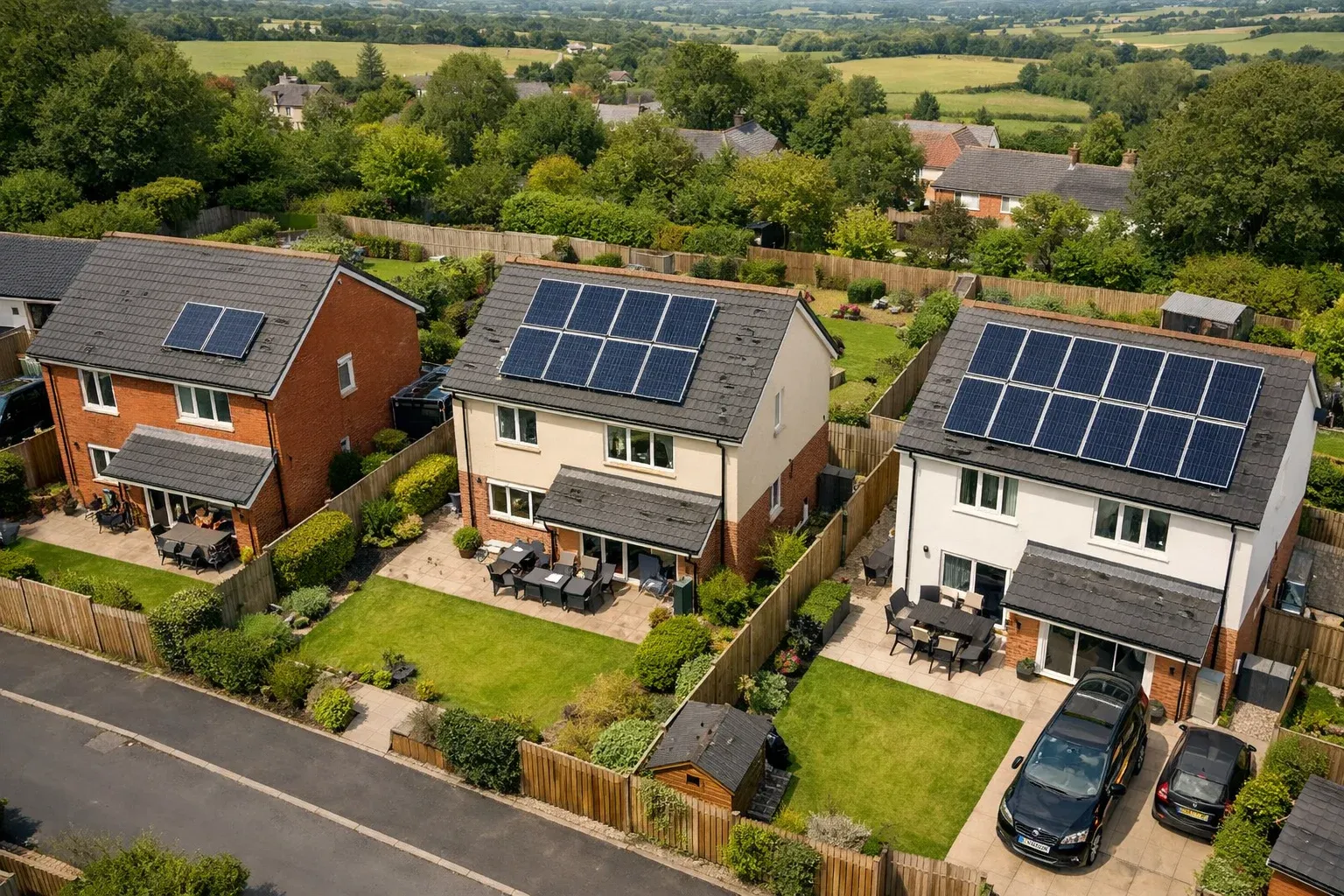
Determining the optimal number of solar panels for your home is the first step towards generating your own clean energy and potentially reducing your electricity bills. This guide will help you understand the key factors involved in sizing a solar photovoltaic (PV) system for a UK household, ensuring you maximise your investment.
Understanding your home's energy needs
Accurately assessing your energy consumption is fundamental to calculating how many solar panels you need. Without this, you risk installing a system that is either too small to meet your demands or larger than necessary, leading to inefficient investment.
Assessing current electricity consumption
The most reliable way to understand your current electricity usage is by reviewing past energy bills or checking your smart meter data. These sources will show your consumption in kilowatt-hours (kWh) over various periods (daily, monthly, annually). The average UK home uses around 2,500 kWh of electricity per year, which is Ofgem's medium typical domestic consumption value (TDCV) effective from 1 July 20261. This equates to roughly 6.8 kWh per day or approximately 208 kWh per month. This figure serves as a useful benchmark, though individual usage can vary significantly based on household size, appliance use, and property type. Understanding what a kilowatt-hour (kWh) is can further help you interpret your energy usage.
Considering future energy demands
Looking ahead is crucial. Your energy needs might increase if you plan to:
- Purchase an electric vehicle (EV) and install a home charger. For more information, see our guide on EV charging at home.
- Install a heat pump, which uses electricity to provide heating and hot water.
- Expand your household or add new high-energy-consuming appliances.
Factoring in these potential changes will help you design a solar system that remains adequate for years to come, avoiding the need for costly upgrades later.
Key factors influencing solar panel count
Beyond your household's energy consumption, several physical and technical factors dictate the number of solar panels you can, and should, install.
Roof space and orientation
The available, unshaded area on your roof is a primary constraint. A standard residential solar panel in the UK measures around 1.72 metres by 1.13 metres, covering approximately 1.94 square metres. South-facing roofs generally offer the most efficient placement for solar panels in the UK, maximising sunlight exposure throughout the day. However, east or west-facing roofs can still be viable, especially if you want to generate power during morning or evening peak times.
Panel efficiency and wattage
Modern solar panels typically have a wattage output ranging from 350W to 450W per panel. Higher wattage panels generate more electricity per square metre, meaning you might need fewer panels to achieve your desired output if roof space is limited. For example, a 400W panel can produce between 350 and 450 kWh per year in the UK, depending on conditions.
What is panel wattage?
Panel wattage, measured in Watts (W), indicates the maximum electrical power a solar panel can produce under ideal conditions. A higher wattage means the panel can generate more electricity, making it a key factor in determining how many panels are needed to meet a specific energy demand.
Shading and local climate
Shading from trees, neighbouring buildings, or even chimneys can significantly reduce a solar panel system's efficiency. Even partial shading on one panel can impact the output of an entire string of panels. While the UK climate is often perceived as cloudy, solar panels still generate electricity on overcast days. However, regions with higher average sunlight hours will naturally yield more electricity from the same system size.
Calculating your solar panel requirements
Determining the right number of panels involves a straightforward calculation once you have your key figures.
Step-by-step calculation guide
- Determine your annual electricity consumption: Find this on your energy bills or smart meter data. The average UK home uses around 2,500 kWh per year.
- Estimate annual panel output: A modern 400W solar panel in the UK can produce approximately 350 to 450 kWh per year. For a more precise estimate, consider your specific location, roof orientation, and potential shading.
- Calculate total panels needed: Divide your annual electricity consumption by the estimated annual output of a single panel.
- Example: If you use 2,500 kWh per year and each 400W panel produces 350 kWh annually, you would need 2,500 kWh / 350 kWh/panel ≈ 7.14 panels. This suggests you would likely need 8 panels.
This calculation provides a theoretical starting point. Real-world factors and professional advice will refine this number.
Common system sizes for UK homes
A typical 3-5 kW solar panel system, common for UK homes, usually consists of 8 to 16 panels, depending on individual panel wattage. For instance, a 4kW system, often made up of 10-14 panels, can generate around 3,400-4,200 kWh per year, potentially covering a significant portion of an average UK home's electricity needs.
Maximising your solar investment with Fuse Energy
Once your solar panels are installed, the journey to energy independence does not end. Optimising how you use and export your generated electricity is key to maximising your investment.
Smart tariffs and export mechanisms
The Smart Export Guarantee (SEG) is a government-backed scheme, launched on 1 January 2020, that requires licensed electricity suppliers to pay homeowners for surplus renewable electricity exported to the grid. This means you can earn money for any energy your panels generate but your home does not immediately use. To qualify for SEG payments, your installation must be MCS-certified. Fuse Energy helps homeowners maximise the financial and environmental benefits of their solar panels through smart tariffs and export mechanisms, making your investment truly powerful. Our smart tariffs are designed to work with your solar generation, allowing you to manage and optimise your energy usage and export.
Battery storage and energy independence
Integrating battery storage with your solar panel system allows you to store excess electricity generated during the day for use later, such as in the evenings or overnight. This increases your self-consumption, reducing reliance on grid electricity and further enhancing your energy independence. Batteries can also play a role in optimising your SEG payments by allowing you to export power when prices are most favourable.
Getting a professional solar assessment
While online calculators and guides provide a useful starting point, a professional assessment is indispensable for a precise and tailored solar system design.
Why consult an MCS-certified installer
It is crucial to consult with a qualified, MCS-certified solar installer. The Microgeneration Certification Scheme (MCS) is a quality assurance scheme that certifies renewable energy products and installers in the UK. Choosing an MCS-certified installer ensures that your system meets strict standards for safety, workmanship, and product quality, and is a requirement for accessing SEG payments.
What to expect from a solar survey
A professional solar survey will typically involve:
- A detailed analysis of your roof's structure, size, orientation, and any potential shading issues.
- An assessment of your household's current and projected energy consumption.
- Recommendations for the optimal number and type of panels, inverter, and battery storage solutions.
- A comprehensive quotation, including expected generation, savings, and payback period.
This tailored approach ensures your solar panel system is perfectly matched to your home and energy goals.
Calculating your solar panel needs is a significant step towards a more sustainable and cost-effective home. By understanding your energy consumption, evaluating your roof's potential, and consulting with MCS-certified professionals, you can design a system that not only meets your current demands but also prepares you for future energy needs. Once your panels are installed, Fuse Energy can help you maximise the value of every kilowatt-hour you generate, turning your solar investment into real power you can play with.
References
Disclaimer
For the avoidance of doubt, this article is provided for informational purposes only and is not intended to constitute legal or financial advice. The author and/or Fuse Energy shall not be responsible for any losses arising out of any reliance on the information contained herein.