How long does it take to charge an electric car?
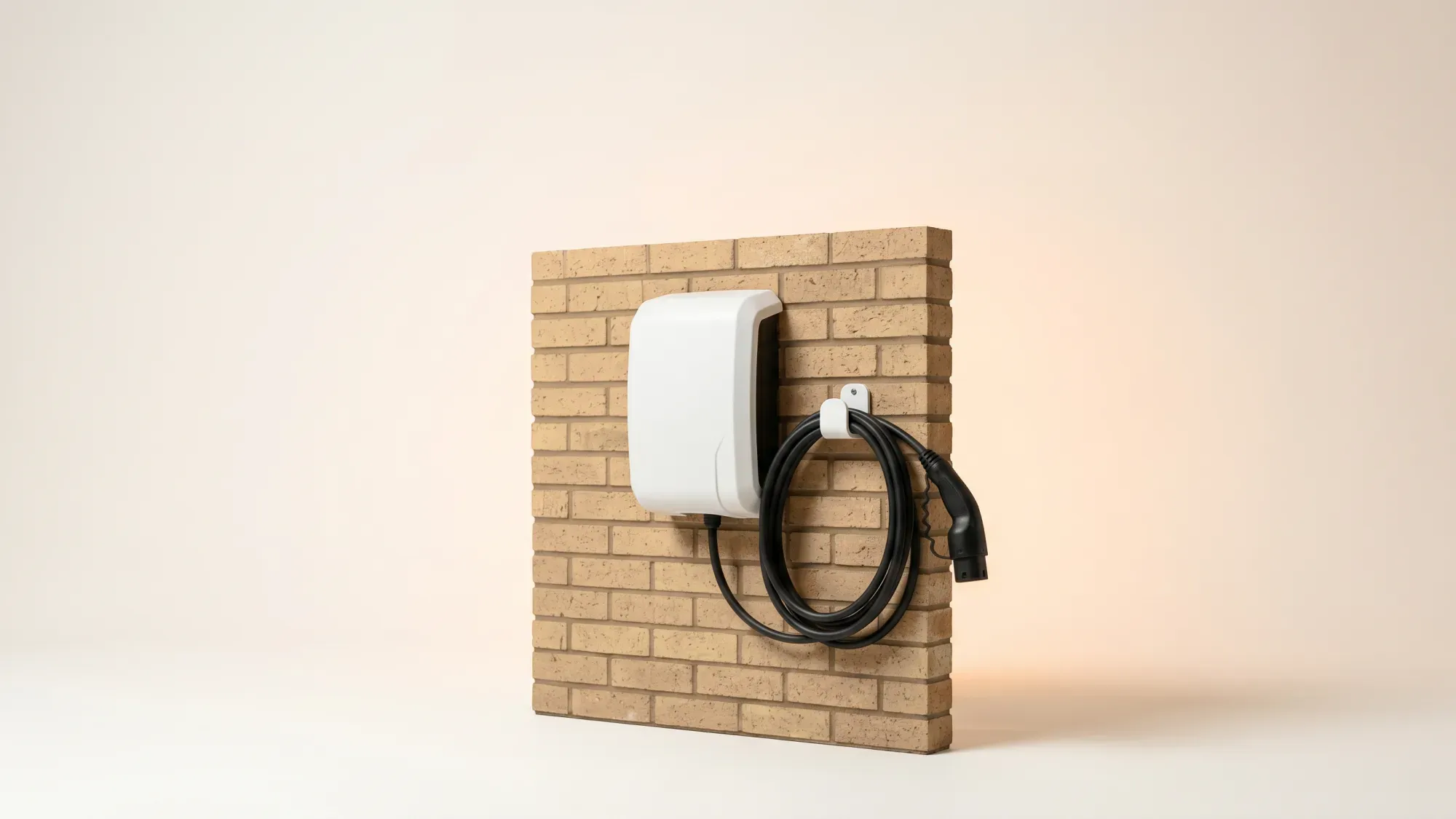
Charging an electric car can take anywhere from around 20 minutes to over 30 hours, depending on the charger type, the car's battery size, and its current State of Charge (SoC). Understanding these variables is key to effectively managing your electric vehicle (EV) and planning your journeys.
For a smoother EV charging experience at home, consider switching to Fuse Energy. We offer dual-rate variable tariffs designed to help you make the most of off-peak charging, allowing you to power your EV more affordably. Click here to switch to Fuse Energy today.
Enter your address to get a quote and see how much you could save
Understanding electric car charging speeds
Electric vehicle charging speeds are categorised by power output, measured in kilowatts (kW), and the energy stored in the battery, measured in kilowatt-hours (kWh). The higher the kW, the faster the charge, while kWh indicates the battery's capacity.
The basics of kW and kWh in electric vehicle charging
Kilowatts (kW) represent the rate at which energy is delivered to your car, essentially how fast it charges. Kilowatt-hours (kWh) measure the battery's capacity, indicating how much energy it can store. Think of kW as the speed of a tap filling a bucket, and kWh as the size of the bucket itself. A larger battery (more kWh) will naturally take longer to fill, even with a powerful charger.
AC vs DC charging: what's the difference?
EV charging primarily uses two types of electricity: Alternating Current (AC) and Direct Current (DC). AC charging is typically slower and is what you will find in home wallboxes and many public charging points. Your car's onboard converter changes the AC to DC for the battery. DC charging, often called rapid or ultra-rapid charging, bypasses the car's onboard converter and feeds DC power directly to the battery, making it significantly faster. You will usually find DC chargers at public rapid charging stations.
Key factors influencing charging time
Several factors determine how long it takes to charge an electric car. Understanding these helps you predict charging times more accurately.
Battery size and State of charge (SoC)
The larger your EV's battery capacity (measured in kWh), the more energy it can store, and generally, the longer it will take to charge fully. Similarly, the current State of Charge (SoC) plays a significant role. Charging to a high percentage is often faster than charging the final few percent, as most EVs slow down their charging rate to protect the battery as it approaches full capacity. The charging rate typically slows down significantly after 80% SoC because the battery management system reduces power to protect the battery and ensure longevity.
Charger type and power output (kW)
The power output of the charger, measured in kW, directly impacts charging speed. A typical home charger, often around 7 kW, will take considerably longer to charge a battery than a rapid charger, which can range from 50 kW to over 350 kW. Matching the charger's power to your needs is crucial for efficient charging.
Vehicle's maximum charging rate
Even if you connect your EV to a powerful rapid charger, your car will only charge at its maximum accepted charging rate. For example, if your car can only accept a maximum charging rate of 50 kW, connecting it to a 150 kW charger will not make it charge any faster than 50 kW. Always check your vehicle's specifications.
Environmental conditions and battery health
Cold weather can slow down charging speeds, especially for rapid charging, as the battery management system needs to warm the battery to an optimal temperature. Over time, battery health can also degrade slightly, potentially affecting its charging efficiency and capacity.
Typical electric car charging times by charger type
Charging speeds are broadly categorised into slow, fast, and rapid, each suited to different scenarios.
Slow charging: 3-pin plugs and dedicated sockets
Slow charging typically uses a standard domestic 3-pin plug, delivering around 2.3 kW, or a dedicated slow charging socket, which might offer up to 3.6 kW. This is the slowest method, often taking 12-30 hours or more for a full charge, depending on battery size. It is best suited for overnight charging or when you have extended periods where your car is parked.
Fast charging: home wallboxes and Public AC
Fast charging is the most common method for home charging, typically via a 7 kW wallbox. Public AC charging points can also offer 7 kW or 22 kW. A 7 kW charger can fully charge many EVs overnight, typically taking 6 to 12 hours for a 60-80 kWh battery, while a 22 kW charger, often found in public or workplace settings, can significantly reduce this time, provided your car can accept that higher AC rate.
Rapid charging: public DC chargers
Rapid chargers use DC power and are found at public charging stations, typically along motorways or at service areas. These chargers typically range from 50 kW to 350 kW, drastically cutting down charging times. A 50 kW rapid charger can add a significant amount of range in about an hour to reach 80% SoC, while ultra-rapid chargers (100 kW to 350 kW) can get many EVs to 80% in 20-30 minutes. Public rapid chargers are generally more expensive per kWh than home charging.
Real-world charging examples for UK drivers
Here are some practical examples to illustrate typical charging times for UK EV owners.
Charging a 60 kWh battery at home (7 kW)
For an electric car with a 60 kWh battery, charging from 20% to 80% with a standard 7 kW home charger can take around 6 to 12 hours. This makes overnight charging a convenient option for most daily commutes.
Rapid charging a Tesla model 3
A Tesla Model 3, depending on the variant, can accept high rapid charging speeds at a Tesla Supercharger. This means it can typically charge a significant portion of its battery in a short time, making it highly efficient for long journeys. However, charging speeds can vary based on the specific model, battery temperature, and the Supercharger's current load.
Estimating charging time for popular EV models
To estimate your EV's charging time, you can use a simple formula:
Charging Time (hours) = (Battery Capacity (kWh) / Charger Power (kW)) x (Percentage of Charge Needed)
For example, if you need to add a certain amount of energy to your battery using a home charger, the calculation involves dividing the energy needed by the charger's power output. Remember that the car's maximum charging rate and the charger's efficiency can influence the actual time. Many online EV charging calculators can also provide more precise estimates for specific models.
Optimising your EV charging for cost and convenience
Making the most of your EV charging means balancing speed with cost and convenience.
Leveraging off-peak electricity tariffs
Home charging is generally the most cost-effective option, especially when you can take advantage of off-peak electricity tariffs. These dual-rate variable tariffs allow you to charge your EV during cheaper hours, typically overnight, significantly reducing your running costs. The legacy EV tariff was withdrawn from sale from 1 July 2026, making dual-rate variable tariffs the current best solution for EV owners seeking off-peak charging benefits. While smart meters are typically used for dual-rate tariffs to accurately track peak and off-peak consumption, a multi-register meter can also be eligible.
How do dual-rate tariffs help with EV charging costs?
Dual-rate variable tariffs offer cheaper electricity rates during off-peak hours, typically overnight. By scheduling your EV charging to occur during these periods, you can significantly reduce the cost per kWh compared to charging during peak times, making home charging more economical.
According to Ofgem, the average UK home uses around 2,500 kWh of electricity per year1. An EV can easily add thousands more kWh to this, so optimising charging times can lead to substantial savings.
Smart charging practices for daily use
Beyond off-peak tariffs, smart charging practices can enhance convenience and battery longevity. Charging to 80% for daily use, rather than 100%, can extend battery life. Many EVs and smart home chargers allow you to schedule charging sessions via an app, ensuring your car is ready when you need it and charged at the lowest possible cost.
Planning long journeys with rapid charging networks
For longer trips, planning is essential. Use dedicated EV charging apps to locate rapid charging stations along your route, check their availability, and understand their pricing. While rapid charging is more expensive, it is crucial for minimising journey time. Aim to arrive at rapid chargers with a lower SoC to take advantage of faster charging speeds, and only charge to a sufficient level before continuing your journey.
The future of EV charging and Fuse Energy
As EV adoption grows, the charging landscape continues to evolve, with smart tariffs playing an increasingly vital role.
The role of smart tariffs in sustainable EV ownership
Smart tariffs, like Fuse Energy's dual-rate variable options, empower EV owners to charge their vehicles more affordably by optimising charging times with smart tariffs. This not only benefits individual drivers but also contributes to a more stable and efficient energy grid. By encouraging charging during periods of lower demand or higher renewable generation, smart tariffs help balance grid demand, supporting a sustainable energy system.
Making EV charging work for your lifestyle
Fuse Energy aims to provide customers with the tools to understand and manage their EV charging costs and schedules through clear tariff information. By offering dual-rate variable tariffs that make home EV charging more affordable, especially during off-peak periods, we help make EV ownership a practical and cost-effective choice for UK drivers, ensuring you have power to play with without constant worry about cost or availability.
Managing your EV charging should be simple and cost-effective. Fuse Energy offers clear pricing and dual-rate variable tariffs designed to help you make the most of off-peak charging. Our 24/7 human support team is always on hand to assist you. Click here to switch to Fuse Energy today and take control of your EV charging costs. You can also learn more about our mission to power a sustainable future here.
References
Disclaimer
For the avoidance of doubt, this article is provided for informational purposes only and is not intended to constitute legal or financial advice. The author and/or Fuse Energy shall not be responsible for any losses arising out of any reliance on the information contained herein.