Electric car range: how far on one charge?
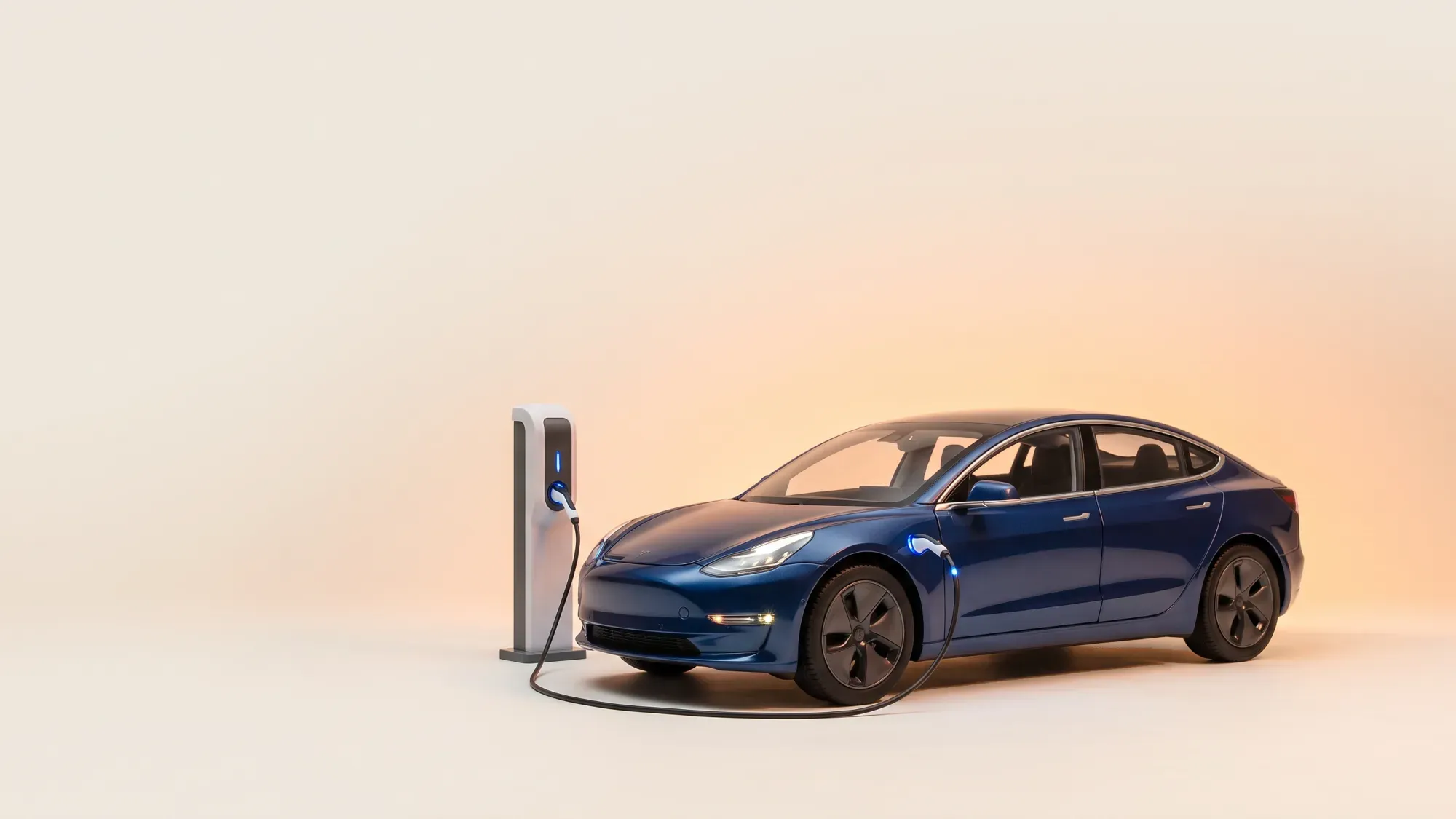
Electric vehicle (EV) range is a key consideration for many drivers in the UK. Understanding how far an EV can travel on a single charge involves more than just looking at official figures; real-world conditions significantly impact the actual driving distance. This guide provides practical, fact-backed information to help you build confidence in electric car ownership.
Considering an electric vehicle? Fuse Energy helps you power your journey with smart energy solutions and reliable home charging. Click here to find out more.
Enter your address to get a quote and see how much you could save
Understanding electric car range
The distance an electric car can cover on a single charge is a crucial factor for daily commutes and longer journeys. While manufacturers provide official figures, real-world performance often varies.
Official versus real-world figures
Electric car ranges are typically calculated using the Worldwide Harmonised Light Vehicle Test Procedure (WLTP) standard. This test is conducted under controlled laboratory conditions, simulating a mix of urban and motorway driving at an average speed of 29 mph. While WLTP figures offer a standardised comparison between models, they often present a higher range than what drivers experience in everyday use.
In reality, factors like temperature, driving style, and road type mean that real-world range can be 10-30% lower than the official WLTP estimate. For instance, the WLTP test is carried out at exactly 23°C, and neither the heater nor the air conditioning system is used, conditions rarely met in typical UK driving.
Average EV range in the UK
The average electric car in the UK can travel approximately 200-250 miles on a single charge. As of 2026, the average range of an electric car is around 300 miles, an increase from 235 miles in 2024. This means that for the vast majority of daily driving needs, an EV is more than capable. The average person in England travels around 17 miles per day, including all modes of transport. For car journeys specifically, 69% of Britons drive under 20 miles a day.
Key factors affecting your EV's range
Several elements influence how far your electric car can go on one charge. Understanding these can help you maximise your driving distance.
Driving style and speed
Aggressive driving, characterised by rapid acceleration and harsh braking, consumes energy much faster than a smooth, consistent driving style. High-speed motorway driving also significantly reduces range due to increased aerodynamic drag, with efficiency dropping sharply above 60 mph. Regenerative braking, which recovers energy when slowing down and feeds it back to the battery, can noticeably extend range, especially in urban driving.
Weather conditions and temperature
Cold weather can reduce an electric car's range by 10-30% due to decreased battery efficiency and increased demand for cabin heating. In very cold UK winter conditions, this reduction can sometimes approach 35-40% for some models, particularly with motorway driving and cabin heating. Lithium-ion batteries operate less efficiently in lower temperatures, and the need to heat the cabin draws significant power directly from the battery. Conversely, using air conditioning extensively in hot weather also draws power, though typically with a less dramatic impact than cold.
Terrain and road type
Driving uphill requires more energy than driving on flat terrain. Similarly, continuous motorway driving at high speeds is less efficient than city or suburban driving, where opportunities for regenerative braking are more frequent.
Battery health and age
Over time, an EV's battery capacity can degrade, leading to a slight reduction in maximum range. However, modern EV batteries are designed for longevity, and significant degradation typically takes many years.
Using cabin climate control
Heating and cooling the cabin directly uses energy from the main battery, impacting range. Pre-conditioning your car while it is still plugged in can mitigate this, using grid electricity to warm or cool the cabin and battery before you set off, rather than draining your car's charge.
Longest range electric cars in the UK
The market for electric vehicles with impressive ranges is rapidly expanding, offering more choices for drivers seeking long-distance capability.
Top models by official WLTP range
In 2026, several electric cars offer over 400 miles of WLTP range, with some pushing past 500 miles. The Mercedes-Benz EQS currently holds the longest WLTP range in the UK, at 542 miles. Other top contenders include the Volvo EX60 (503 miles) and the BMW iX3 (500 miles). The Mercedes-Benz CLA Electric also offers a substantial WLTP range of 484 miles. The Tesla Model 3 Long Range provides a WLTP range of 466 miles.
Considering real-world performance
While official WLTP figures are useful for comparison, real-world range is often 10-30% lower. For example, the Mercedes EQS, with a WLTP range of 511 miles, has a real-world figure of approximately 425 miles. When choosing an EV, it is important to consider how your typical driving conditions and habits might affect these figures.
Overcoming range anxiety: building confidence
Range anxiety, the fear of running out of charge before reaching a destination, is a common concern for new EV drivers. However, with planning and understanding, it can be largely overcome.
Is 200 miles enough for UK driving?
For most UK drivers, a range of 200 miles is more than sufficient. The average UK motorist drives around 17 miles per day. Even a basic 150-mile range EV can provide over seven days of typical driving on a single charge. A range of 200-250 miles offers optimal flexibility for daily use and occasional longer trips without constant worry.
What is range anxiety?
Range anxiety is the concern that an electric vehicle will run out of charge before reaching its destination or the next available charging point. While it was a valid concern in the early days of electric motoring, improvements in battery technology, vehicle range, charging speeds, and public charging infrastructure mean it is becoming less of an issue for most drivers.
Planning longer journeys
Planning is key to confident long-distance EV travel. Modern EV navigation systems often monitor battery status, predict remaining range, and can even plan charging stops along your route, displaying charger availability and speeds. It is advisable to start long journeys with a full battery and factor in charging stops every 2-3 hours to allow for both car and driver to rest. Rapid charging points can add significant range in a short time, with ultra-rapid chargers, delivering 150kW or more, able to add 100 miles of range in around 20-30 minutes for compatible vehicles.
Maximising your electric car's driving distance
Adopting efficient habits and smart charging strategies can significantly extend your EV's range.
Efficient driving techniques
Smooth acceleration and gentle braking, along with maintaining a moderate, consistent speed, are fundamental to efficient EV driving. Utilising regenerative braking to its fullest, especially in stop-start traffic, helps recover energy. Many EVs also feature an "Eco" mode, which optimises throttle response and climate control settings to conserve energy. Removing unnecessary weight from the car and taking off roof racks when not in use can also improve efficiency.
Smart charging strategies
Home charging is the most convenient and cost-effective way to manage your EV's range. Starting each day with a full battery from home charging reduces reliance on public infrastructure and minimises range concerns. Smart charging systems can also optimise charging times, often taking advantage of cheaper off-peak electricity rates.
Pre-conditioning your EV
Pre-conditioning involves warming or cooling your car's cabin and battery while it is still plugged into a charger. This uses grid electricity rather than your car's battery, ensuring you start your journey with optimal range and comfort, especially in extreme weather.
Powering your journey with Fuse Energy
Fuse Energy aims to make electric vehicle ownership effortless by providing abundant energy and smart management tools, transforming EV range from a limitation into a source of capability.
Seamless home charging is the foundation of confident EV ownership. Fuse can install an Easee One electric vehicle charger at your property for £899, including installation. This provides a convenient and dependable way to ensure your EV is always ready for your next journey.
OZEV (Office for Zero Emission Vehicles) chargepoint grants have been extended until 31 March 2027, with a revised structure from 1 April 2026. While typical homeowners with private off-street parking are not eligible for domestic grants, schemes are available for renters and flat owners with off-street parking, and for households with on-street parking who are installing a cross-pavement solution. There are also schemes for landlords and workplaces. The customer applies for these grants themselves via GOV.UK, and the installer's role begins after the application is approved.
Fuse's approach to smart energy management provides drivers with the capability to confidently manage their electric car's range and energy consumption. By optimising charging and providing reliable energy infrastructure, Fuse empowers EV owners to have more usable range, making energy a surplus rather than a concern. Fuse Energy offers 24/7 human customer support for energy-related queries, including those pertaining to electric vehicle charging. This round-the-clock support provides peace of mind, ensuring help is always available directly mitigating range anxiety.
Disclaimer
For the avoidance of doubt, this article is provided for informational purposes only and is not intended to constitute legal or financial advice. The author and/or Fuse Energy shall not be responsible for any losses arising out of any reliance on the information contained herein.