How do plug-in solar panels work?
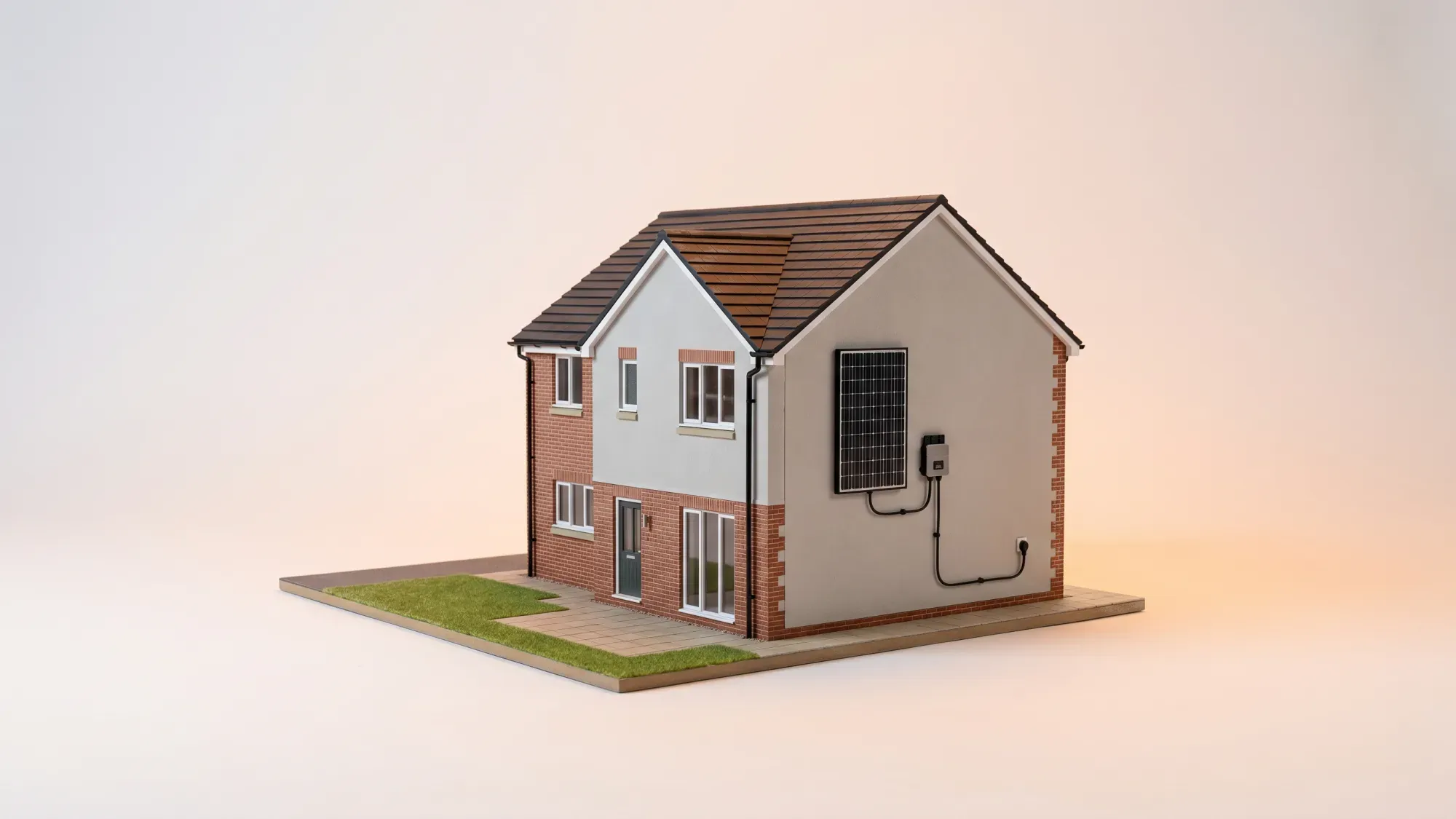
Plug-in solar panels offer a straightforward way for UK homeowners to generate their own electricity, reducing reliance on the grid and potentially cutting energy bills. These accessible systems convert sunlight into usable power that feeds directly into your home by simply plugging into a standard wall socket. This guide demystifies how they work, their benefits, and the specific UK regulations governing their use.
What are plug-in solar panels?
Plug-in solar panels are compact, self-contained photovoltaic (PV) systems designed for easy installation and portability. Unlike traditional rooftop solar arrays, they do not require complex wiring or professional installation, making them an attractive option for a wider range of properties, including flats and rented homes.
Components of a plug-in solar system
A typical plug-in solar system consists of two main parts: the solar panel itself and a microinverter. The solar panel captures sunlight and converts it into direct current (DC) electricity. This DC power then flows to the microinverter, which is usually attached to the back of the panel.
Plug-in solar versus traditional rooftop solar
The key difference between plug-in and traditional rooftop solar lies in their scale and installation. Traditional systems are often larger, permanently installed on roofs, and require professional electricians for wiring into the home's consumer unit. Plug-in solar, by contrast, is designed for self-installation, is portable, and feeds electricity into your home via a standard wall socket. This makes it a more affordable and less disruptive entry point into solar energy.
How plug-in solar panels generate electricity
The process of turning sunlight into electricity your home can use is efficient and largely automatic with a plug-in solar system.
From sunlight to socket: the energy flow
When sunlight hits the solar panel, it generates DC electricity. The microinverter then converts this DC electricity into alternating current (AC), which is the standard type of electricity used in UK homes. This AC power is then fed into your home's electrical circuit through a standard wall socket. Any appliance switched on will use this solar-generated power first, reducing the amount of electricity drawn from the grid.
Understanding microinverters
Microinverters are crucial for plug-in solar systems. They optimise the performance of each individual solar panel, converting its DC output to AC. Unlike larger string inverters that connect multiple panels, microinverters ensure that if one panel's output is reduced (e.g., due to shading), the performance of other panels in the system is not significantly affected. They also synchronise the generated electricity with the grid and include essential safety features, such as automatically disconnecting during a power cut to prevent backfeeding into the grid.
Offsetting your home's base load
Plug-in solar panels are particularly effective at offsetting your home's "base load" - the continuous background electricity consumption from appliances that are always on, such as your fridge, freezer, Wi-Fi router, and devices on standby. By generating electricity during daylight hours, these systems reduce the amount of power you need to buy from your energy supplier for these constant demands.
Benefits for UK homeowners
For homeowners across the UK, plug-in solar offers several compelling advantages, from reducing bills to fostering greater energy independence.
Ease of installation and portability
One of the most significant benefits is the straightforward installation process. Plug-in solar kits are designed for self-installation, meaning you typically will not need to hire an electrician. Their compact size and portability also make them suitable for various outdoor spaces, including balconies, patios, and gardens, and you can even take them with you if you move home.
Reducing electricity bills
By generating your own electricity and using it directly in your home, you reduce the amount you purchase from the grid, leading to lower electricity bills. The savings are most noticeable when you use appliances during daylight hours when your panels are generating power. For an illustrative Direct Debit household on the Ofgem price-cap default tariff for 1 July to 30 September 2026, electricity costs 26.11p per kWh, inclusive of 5% VAT1.
Contributing to energy independence
Plug-in solar empowers homeowners by giving them more control over their energy consumption. By generating a portion of your own electricity, you become less reliant on external energy sources and fluctuating market prices, contributing to a sense of energy independence. The average UK home uses around 2,500 kWh of electricity per year.
UK regulations and safety for plug-in solar
Understanding the specific legal framework and safety considerations is crucial for UK homeowners considering plug-in solar.
The SI 2026/848 legislation explained
Compliant plug-in solar has been lawful in Great Britain since 27 August 2026, under Statutory Instrument (SI) 2026/848. This legislation amends the Plugs and Sockets etc. (Safety) Regulations 1994 (PSSR), creating a legal route for approved plug-in solar microgenerators to connect via a standard BS 1363 UK plug. It is important to note that this legislation specifically covers standalone plug-in solar devices and does not extend to plug-in batteries or hybrid solar and battery systems.
The 800W limit and 'one unit per property'
Under SI 2026/848, compliant plug-in solar systems in the UK are limited to an 800W AC export limit per device. While the inverter's output is capped at 800W AC, the solar panels themselves can have a higher DC input capacity, up to 2,000W, to maximise generation in varying light conditions. The regulations currently permit only one plug-in solar unit per household.
DNO notification (G98) requirements
After installing a plug-in solar system, the Distribution Network Operator (DNO) must be notified under G98 within 28 days. This notification ensures the DNO is aware of electricity generation connected to their network. The consumer or their energy supplier can complete this notification.
Safety and old wiring concerns
The UK government conducted safety testing on representative plug-in photovoltaic systems under domestic conditions. This testing found that compliant systems operated safely, and there was no evidence that UK ring circuits or standard domestic wiring were inherently unsafe for plug-in solar. However, product quality can vary, and it is always wise to ensure your home's electrical wiring is in good condition. If you have concerns about older wiring or Fuse protection, consulting a qualified electrician is recommended. Electrical Safety First advises against using extension leads or multi-way adaptors with plug-in solar systems.
Potential savings and financial considerations
Understanding the financial implications of plug-in solar involves more than just the upfront cost.
Calculating your savings: a transparent approach
Your potential savings from plug-in solar depend primarily on three factors: the amount of electricity your panels generate, how much of that electricity you use directly in your home (self-consumption), and your current electricity unit rate. For an illustrative Direct Debit household on the Ofgem price-cap default tariff for 1 July to 30 September 2026, electricity is 26.11p per kWh, inclusive of 5% VAT. The average UK home uses around 2,500 kWh of electricity per year.
Why self-consumption matters most
The primary financial benefit of plug-in solar comes from self-consumption - using the electricity as it is generated, rather than buying it from the grid. Any electricity generated but not immediately used by your home will be exported to the grid. Without a battery, this unused generation cannot be stored for later self-use; it goes to the grid.
Smart Export Guarantee (SEG) and other export options
Most plug-in solar systems do not qualify for the Smart Export Guarantee (SEG). This is because SEG typically requires specific certifications, metering, and grid connection requirements that self-installed plug-in kits usually do not meet. However, not qualifying for SEG does not mean unused generation is unpaid. Energy suppliers can still offer their own export tariffs outside the SEG scheme.
Getting started with plug-in solar
If you are considering plug-in solar, a few key steps will help you make an informed decision and ensure a smooth setup.
Choosing a compliant system
When selecting a plug-in solar kit, ensure it complies with the UK's Interim Product Specification (IPS) and is listed on the Energy Networks Association (ENA) Type Test Register (now part of Connect Direct). Look for systems that come with a manufacturer-supplied, compliant BS 1363 UK plug.
Installation tips and best practices
Plug-in solar systems are designed for self-installation, but careful placement is key to maximising generation. Position your panels where they receive direct sunlight for most of the day, ideally unshaded and south-facing. Always follow the manufacturer's instructions for safe installation, including mounting and connection. Electrical Safety First advises against using extension leads or multi-way adaptors.
What to consider before buying
Before purchasing, assess your home's suitability, including sunlight exposure and your typical daytime electricity usage. Understand the UK regulations, particularly the 800W limit and the DNO notification requirement. While plug-in solar offers an accessible step towards energy independence, it is essential to weigh the potential savings against the initial investment.
References
Disclaimer
For the avoidance of doubt, this article is provided for informational purposes only and is not intended to constitute legal or financial advice. The author and/or Fuse Energy shall not be responsible for any losses arising out of any reliance on the information contained herein.