Home wind turbine explained
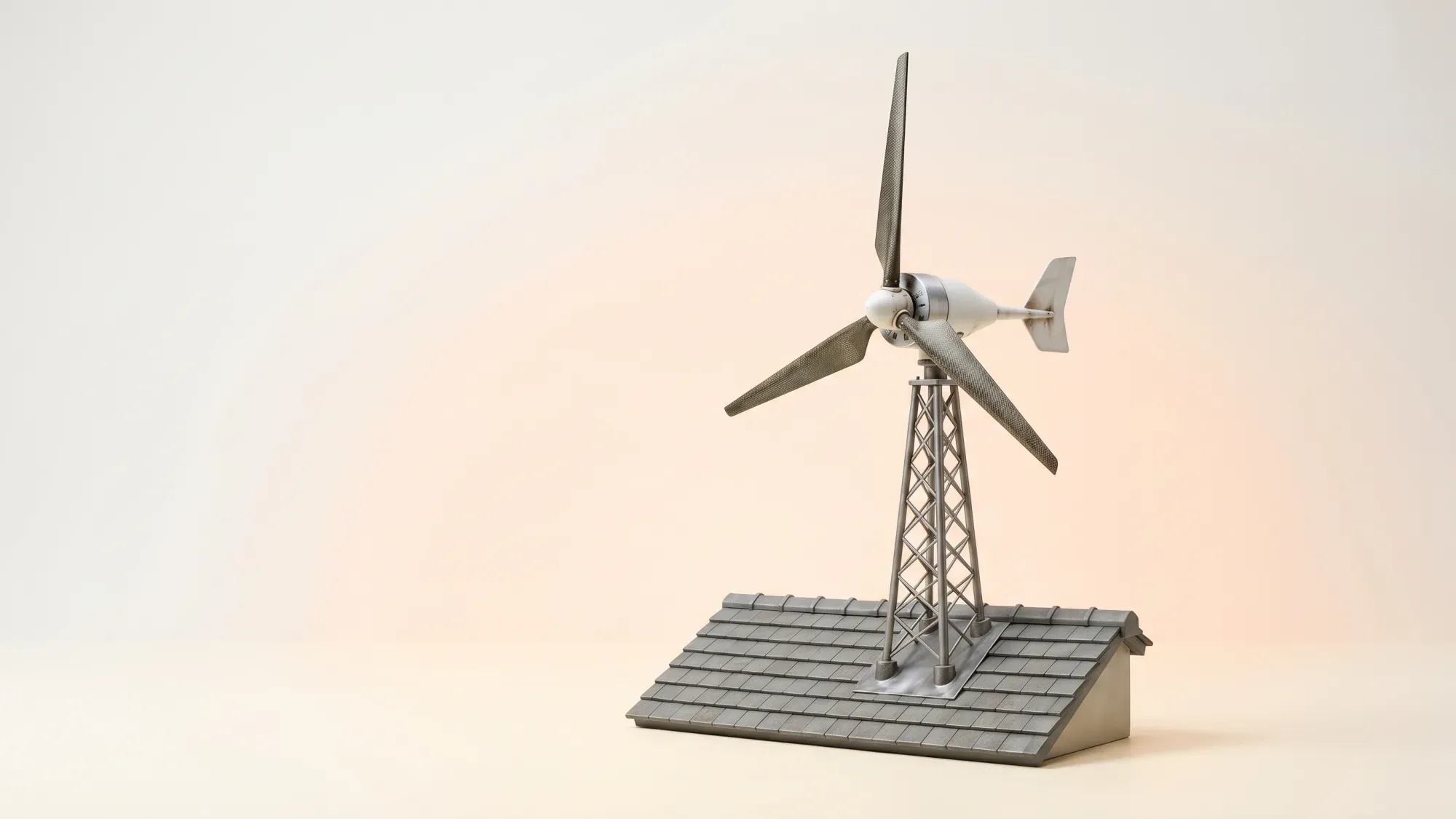
Generating your own electricity at home can offer a path to greater energy independence and reduced electricity bills for UK homeowners. While the idea of harnessing wind power might conjure images of vast wind farms, small-scale domestic wind turbines are a tangible option for many, though their suitability depends heavily on your property's specific location and prevailing wind conditions. This guide explores the practicalities, benefits, costs, and regulatory landscape of home wind turbines in the UK.
Considering a home wind turbine to generate your own clean energy? Discover how Fuse Energy's smart tariffs and app can help you manage your self-generated power and optimise your home's energy use. Click here to get started.
Enter your address to get a quote and see how much you could save
What is a home wind turbine and how does it work?
A home wind turbine captures the kinetic energy of wind and converts it into usable electricity for your household. These systems are scaled-down versions of the larger turbines seen in commercial wind farms, designed to meet the energy needs of individual properties.
Understanding small-scale wind power
Small domestic wind turbines typically range in capacity from 1 kW to 6 kW. Unlike large-scale installations, they are designed to integrate with residential properties, either as freestanding pole-mounted units or, less commonly, as building-mounted systems. The electricity generated can power your appliances, be stored in batteries, or be exported to the National Grid.
Key components of a domestic wind system
At its core, a domestic wind turbine consists of several key components:
- Blades: These capture the wind's force, causing the rotor to spin.
- Rotor: The assembly to which the blades are attached.
- Generator: Converts the mechanical energy from the spinning rotor into electricity.
- Tower/Mast: Elevates the turbine to a height where it can access clearer, stronger winds.
- Inverter: Transforms the direct current (DC) electricity produced by the generator into alternating current (AC) suitable for home use or export to the grid.
- Control mechanisms: Manage the turbine's operation and safety features.
Benefits of home wind power for UK homeowners
Installing a home wind turbine offers several compelling advantages for UK homeowners looking to take control of their energy use and environmental impact.
Reducing electricity bills and energy costs
By generating your own electricity, you can significantly reduce your reliance on grid power, leading to lower electricity bills. Wind is a free resource, so once the initial installation and maintenance costs are covered, you'll be producing your own electricity. For instance, a small 6 kW domestic turbine in a good location can produce roughly 9,000 kWh per year. This is more than three times the annual electricity usage of an average UK home, which is around 2,500 kWh per year1.
Achieving greater energy independence
Generating your own power makes you less dependent on external energy suppliers and can provide a hedge against rising electricity prices. This enhanced energy security can protect your household from power outages or price spikes.
Contributing to environmental sustainability
Home wind turbines produce clean, renewable electricity, helping to reduce your household's carbon footprint and contributing to the UK's transition to a low-carbon economy. Wind power avoids the air pollution associated with fossil fuel generation, making it an environmentally friendly choice.
Is a home wind turbine right for your property?
The suitability and efficiency of a home wind turbine are highly dependent on the property's specific location and prevailing wind conditions. It is not a universally suitable solution for all UK homes.
Assessing your property's wind resource
A thorough site assessment for wind resource is crucial before investing in a turbine. Wind turbines work best in exposed, windy locations and are less suitable for built-up or sheltered areas. The stronger and more consistent the wind, the more electricity a turbine can produce.
Space and location considerations
Domestic wind turbines can be either pole-mounted (freestanding) or building-mounted. Pole-mounted turbines require open space and are typically more efficient, with small domestic turbines generating around 6 kW. Building-mounted turbines are smaller, generating around 2 kW, but are generally not recommended due to the strain they can put on the building's structure and their lower efficiency.
Potential noise and visual impact
Noise and visual impact are important considerations for residential wind turbines. While modern designs aim to minimise these, they can still be a concern for homeowners and neighbours. Vertical axis wind turbines (VAWTs) are often considered more aesthetically pleasing and may operate more quietly than horizontal axis wind turbines (HAWTs), making them potentially more suitable for residential areas.
Types, sizes, and costs of home wind turbines
Understanding the different types, typical sizes, and associated costs is essential for any homeowner considering a home wind turbine.
Vertical vs horizontal axis turbines
Home wind turbines primarily come in two designs:
- Horizontal axis wind turbines (HAWTs): These are the more traditional design, resembling miniature versions of large-scale wind farm turbines with blades that rotate around a horizontal axis. They are generally more efficient in capturing wind energy, especially in consistent wind conditions.
- Vertical axis wind turbines (VAWTs): These have blades that rotate around a vertical axis. They are often considered more aesthetically pleasing, can capture wind from any direction without needing to yaw, and may operate more quietly. However, their efficiency can sometimes be lower than HAWTs.
Typical sizes and power output for residential use
Domestic wind turbines typically range from 1 kW to 6 kW in capacity. A well-located 6 kW domestic turbine can produce approximately 9,000 kWh of electricity per year. For context, UK onshore wind averages around a 27% capacity factor, meaning they produce 27% of the electricity they would if running at full power constantly.
Installation and ongoing maintenance costs
The upfront costs for a home wind turbine can be significant. Overall installation costs in the UK typically range from £20,000 to £50,000, depending on the turbine size, location, and project requirements. A complete 6 kW pole-mounted system averages around £35,000, including installation.
Beyond installation, ongoing costs include:
- Maintenance: Regular maintenance checks, typically every few years, can cost around £100 to £200 annually.
- Inverter replacement: The inverter may need replacing during the turbine's lifespan of over 20 years, costing between £1,000 and £2,000.
- Permits and planning: Fees for planning permissions can range from £500 to £2,000. It is advisable to consult your local planning authority for exact fees.
UK planning permission and regulations
Navigating the regulatory landscape is a crucial step for any homeowner considering a home wind turbine in the UK.
Navigating local authority planning rules
Planning permission is often required for home wind turbines in the UK, with requirements varying by local authority and turbine specifications. While some installations may fall under "permitted development rights," these are subject to strict limits on height, location, noise, and other factors. For example, a standalone wind turbine may qualify for permitted development if its highest part does not exceed 11.1 metres and the distance between ground level and the lowest part of any blade is not less than 5 metres. It is advisable to consult your local planning officer and neighbours before proceeding.
Grid connection requirements (G98)
Connecting a microgeneration system, including a home wind turbine, to the grid requires notification to your local Distribution Network Operator (DNO) under Engineering Recommendation G98. This applies to installations with a rated output under 16A per phase, which equates to 3.68kW for single-phase systems or 11.04kW for three-phase systems. The consumer or their supplier must notify the DNO under G98 within 28 days of installation.
Smart Export Guarantee (SEG) eligibility and MCS Certification
The Smart Export Guarantee (SEG) scheme allows homeowners to receive payments for any excess renewable electricity they export to the National Grid. To be eligible for SEG payments, your installation must be certified under the Microgeneration Certification Scheme (MCS) or an equivalent scheme. You will also need a smart meter capable of providing half-hourly export readings.
Integrating your wind turbine with home energy management
Once installed, optimising your home wind turbine's output requires smart energy management to maximise savings and control.
Maximising self-consumption of generated power
The primary benefit of a home wind turbine is reducing the amount of electricity you need to buy from the grid. Maximising self-consumption means using the electricity your turbine generates as it is produced. This can involve adjusting your energy usage patterns to align with periods of high wind generation, or integrating battery storage to save excess power for when the wind is not blowing or demand is higher.
The role of smart tariffs and energy apps
Smart tariffs can offer different electricity rates at various times of the day, allowing you to benefit from cheaper off-peak electricity or earn more for exporting power during peak demand. Energy apps provide the tools to monitor your generation and consumption in real-time, helping you make informed decisions to optimise your energy flow. These tools can help you understand when your turbine is most productive and how to best utilise that power, whether for immediate consumption, battery charging, or export.
Fuse Energy: your partner in home generation
While Fuse Energy does not currently offer microgeneration systems like small wind turbines, home solar, or home battery installation, we are committed to empowering homeowners to generate their own energy and reduce reliance on traditional grids. Our vision is a future with power to play with, and we believe in never settling for the scarcity mindset prevalent in the energy industry. If you choose to install a home wind turbine, Fuse Energy's app and smart tariffs can help you manage and optimise your home's energy flow, including self-generated power, once a system like a wind turbine is in place. This allows you to maximise savings and control, ensuring you get the most value from your renewable energy investment.
Managing your home's energy, especially with your own generation, should be simple and rewarding. Fuse Energy offers clear pricing, real-time usage data through our app, and 24/7 human customer support to help you make the most of your energy. We are committed to building a future with power to play with, empowering you to take control of your energy bills. Click here to switch to Fuse Energy today and explore our mission here.
References
Disclaimer
For the avoidance of doubt, this article is provided for informational purposes only and is not intended to constitute legal or financial advice. The author and/or Fuse Energy shall not be responsible for any losses arising out of any reliance on the information contained herein.