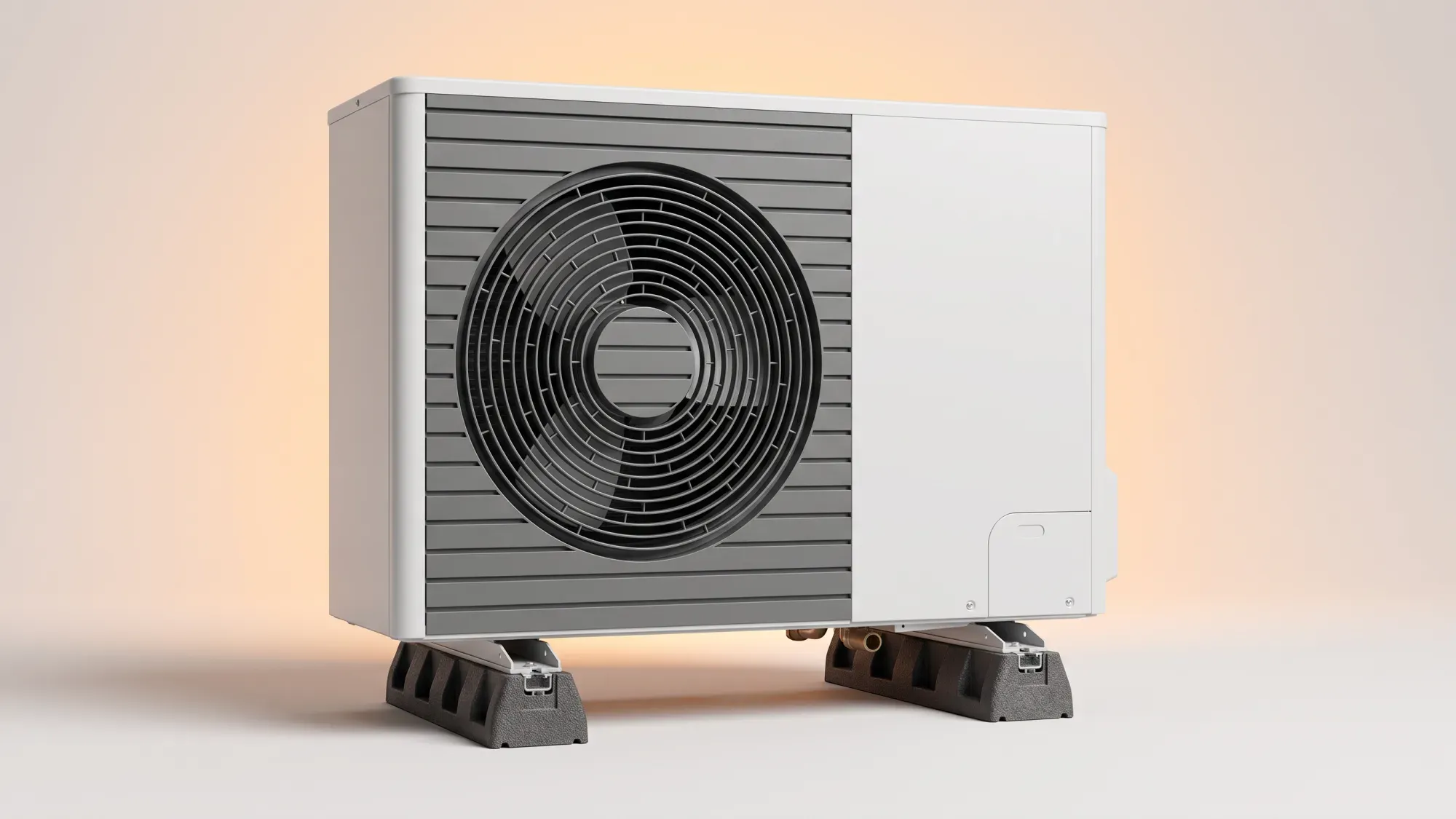
Optimising your heat pump settings is crucial for maintaining a warm home and managing energy costs, especially during the colder winter months. Heat pumps are an efficient way to heat your home, even when temperatures drop. Unlike traditional boilers that burn fuel, heat pumps transfer heat from the outside air or ground into your home. This process means they can achieve efficiencies of 300% or more, producing at least 3 kWh of heat for every 1 kWh of electricity consumed, according to Simple Green Energy.
Understanding your heat pump in winter
How heat pumps work in cold weather
Even in chilly UK winters, air source heat pumps can effectively extract warmth from the outside air. While their efficiency can slightly decrease in extremely low temperatures, modern systems are designed to perform well in typical British climates. They do this by compressing a refrigerant to raise its temperature, then transferring that heat into your home's heating system.
Thermostat vs flow temperature: what's the difference?
Understanding the distinction between your thermostat and your heat pump's flow temperature is key to efficient operation. Your thermostat sets the desired room temperature, much like with any heating system. However, a heat pump also has a 'flow temperature', which is the temperature of the water circulating through your radiators or underfloor heating. Lower flow temperatures generally lead to higher efficiency, as the heat pump does not have to work as hard to raise the water temperature.
Optimal heat pump settings for efficiency
Setting your thermostat for winter comfort
For optimal heat pump efficiency and comfort, aim for a consistent indoor temperature between 18°C and 21°C. Running your heat pump continuously at a lower, steady temperature is generally more efficient than turning it off and on frequently. This prevents the system from having to work harder to reheat a cold home from scratch. Avoid setting the thermostat too high, as this significantly increases energy consumption and running costs.
Adjusting flow temperature for maximum efficiency
The flow temperature of your heat pump should be set as low as possible while still achieving your desired indoor comfort. For well-insulated homes with modern radiators or underfloor heating, a flow temperature between 35°C and 45°C is often sufficient. Older, less insulated properties or those with smaller radiators might require a slightly higher flow temperature, but it is worth experimenting to find the lowest effective setting. A lower flow temperature means the heat pump operates more efficiently, extracting more heat from the outside air.
Continuous running vs intermittent use
Heat pumps are designed to run continuously at a lower output rather than cycling on and off. This continuous operation allows the system to maintain a stable indoor temperature more efficiently. When a heat pump is repeatedly turned off, it needs to expend more energy to bring the home back up to temperature, which can lead to higher electricity bills. Maintaining a consistent, comfortable temperature by letting the system run steadily is the most energy-efficient approach for winter.
Advanced optimisation techniques
Leveraging weather compensation
Weather compensation is a smart feature that adjusts your heat pump's flow temperature based on the outdoor temperature. When it is colder outside, the system might slightly increase the flow temperature, and when it is milder, it will reduce it. This ensures your home remains comfortable without wasting energy, as the heat pump only produces the heat needed for the prevailing conditions.
Impact of property insulation and draught-proofing
Even the most perfectly set heat pump will struggle to be efficient in a poorly insulated home. Adequate insulation in walls, lofts, and floors, along with effective draught-proofing, significantly reduces heat loss. This allows your heat pump to maintain comfort with lower flow temperatures and less continuous running, directly translating to lower energy bills. It is a foundational step for any homeowner looking to maximise their heat pump's efficiency.
Zone control and smart radiator valves
For homes with varying heating needs across different rooms, zone control and smart radiator valves can offer further optimisation. These systems allow you to set different temperatures for individual areas or rooms, ensuring you only heat the spaces you are using to the desired level. This targeted approach prevents overheating unused areas, reducing overall energy consumption and improving comfort where it matters most.
Monitoring, maintenance, and smart control
Regular maintenance for winter performance
Just like any heating system, regular maintenance is vital for your heat pump's optimal performance, especially during winter. Annual servicing by a qualified engineer ensures all components are working correctly, filters are clean, and the system is running as efficiently as possible. This proactive approach can prevent breakdowns and maintain efficiency, keeping your home warm and your bills manageable.
Using smart thermostats and apps for control
Modern heat pumps often integrate with smart thermostats and dedicated mobile apps. These tools provide greater control over your heating schedule, temperature settings, and even flow temperatures. They can learn your preferences, adapt to your routine, and allow you to manage your heating remotely, offering convenience and further opportunities for optimisation.
Understanding your energy consumption data
Monitoring your energy consumption data is crucial for understanding the real-world impact of your heat pump settings. Many smart energy providers and apps offer detailed insights into your electricity usage. By tracking this data, you can identify patterns, pinpoint periods of high consumption, and make informed adjustments to your settings to improve efficiency and reduce costs.
Fuse's role in optimising your heat pump costs
Real-time data for informed decisions
Fuse's app provides real-time consumption data, allowing you to see the immediate impact of your heat pump settings on energy usage and costs. This transparency empowers you to make informed decisions, actively optimising your system for both comfort and savings.
Smart tariffs and insights for savings
Fuse's smart tariffs and insights help you identify optimal times to run your heat pump during periods of lower electricity cost or higher renewable energy availability. This maximises efficiency and reduces your bills, giving you greater control over your energy expenditure.
Support for your energy journey
Fuse encourages homeowners to actively optimise their heat pump settings, challenging the 'set and forget' mentality to achieve better comfort and savings. Our tools and insights support you every step of the way, helping you get the most out of your heat pump.
Common questions about heat pump settings
What is the ideal heat pump temperature for winter?
The ideal heat pump temperature for winter typically ranges between 18°C and 21°C for indoor comfort and efficiency. It is generally more efficient to maintain a consistent, lower temperature rather than allowing the home to cool significantly and then reheating it.
Do heat pumps work efficiently in very cold weather?
Modern air source heat pumps are designed to work efficiently even in cold UK winters. While their efficiency can slightly decrease in extremely low temperatures, they remain a highly effective heating solution, extracting heat from the air down to very low outdoor temperatures.
It is generally more efficient to let your heat pump run continuously at a lower, consistent temperature, rather than turning it off at night. Turning it off means the system has to work harder to reheat your home in the morning, which can use more energy overall.
For the avoidance of doubt, this article is provided for informational purposes only and is not intended to constitute legal or financial advice. The author and/or Fuse Energy shall not be responsible for any losses arising out of any reliance on the information contained herein.