Grid connection for home renewables
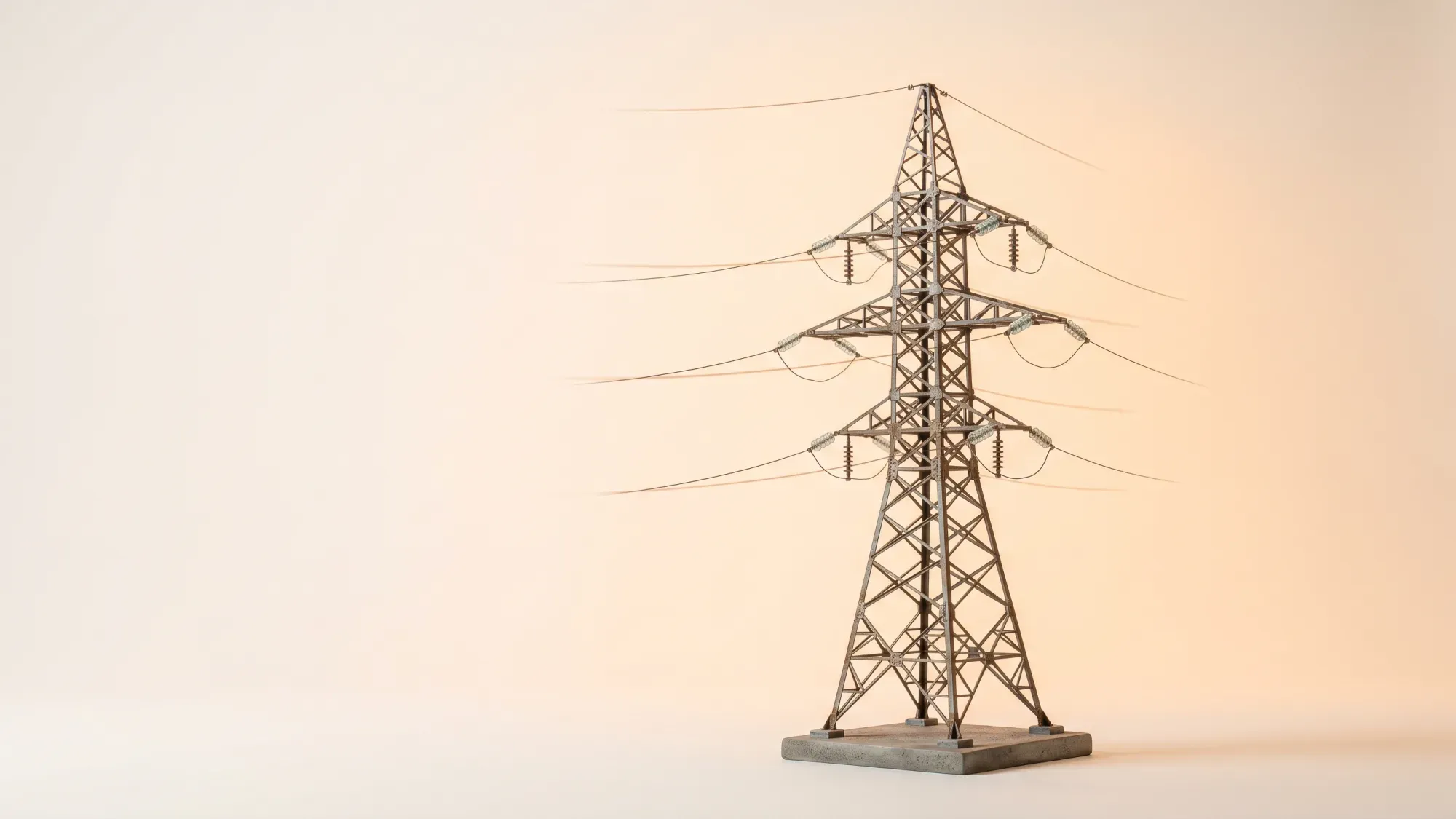
Connecting your home renewable energy system to the UK electricity grid can seem like a complex process, but it is a vital step towards greater energy independence and potentially reducing your energy bills. This guide aims to clarify the requirements and benefits, helping you understand how your home generation integrates with the wider network.
Fuse Energy is committed to making your home energy journey as clear and manageable as possible. We aim to demystify complex technical and regulatory information, presenting it clearly and actionably. This includes guidance on Distribution Network Operator (DNO) notifications and understanding the nuances of export tariffs, ensuring you have the knowledge to make informed decisions about your home's energy future. Click here to switch to Fuse Energy today.
Enter your address to get a quote and see how much you could save
What is grid connection?
Grid connection refers to the process of linking your home's electricity generation system, such as solar panels or a wind turbine, to the national electricity network. This allows any surplus electricity you generate to be exported to the grid, and ensures your home can still draw power from the grid when your renewable system is not generating enough.
The UK electricity network explained
The UK's electricity network is a complex system with distinct roles for different operators. The National Grid operates the high-voltage transmission network, moving electricity across long distances from large power stations to major demand centres. Below this, DNOs manage the local electricity grids, which are the lower-voltage networks that connect homes to the wider National Grid.
Why home renewables need grid connection
Home renewable systems need grid connection for two main reasons: safety and efficiency. Firstly, connection ensures that your system operates safely and does not disrupt the stability of the local electricity grid. Secondly, it allows you to export any excess electricity you generate but do not use, potentially earning you money through export tariffs. Without a grid connection, you would only be able to use the electricity as it is generated, or store it in a battery for later use, with no option to send surplus to the wider network.
Understanding your distribution network operator (DNO)
Your DNO is responsible for the physical infrastructure that delivers electricity to your home, including the poles, cables, and substations in your local area. They are distinct from your energy supplier, which is the company you pay for your electricity.
DNOs versus the National Grid
While the National Grid manages the high-voltage transmission network across Great Britain, DNOs are responsible for the local distribution networks that bring electricity directly to your property. Your DNO is determined by your geographical location and cannot be chosen or changed, unlike your energy supplier. There are several electricity network operators that cover different parts of Great Britain, powering communities across England, Scotland, and Wales.
Finding your local DNO
There are several straightforward ways to find your local DNO. You can use the Energy Networks Association (ENA) postcode lookup tool, which will tell you who operates the network in your area. Alternatively, you can dial 105, the free power cut emergency number, which will connect you directly to your DNO if you are in England, Scotland, or Wales.
Connecting plug-in solar systems Under SI 2026/848
Recent legislation has made it easier for homeowners to connect small-scale plug-in solar systems.
The new plug-in solar regulations explained
Statutory Instrument (SI) 2026/848, effective since 27 August 2026, amends the Plugs and Sockets etc. (Safety) Regulations 1994 (PSSR). This change introduces a narrow exemption that legalises compliant standalone plug-in solar systems for home use. Previously, connecting anything that generates electricity via a standard BS 1363 plug was restricted.
Key requirements and limitations (800W, one unit)
Under SI 2026/848, compliant plug-in solar systems have an 800W AC export limit per device. Homeowners are limited to one such unit per property. It is important to note that this legislation applies only to standalone plug-in solar and does not cover plug-in batteries or hybrid solar-battery systems.
G98 notification for plug-in solar
Even for plug-in solar systems, notification to your DNO is still required under G98 regulations. This is a notification, not an application, meaning that for compliant installations, you do not need to wait for approval before connecting. Homeowners or their suppliers must notify their DNO under G98 within 28 days of installing a compliant microgeneration system. This ensures the network operator is aware of what is connected to their grid.
Connecting larger home renewable systems
For renewable energy systems larger than plug-in solar, the grid connection process involves more detailed applications under G98 or G99 regulations.
Solar PV and battery storage
Installing rooftop solar photovoltaic (PV) arrays or home battery storage systems typically falls under G98 or G99 regulations, depending on their size. These applications ensure that your system can safely connect to the public electricity grid without causing stability or safety issues.
Heat pumps and other microgeneration
Heat pumps and other microgeneration technologies also require DNO permission to connect to the grid. The specific application route (G98 or G99) will depend on the system's electrical capacity and export capabilities.
G99 applications for larger systems
G99 applications are required for larger-scale systems that exceed the limits of G98, typically those with a power output greater than 3.68 kW per phase. Unlike G98, G99 usually requires approval from the DNO before installation can begin, and the process can take several weeks or months. This allows the DNO to assess the impact of the larger system on the local grid.
Exporting your energy: Smart Export Guarantee (SEG) and other tariffs
If your renewable energy system generates more electricity than your home consumes, you can export the surplus to the grid and potentially get paid for it.
What is the Smart Export Guarantee (SEG)?
The Smart Export Guarantee (SEG) is a UK government-backed scheme that requires licensed electricity suppliers with 150,000 or more domestic customers to offer tariffs for electricity exported to the grid. These tariffs pay you for every unit of eligible renewable electricity you send back to the network.
Eligibility for SEG (MCS certification)
To be eligible for SEG payments, your renewable energy installation must typically be certified under the Microgeneration Certification Scheme (MCS) or an equivalent scheme. You will also need a smart meter capable of recording your exported electricity. Self-installed plug-in solar kits are generally not eligible for SEG as they lack MCS certification.
Supplier export tariffs for non-SEG systems
Even if your system is not eligible for the SEG (for example, a self-installed plug-in solar kit), you may still be able to receive payment for unused generation exported to the grid. Many energy suppliers offer their own export tariffs outside of the SEG scheme. While self-consumption (using the electricity you generate directly in your home) remains the primary saving, these supplier-specific tariffs can provide additional value for your surplus energy.
Benefits of connecting home renewables to the grid
Connecting your home renewable energy system to the grid offers multiple advantages beyond simply generating your own power.
Reducing your energy bills
By generating your own electricity, you reduce the amount you need to buy from the grid, directly lowering your energy bills. Any surplus electricity exported can also earn you money through SEG or other supplier export tariffs, further contributing to savings. The average UK home uses around 2,500 kWh of electricity per year, based on Ofgem's medium Typical Domestic Consumption Values (TDCVs) effective from 1 July 2026.
Contributing to a greener grid
Every unit of renewable electricity you generate and export helps to displace fossil fuel-generated power, contributing to a greener, more sustainable National Grid. This supports the UK's broader climate goals and reduces carbon emissions.
Achieving greater energy independence
Generating your own power gives you more control over your energy consumption and costs, making you less reliant on fluctuating energy prices. This move towards energy independence empowers homeowners to manage their energy usage more effectively.
Navigating the grid connection process can raise many questions. Fuse Energy offers 24/7 human customer support to provide valuable assistance and guidance, helping you through each step of your home energy journey. This support ensures you have a resource to turn to, whether you are connecting a new plug-in solar system or a larger renewable installation. Our mission is to make energy simpler, smarter, and more sustainable for everyone. Find out more about our mission here. Click here to switch to Fuse Energy today.
Disclaimer
For the avoidance of doubt, this article is provided for informational purposes only and is not intended to constitute legal or financial advice. The author and/or Fuse Energy shall not be responsible for any losses arising out of any reliance on the information contained herein.