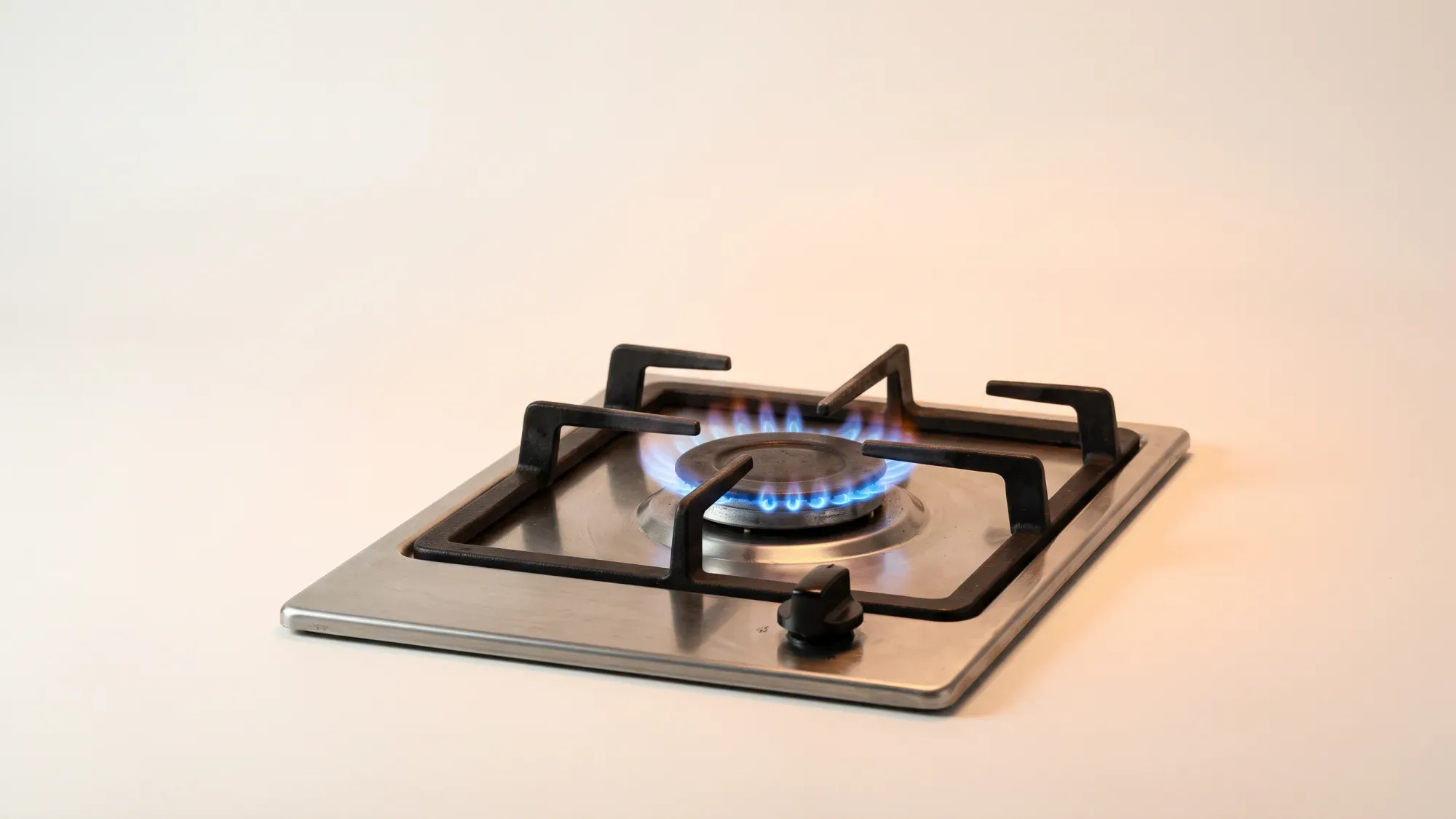
Understanding how your home's gas supply works, how it is measured, and what influences your costs is key to managing your household budget effectively. Many UK adults find domestic gas usage and its associated expenses a source of financial anxiety. This guide aims to demystify the process, offering practical advice to help you take control.
Understanding your domestic gas supply is crucial for managing household costs. Fuse Energy provides transparent information and tools to help you understand and control your gas usage, aligning with a future of abundant, manageable energy. Click here to get started.
Domestic gas in the UK is primarily natural gas, delivered to homes via an extensive national network. This journey involves several stages and different entities, all working to ensure a reliable supply to your property.
From source to meter: the journey of natural gas
Natural gas is extracted from various sources, including the North Sea and international imports, before entering the National Transmission System (NTS) - a high-pressure pipeline network that spans Great Britain. From the NTS, the gas flows into regional Gas Distribution Networks (GDNs), which are lower-pressure pipeline systems that carry gas to towns, cities, and eventually, to your home's meter.
The role of gas Transporters and suppliers
The gas network infrastructure, including the pipelines that deliver gas to your home, is managed by Gas Transporters (also known as GDNs or, for smaller networks, Independent Gas Transporters or IGTs). These companies are responsible for the safe and efficient operation and maintenance of the gas pipelines, including emergency response. They do not sell gas directly to consumers but charge energy suppliers for using their networks.
Energy suppliers, like Fuse, purchase gas from the wholesale market and sell it to you, the consumer. They handle your billing, customer service, and other account management aspects. Ofgem, the Office of Gas and Electricity Markets, regulates the gas market in Great Britain, setting rules for suppliers and protecting consumers.
Your gas bill can sometimes seem complex, but it essentially breaks down into two main components: how much gas you have used and the fixed daily costs of supplying it.
Unit rates and standing charges explained
Gas bills typically include a unit rate, charged in pence per kilowatt-hour (kWh), for the actual gas you consume. This rate covers the cost of the gas itself, as well as its transportation through the networks. The more gas you use, the higher this part of your bill will be.
You also pay a daily standing charge, which is a fixed fee applied regardless of how much gas you use. This charge covers the fixed costs of providing your home with gas, such as maintaining the energy network, meter readings, and other operational expenses. Standing charges can vary by supplier and region.
How your gas usage is measured (kWh)
Gas consumption is measured at your meter in cubic metres (m³) or cubic feet (ft³). However, for billing purposes, this volume is converted into kilowatt-hours (kWh). This conversion ensures that you are billed based on the energy content of the gas, as the energy density can vary slightly. Your bill will show your consumption in kWh, making it comparable to electricity usage.
Understanding the average UK gas bill
The average UK home uses around 9,500 kWh of gas per year. This figure, known as the Typical Domestic Consumption Value (TDCV) for a medium-sized household, is set by Ofgem and helps provide a benchmark for understanding your usage. Your actual bill will depend on various factors, including the size and energy efficiency of your home, the number of occupants, and your heating habits.
Taking steps to improve your home's gas efficiency can lead to significant savings and a greater sense of control over your energy costs.
Optimising your boiler for lower consumption
Your boiler is often the largest consumer of gas in your home. Regular servicing can significantly improve its efficiency and safety, potentially reducing your gas consumption. An annual service ensures your boiler runs smoothly, preventing issues that could lead to higher fuel use and costly repairs. Simple actions like setting your thermostat appropriately and bleeding radiators can also make a difference. For more tips, explore our guide on boiler efficiency.
Insulation and draught proofing
Preventing heat loss is one of the most effective ways to reduce gas consumption. Ensuring your home has adequate loft and wall insulation, along with effective draught proofing around windows and doors, can keep the warmth in and reduce the amount of gas needed to heat your home. You might also be eligible for insulation grants to help with these upgrades.
Smart heating controls and habits
Modern heating controls, including smart thermostats, allow for more precise management of your home's temperature. Programming your heating to come on only when needed, reducing the temperature by a degree or two, and turning off radiators in unused rooms can all contribute to lower gas usage. Developing energy-conscious habits, such as wearing an extra layer indoors, also plays a role.
Smart meters are transforming how households manage their energy, offering insights that traditional meters cannot.
Automated readings and usage data
Smart meters automatically send your gas readings to your supplier, eliminating the need for manual submissions and reducing the likelihood of estimated bills. Smart gas meters typically provide one daily cumulative reading, allowing you to track your usage and identify areas for reduction.
Gaining control over your gas usage
With access to detailed consumption data, you can make informed decisions about your energy use. Understanding your usage patterns empowers you to adjust your habits, identify energy-intensive appliances, and take proactive steps to reduce your gas bill. Fuse's app provides clear insights into energy consumption, enabling users to understand and manage their gas usage effectively.
Taking an active role in managing your gas supply can help ensure bill accuracy and potentially lead to better deals.
Regular meter readings and bill accuracy
If you do not have a smart meter, submitting regular and accurate meter readings is crucial. This ensures your bills are based on your actual consumption rather than estimates, which can sometimes be higher or lower than your true usage. Keeping a record of your readings can also help you track your consumption over time. Learn more about how to read your energy meter.
When to consider switching gas suppliers
The energy market is competitive, and tariffs can vary between suppliers. Regularly reviewing your gas tariff and comparing it with other available deals can help ensure you are on the most suitable plan for your needs. Ofgem encourages households to consider switching energy suppliers as a way of keeping the market competitive. You can find out who your current gas supplier is using the Find My Supplier service.
Is gas still a major energy source in the UK?
Yes, gas remains a significant energy source in the UK, particularly for heating homes and generating electricity. While there is a growing focus on renewable energy sources, many households still rely on gas for their daily energy needs.
What happens during a gas emergency?
If you smell gas inside or outside your property, or suspect a gas leak, it is crucial to act immediately. The first step is to open windows and doors, turn off your gas supply at the meter if safe to do so, and evacuate the property. Once safe, you should call the National Gas Emergency Service on 0800 111 999. This free helpline will dispatch an emergency gas engineer to make the situation safe.