EV charging for UK businesses: fleet strategies
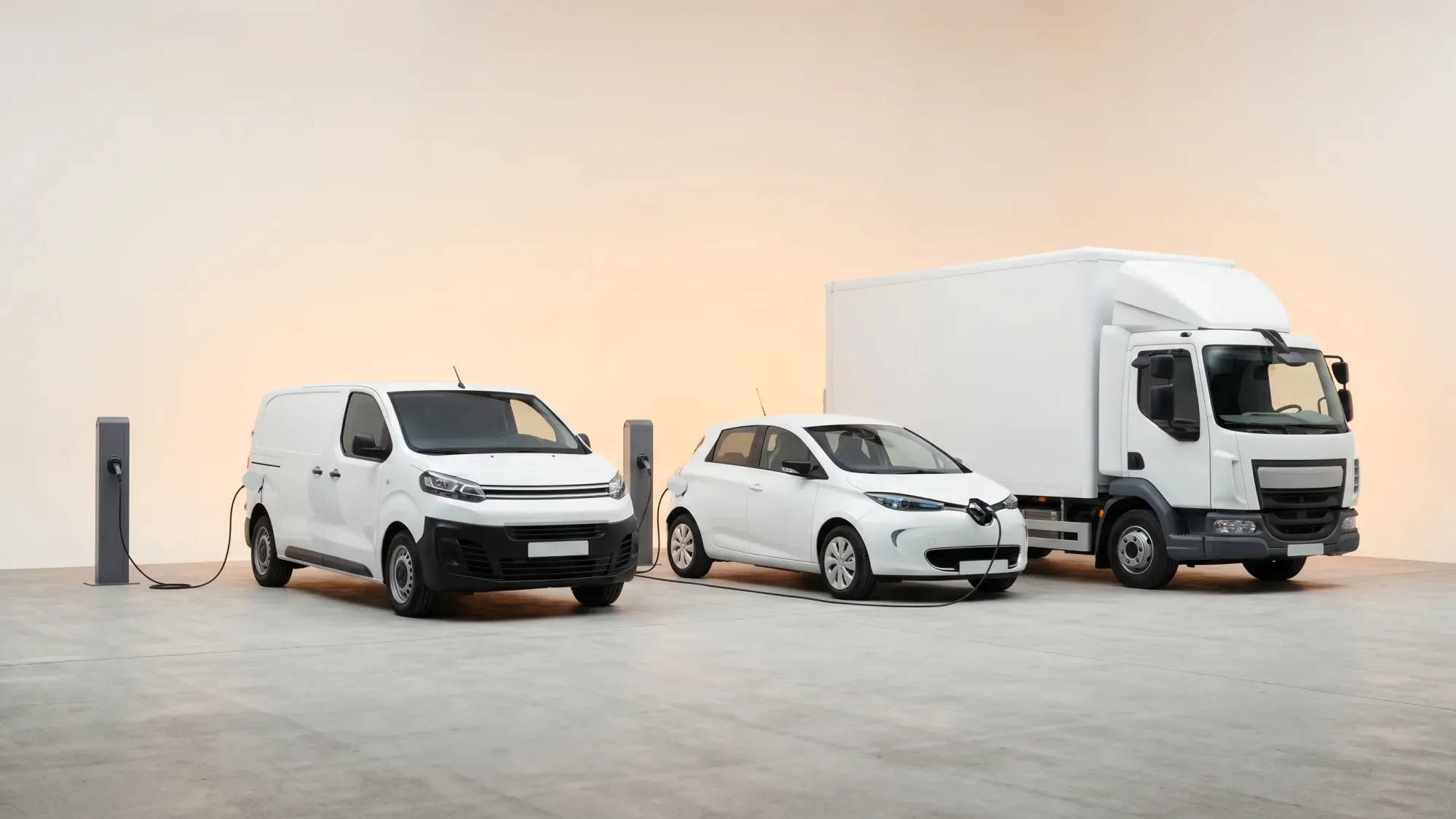
Electrifying a vehicle fleet in the UK presents both significant opportunities and complex challenges for businesses. This guide offers practical advice for fleet managers and business owners navigating the transition to electric vehicles (EVs), focusing on efficient, scalable, and cost-effective charging solutions. While Fuse Energy specialises in residential energy supply and EV charging solutions for homes in Great Britain, the principles of smart energy management and optimised charging discussed here are directly applicable to employee home charging, a key component of many fleet strategies.
Understanding electric vehicle fleet charging
The shift to electric vehicles is transforming transport, presenting both challenges and opportunities for businesses in the UK. Understanding this landscape is crucial for successful fleet electrification.
Why electrify your fleet?
Electrifying your fleet offers numerous benefits, from reducing operational costs to enhancing your company's environmental credentials. Businesses can achieve substantial savings on fuel and maintenance, as electricity is generally cheaper than petrol or diesel, and EVs have fewer moving parts requiring less servicing. Beyond cost, transitioning to an electric fleet demonstrates a commitment to sustainability, aligning with corporate social responsibility goals and contributing to cleaner air in urban areas. This move also future-proofs operations against evolving environmental regulations and potential fuel price volatility.
Challenges and opportunities for UK businesses
The journey to an all-electric fleet comes with its own set of challenges, primarily around the initial capital investment for vehicles and charging infrastructure. Range anxiety, charging speed, and the availability of suitable charging points are common concerns. However, these challenges also present opportunities. The UK government offers various grants and incentives to support the deployment of EV charging infrastructure, easing the financial burden. Furthermore, advancements in battery technology and charging solutions are continuously improving the feasibility and efficiency of electric fleets. Strategic planning can turn these challenges into competitive advantages, optimising routes, managing energy consumption, and integrating smart charging technologies.
Essential EV charging infrastructure for fleets
An effective fleet charging strategy typically involves a combination of depot charging, public charging, and employee home charging solutions. Each type serves a distinct purpose within the broader operational framework.
Depot charging solutions
Depot charging forms the backbone of most fleet electrification strategies, providing reliable and often cost-effective charging at a central location. This setup is ideal for vehicles that return to a central hub overnight or for extended periods. Solutions typically range from 3.7kW to 22kW for AC chargers, suitable for overnight charging, while rapid DC chargers can deliver between 50kW and over 350kW for faster turnarounds during the day. Careful consideration must be given to the available grid connection, potential upgrades, and the number of vehicles requiring simultaneous charging. Smart charging systems are crucial here to manage demand, balance loads, and avoid expensive peak-time electricity tariffs.
On-route and public charging
For fleets that operate over long distances or do not return to a central depot daily, access to on-route and public charging infrastructure is vital. This includes a network of rapid and ultra-rapid chargers located at service stations, public car parks, and dedicated charging hubs. While generally more expensive than depot charging, public charging ensures operational flexibility and extends the range of electric vehicles. Fleet managers should integrate public charging network access into their planning, potentially leveraging partnerships with charge point operators or utilising universal charging cards to streamline payments and access.
Employee home charging
Employee home charging can significantly reduce the reliance on depot and public charging, offering convenience for drivers and potentially lowering overall fleet energy costs. This involves installing charge points at employees' residences, allowing vehicles to charge overnight. It's particularly effective for company cars or vans that are taken home by employees.
What is the OZEV EV Chargepoint Grant for renters and flat owners?
The EV Chargepoint Grant for renters and flat owners provides up to £500 towards installing a chargepoint at the property. To be eligible, applicants must own and live in a flat, or rent and live in any residential property, and have private off-street parking.
Fuse Energy, for example, focuses on residential energy supply and EV charging solutions for homes in Great Britain. While Fuse does not offer commercial fleet charging services, its expertise in smart energy management for residential EV charging can inform fleet managers on principles applicable to employee home charging. Insights into efficient energy use and smart tariffs, similar to those Fuse offers residential customers, can help fleet managers understand how to optimise costs for vehicles charged at employees' homes.
"Customers can purchase an Easee One charger including install through the Fuse App or Fuse Website, for the base cost of £899. This includes full installation (up to 15m of cabling), surge protection, and a 3-year warranty." — Fuse Energy
Cost of installing and operating fleet EV charging
Understanding the financial implications is paramount when transitioning to an electric fleet. This includes both the upfront investment and ongoing operational expenses, alongside available funding opportunities.
Initial setup costs
The initial setup costs for fleet EV charging infrastructure can vary widely depending on the scale and type of charging required. This typically includes the purchase and installation of charge points, electrical infrastructure upgrades (such as transformer upgrades or new grid connections), and the implementation of charging management software. For a large depot, these costs can be substantial, often requiring detailed site assessments and feasibility studies. Smaller fleets or those relying more on employee home charging may face lower initial outlays.
Operational expenses
Beyond the initial investment, operational expenses are a critical factor. These primarily consist of electricity costs, which can be significantly influenced by the chosen charging strategy and electricity tariffs. Smart charging, which optimises charging times to take advantage of off-peak electricity rates, can significantly reduce the cost of EV fleet operations. Maintenance of charging equipment and software subscriptions for charge point management also contribute to ongoing costs. Monitoring charging data and adapting your strategy for continuous improvement and scalability is essential for cost optimisation.
Government grants and incentives (OZEV)
The UK government offers several grants through the Office for Zero Emission Vehicles (OZEV) to support the deployment of EV charging infrastructure. These incentives are crucial for mitigating the financial burden of electrification.
The Workplace Charging Scheme (WCS) offers eligible businesses, charities, and public sector organisations up to £500 per socket, for up to 40 sockets across all sites. This grant helps reduce the cost of installing workplace charge points for staff and fleet vehicles.
For domestic installations relevant to employee home charging, the EV Chargepoint Grant for renters and flat owners provides up to £500 towards installing a chargepoint at the property, provided they have private off-street parking. It's important to note that the Electric Vehicle Homecharge Scheme (EVHS) for owner-occupiers in a house with private off-street parking has been discontinued. Eligibility for OZEV grants requires the customer to apply directly via GOV.UK; installers do not claim grants on the customer's behalf for domestic schemes.
Optimising your fleet charge management
Effective management of your charging infrastructure is key to maximising efficiency and minimising costs. This involves leveraging smart technologies, integrating various charging solutions, and utilising data for informed decision-making.
Smart charging and energy management
Smart charging technologies are fundamental to optimising fleet operations. These systems allow fleet managers to control when and how vehicles charge, enabling them to take advantage of lower, off-peak electricity tariffs. By optimising charging times, smart charging can significantly reduce electricity costs and help manage grid demand, preventing expensive power surges. Advanced energy management systems can also integrate with renewable energy sources, battery storage, and building energy management to create a holistic and sustainable charging ecosystem.
Integrating employee home charging
Integrating employee home charging into a broader fleet strategy offers flexibility and cost savings. By encouraging and supporting employees to charge company vehicles at home, businesses can reduce the need for extensive depot charging infrastructure and lessen reliance on public charging. This approach requires clear policies on reimbursement for electricity costs and potentially assistance with charge point installation. The principles of smart charging, similar to those Fuse offers residential customers, can be applied to employee home charging to optimise costs for vehicles charged at employees' homes.
Data and analytics for efficiency
Monitoring charging data and utilising analytics are crucial for continuous improvement. Data collected from charge points can provide insights into vehicle usage patterns, charging behaviour, energy consumption, and costs. This information allows fleet managers to identify inefficiencies, forecast future energy needs, and adapt their charging strategy for optimal performance and scalability. Regular analysis of charging data can inform decisions on infrastructure expansion, tariff optimisation, and overall fleet management.
Future-proofing your fleet's EV charging strategy
The electric vehicle landscape is evolving rapidly. Future-proofing your fleet's charging strategy involves anticipating technological advancements, adapting to regulatory changes, and aligning with sustainability goals.
Scalability and technology advancements
Investing in scalable charging infrastructure that can adapt to future growth and technological advancements is vital. This includes choosing flexible hardware and software solutions that can be upgraded or expanded as your fleet grows and as charging technology evolves. Staying informed about innovations in battery technology, vehicle-to-grid (V2G) capabilities, and faster charging speeds will ensure your infrastructure remains relevant and efficient in the long term.
Regulatory landscape and sustainability goals
The regulatory landscape surrounding EVs and charging infrastructure is constantly changing. Keeping abreast of new government policies, grants, and environmental regulations is essential for compliance and for leveraging new opportunities. Aligning your fleet's electrification strategy with broader sustainability goals not only enhances your corporate image but also contributes to a cleaner environment. This includes considering the source of your electricity, exploring renewable energy integration, and striving for a net-Zero carbon footprint for your fleet operations.
Disclaimer
For the avoidance of doubt, this article is provided for informational purposes only and is not intended to constitute legal or financial advice. The author and/or Fuse Energy shall not be responsible for any losses arising out of any reliance on the information contained herein.