Export MPAN explained
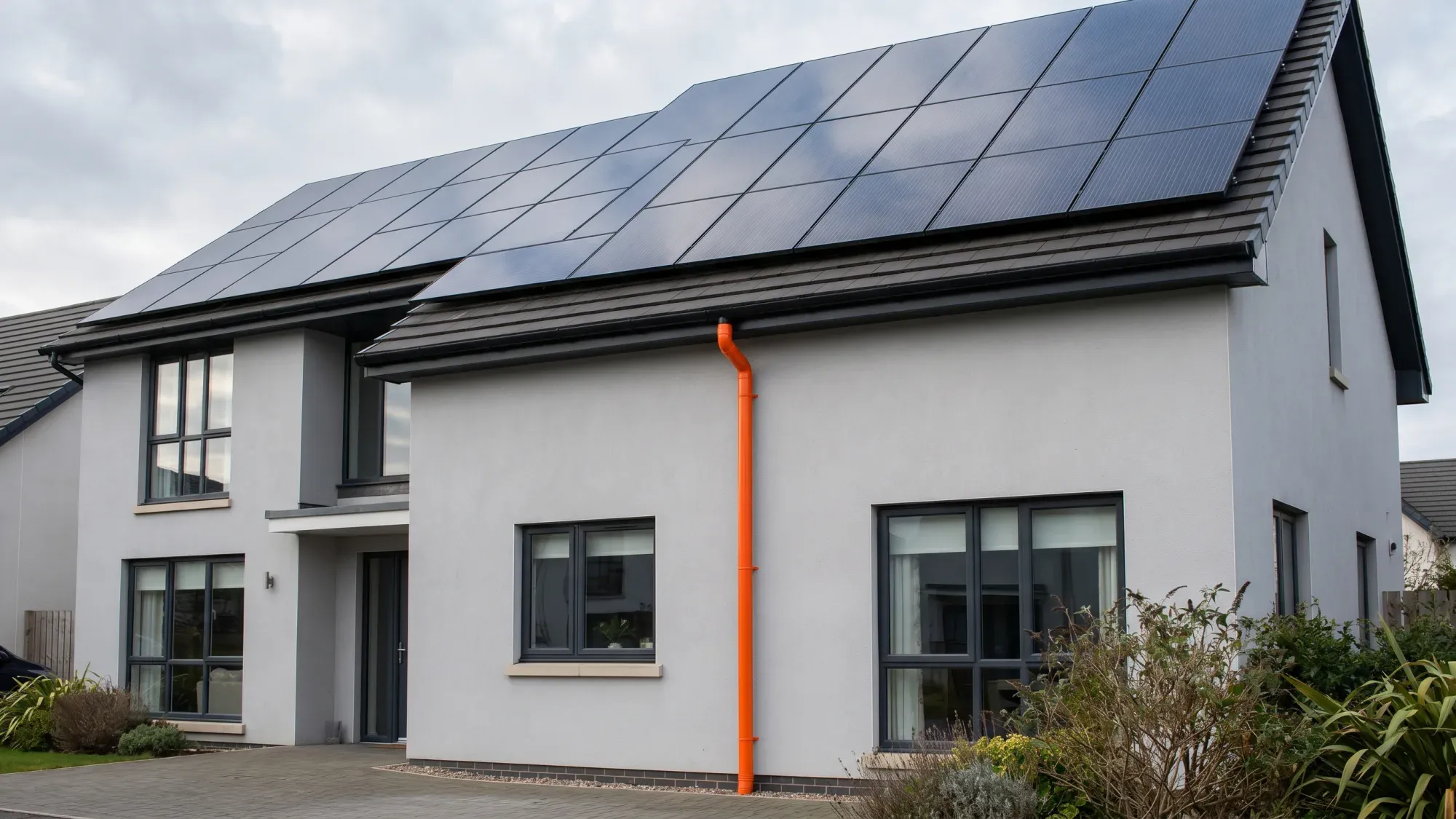
An Export MPAN is a unique 21-digit reference number that identifies an electricity export supply point in the UK. This number is crucial for homeowners with microgeneration systems, such as solar panels, who want to earn money from the surplus electricity they send back to the grid. Without it, energy suppliers cannot accurately measure or pay you for the power you contribute to the National Grid.
Understanding your Export MPAN is key to unlocking payments for your generated electricity. Fuse Energy offers clear pricing and smart tools to help you manage your energy, including any export payments. Click here to see how Fuse can support your home energy needs.
Enter your address to get a quote and see how much you could save
What is an export MPAN?
An Export MPAN, or Meter Point Administration Number, is a unique 21-digit reference number that identifies an electricity export supply point in the UK. Think of it as a specific address for the electricity your solar panels send back to the grid. Energy suppliers and network operators use it to register your export meter point, record how much you export, and ensure you are paid for it under a Smart Export Guarantee (SEG) tariff or other export arrangement.
Understanding the 21-digit identifier
The full MPAN is a 21-digit number, though the core unique ID is often 13 digits, which is the part most often used to identify the supply. This industry identifier is created as part of the process of connecting your property to the electricity network, a process managed by your Distribution Network Operator (DNO).
Export MPAN vs import MPAN
It is easy to confuse an export MPAN with an import MPAN, but they serve entirely different functions. Your import MPAN identifies the meter point through which electricity enters your home from the grid. It is assigned when your property is connected to the network and appears on every electricity bill you receive, usually prefixed with the letter 'S'.
In contrast, your export MPAN identifies the meter point through which surplus electricity from your microgeneration system leaves your property and flows back to the grid. It is created specifically because you have a generation source at your property. While your import MPAN helps your supplier bill you, your export MPAN helps your supplier pay you.
Why you need an export MPAN
If you have a microgeneration system installed, an Export MPAN is essential for getting paid for the surplus electricity you generate and send back to the grid. Without a valid Export MPAN registered against your property, most suppliers cannot set up export payments.
Earning from your microgeneration
Microgeneration systems, such as solar panels, allow you to produce your own electricity. When you generate more electricity than you use, the excess can be exported back to the grid. An Export MPAN ensures that this exported electricity is accurately measured and attributed to your property, enabling you to receive payments for your contribution.
The Smart Export Guarantee (SEG)
The SEG is a UK government scheme that pays you for exporting surplus renewable electricity to the grid. This scheme mandates larger energy suppliers to offer tariffs for exported electricity from small-scale low-carbon generators. To qualify for an SEG tariff, you will usually need an eligible renewable system, MCS certification, a smart meter, and crucially, an Export MPAN. The average UK home uses around 2,500 kWh of electricity per year1, highlighting the potential for microgenerators to offset their own consumption and earn from their surplus energy.
What is the SEG?
The SEG is a UK government scheme that ensures homeowners with renewable energy systems are paid for the surplus electricity they export to the National Grid. It requires larger energy suppliers to offer export tariffs, with payments based on the amount of electricity exported.
How to find your existing export MPAN
If you already have a microgeneration system and believe you should be receiving payments, you might already have an Export MPAN.
Checking your bills and documents
Your import MPAN is typically found on your electricity bill. However, an Export MPAN does not automatically appear on your electricity bill. If you are already receiving SEG payments, your energy supplier should list your Export MPAN on your export tariff documents, statements, or within your online account or app.
Contacting your current supplier
If you cannot find your Export MPAN on your documents, the quickest way to check if one exists is to contact your current energy supplier directly. They should be able to provide you with this information if it has already been registered for your property. You might also consider how to switch energy supplier if your current provider isn't meeting your needs.
Obtaining a new export MPAN: a step-by-step process
If you have a microgeneration system but do not have an Export MPAN, you will need to apply for one. This process primarily involves your DNO.
Identifying your distribution network operator (DNO)
Your DNO is the company that owns and operates the local electricity distribution network in your region. They are responsible for the physical infrastructure that delivers electricity to your property, not your energy supplier.
The quickest way to find your DNO is by using the Energy Networks Association (ENA) postcode lookup tool. Simply enter your postcode, and the tool will tell you which DNO covers your area, along with their contact details. You can find this tool at energynetworks.org/customers/find-my-network-Operator.
Applying to your DNO
Your Export MPAN is created and registered in the national database following the connection of your microgeneration system to the grid. This typically occurs alongside, or shortly after, the G99 or G98 application notification or approval process, which is the formal mechanism for small-scale generators to notify their DNO before connecting to the grid. Your installer should initiate this DNO notification as part of the installation process.
What to expect after application
Once your DNO has been notified and the necessary paperwork submitted, they will process your application, and your Export MPAN will be registered. The timeframe for this can vary depending on your DNO and their current workload. If you experience delays, it may be worth contacting your DNO directly.
Connecting your export MPAN to an SEG tariff
Once you have secured your Export MPAN, the next step is to apply for an SEG tariff with an eligible energy supplier.
Eligibility requirements
To be eligible for an SEG tariff, you generally need an eligible renewable energy system installed by a certified installer (often MCS certified), a working smart meter, and proof of grid connection. Your Export MPAN is a key piece of administrative information that needs to be in place for your supplier to register your exported electricity and pay you.
The role of smart meters
A smart meter is crucial for SEG tariffs as it measures your electricity usage and, importantly, the amount of electricity you export to the grid. For most SEG tariffs, you will need a meter capable of taking half-hourly export readings, which typically means a smart meter installation that can accurately record export data. Without reliable export readings, reliable export payments are not possible.
Maximising your export earnings
With your Export MPAN in hand and a smart meter correctly configured, you can then choose an SEG tariff that best suits your needs. While there are no set SEG rates, suppliers must offer a rate greater than zero. Some suppliers offer variable tariffs that fluctuate with market demand, while others offer fixed rates. Comparing different SEG tariffs can help you maximise your earnings from your exported electricity.
Fuse Energy supports microgenerators by helping you manage your SEG payments. Once you have secured your Export MPAN, Fuse's digital tools and 24/7 human customer support can help you manage your export data and SEG payments, empowering you to earn from your generated electricity.
Managing your energy, especially with microgeneration, should be straightforward. Fuse Energy provides clear pricing, real-time usage data through our app, and 24/7 human customer support to make your energy experience as simple as possible. We focus on empowering you to understand and control your energy use and earnings. Click here to switch to Fuse Energy today and take control of your energy. You can also learn more about our mission to make energy abundant and affordable by clicking here.
References
Disclaimer
For the avoidance of doubt, this article is provided for informational purposes only and is not intended to constitute legal or financial advice. The author and/or Fuse Energy shall not be responsible for any losses arising out of any reliance on the information contained herein.