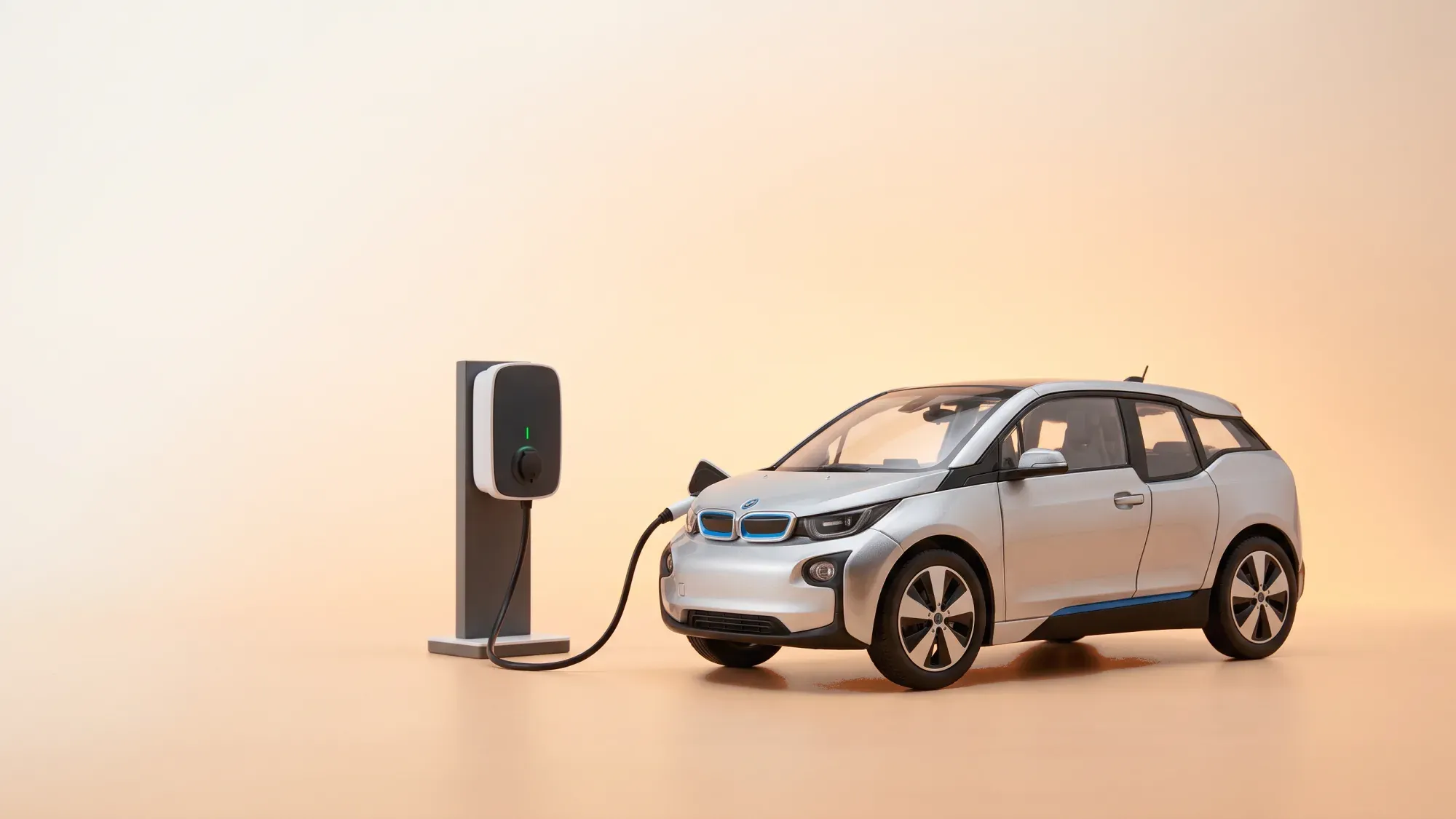
The tax landscape for electric vehicle (EV) ownership in the UK has changed significantly, with electric cars now subject to Vehicle Excise Duty (VED) since April 2025. This shift means understanding the financial aspects of owning an EV is more important than ever for managing motoring costs.
Understanding these changes can help you plan your motoring costs. If you are looking to optimise your EV charging costs, Fuse Energy offers clear pricing and real-time usage data to help you manage your energy. Click here to switch to Fuse Energy today and start saving.
For many years, electric vehicles enjoyed an exemption from VED in the UK, a policy designed to encourage the adoption of greener transport. This exemption was a key incentive for drivers to switch from petrol and diesel cars. VED is commonly referred to as 'road tax' in the UK, although it is technically a tax on vehicle ownership rather than road usage.
The VED exemption (prior to 1 April 2025)
Prior to 1 April 2025, fully electric vehicles were exempt from paying VED. This meant owners of eligible EVs paid nothing in annual road tax. This exemption was put in place to incentivise the uptake of EVs, helping to reduce carbon dioxide (CO2) emissions and improve air quality. The changes to VED for electric vehicles were announced in the Autumn Statement 2022 and came into effect from April 2025.
Current VED rates for electric cars (from 1 April 2025)
Since 1 April 2025, electric cars have been subject to VED, bringing them in line with petrol and diesel vehicles.
- New electric cars (registered on or after 1 April 2025): These vehicles pay a first-year VED rate of £10. From their second year onwards, they pay the standard annual rate of £200.
- Existing electric cars (registered between 1 April 2017 and 31 March 2025): These vehicles pay the standard rate of £200 per year from 1 April 2025.
- Older electric cars (registered between 1 March 2001 and 31 March 2017): These vehicles pay £20 a year from 1 April 2025.
Understanding the first year rate and standard rate
From their second year onwards, most electric cars will pay the standard annual rate of VED, which is £200. This means that while the initial VED cost might be minimal, owners should factor in the standard annual charge for subsequent years.
Beyond the standard VED rates, certain electric vehicles are also subject to an additional charge known as the 'expensive car supplement' (ECS). This applies to higher-value vehicles regardless of their fuel type.
How the supplement applies to electric vehicles
Electric vehicles are no longer exempt from the expensive car supplement as of 1 April 2025. The threshold for this supplement for electric vehicles was £40,000 from 1 April 2025 to 31 March 2026. However, from 1 April 2026, the ECS threshold for electric vehicles increased to £50,000. This means that electric cars with a list price exceeding £50,000 will be subject to the supplement. The supplement is charged for five years, starting from the second year of registration.
Calculating the additional cost
The expensive car supplement is £440 per year from 1 April 2026. This is added to the standard annual VED rate. For an EV registered after 1 April 2025 with a list price over £50,000, this means an annual VED payment of £200 (standard rate) plus £440 (supplement), totalling £640 for five years from the second year of registration.
Impact on higher-value EVs
This supplement significantly impacts the total cost of ownership for higher-value electric vehicles. Owners considering purchasing an EV with a list price above £50,000 should account for this additional charge in their financial planning.
The UK government is actively exploring new ways to tax road usage, which could further impact EV owners in the future.
What is pay-per-mile taxation?
Pay-per-mile taxation, also known as road pricing or mileage-based car tax, is a system where drivers are charged based on the distance they travel. This could replace or supplement existing vehicle taxes like VED. The UK government is exploring future road pricing mechanisms, including pay-per-mile schemes.
Potential impact on EV owners
For EV owners, a pay-per-mile scheme could mean a shift from fixed annual VED costs to variable charges based on actual mileage. This might benefit low-mileage drivers but could increase costs for those who cover significant distances.
Staying informed about future policy
Future proposals such as pay-per-mile taxation would require new legislation and public consultation. Staying informed about ongoing government consultations and policy changes regarding EV taxation is crucial for managing future motoring costs.
While VED changes are a new consideration, they are just one part of the overall cost of owning an electric vehicle.
Beyond VED: insurance, maintenance, and charging
Beyond VED, EV owners must consider insurance, maintenance, and energy costs. EVs often have lower maintenance requirements than petrol or diesel cars due to fewer moving parts. However, insurance premiums can sometimes be higher due to specialised components and repair costs.
The role of energy costs in total ownership
Energy costs, specifically electricity for charging, represent a significant portion of an EV's running expenses. These costs can fluctuate based on electricity tariffs, charging habits, and the efficiency of the vehicle. Optimising charging can help mitigate the impact of rising tax burdens.
Strategies for cost mitigation
To manage overall EV running costs, consider strategies such as off-peak charging, utilising smart charging solutions, and exploring tariffs designed for EV owners. These approaches can help reduce the amount spent on electricity, offsetting other expenses.
Managing your EV's energy consumption is key to keeping running costs down. Fuse Energy offers clear pricing, real-time usage data, and 24/7 human customer support to help you optimise your charging and manage your overall energy bills. Switching to Fuse is quick and easy, allowing you to take control of your energy usage and make informed decisions. Click here to switch to Fuse Energy today. You can also learn more about our mission to make energy simpler and more sustainable by clicking here.