Do you need planning permission for solar panels?
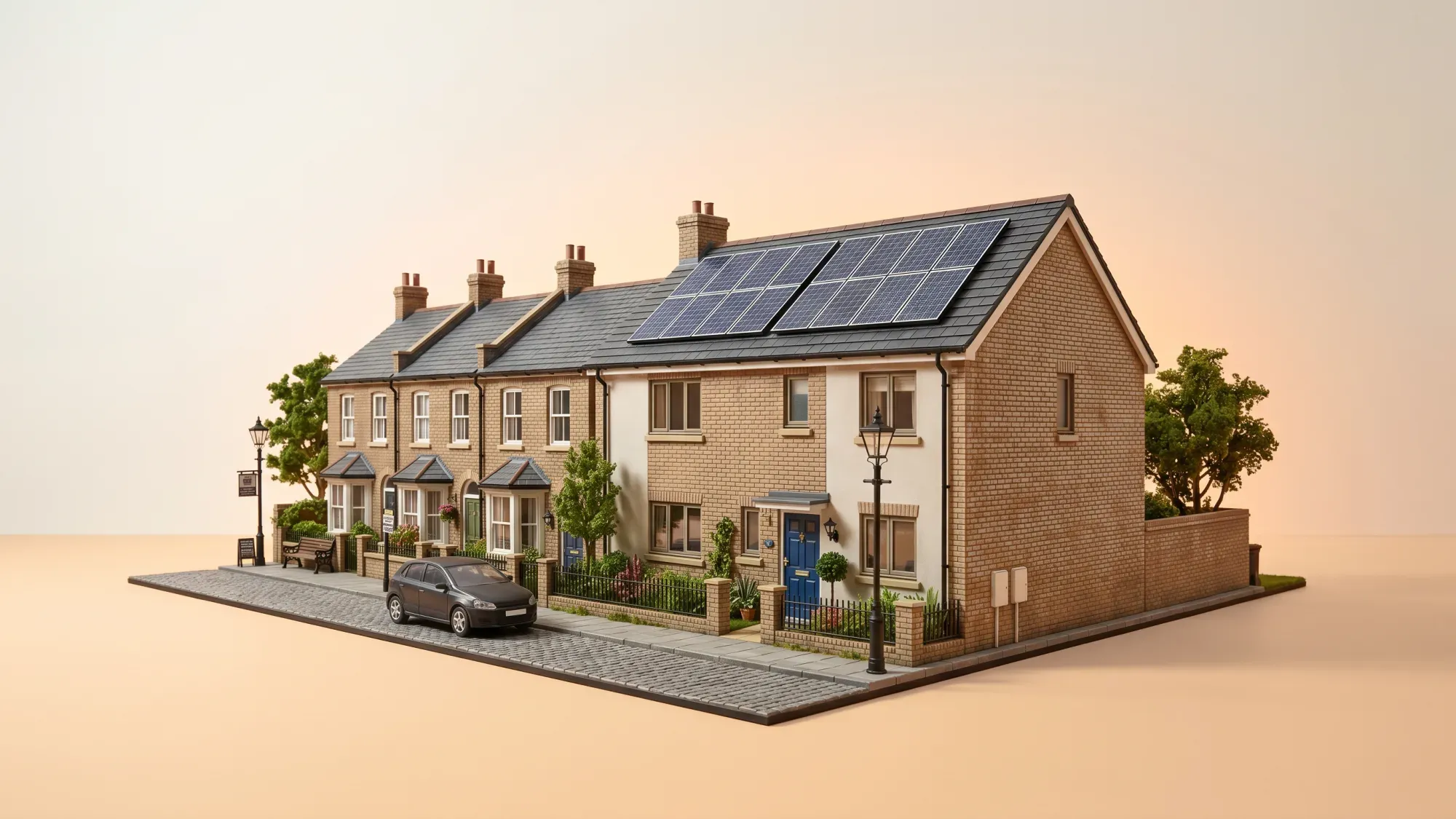
Installing solar panels can significantly reduce your electricity bills and carbon footprint, but understanding the planning permission requirements in the UK is crucial to a smooth installation. Most domestic solar panel installations in England do not require full planning permission, thanks to Permitted Development Rights (PDRs). However, specific conditions apply, particularly for homes in Conservation Areas or those that are Listed Buildings, where stricter rules often mean you'll need to apply for full planning permission or Listed Building Consent.
This guide demystifies the regulations, helping you navigate the process with confidence. Fuse Energy supplies electricity and offers smart tools and export tariffs for homes with solar, but does not handle solar panel installation or planning applications.
Understanding permitted development rights for solar panels
Permitted Development Rights (PDRs) allow certain types of development to proceed without needing a full planning application. For solar panels, these rights were introduced to encourage renewable energy adoption by simplifying the process.
What are permitted development rights?
PDRs are a set of national planning rules that grant automatic planning permission for specific minor developments, provided they meet certain conditions and limitations. In England, these rights are primarily set out in The Town and Country Planning (General Permitted Development) (England) Order 2015. This means that if your solar panel installation falls within these parameters, you can bypass the often lengthy and complex full planning application process.
Conditions for roof-mounted solar panels
For roof-mounted solar panels on domestic properties, several conditions must be met for the installation to be considered permitted development:
- Projection from the roof: Panels should not protrude more than 200mm from the roof plane.
- Height: The panels must not be installed above the highest part of the roof, excluding features like chimneys.
- Minimising impact: The installation should be sited, as far as practicable, to minimise its effect on the external appearance of the building and the amenity of the area.
- Removal: When no longer needed, the equipment should be removed as soon as reasonably practicable.
When PDRs don't apply
While PDRs cover most domestic solar installations, there are key exceptions where full planning permission will be required:
- Listed buildings: Properties that are listed buildings almost always require Listed Building Consent, in addition to or instead of planning permission.
- Conservation areas: While PDRs can apply, stricter conditions often mean planning permission is needed, especially if panels are on a principal elevation or visible from a highway.
- Article 4 directions: Local planning authorities can issue an Article 4 Direction, which removes specific permitted development rights in a defined area, usually to protect an area's special character.
- Flats: PDRs for solar panels typically apply to dwelling houses, so if you live in a flat, you should contact your local planning authority for guidance.
- Exceeding PDR limits: If your proposed installation exceeds the size, height, or projection limits set out by the PDRs, you will need to apply for full planning permission.
Solar panels in conservation areas
Conservation Areas are designated for their special architectural or historic interest, meaning any alterations must demonstrate that they won't harm the area's character.
Specific rules for conservation areas
While solar panels are generally permitted in conservation areas, the rules are stricter to protect the visual amenity of the area.
- Visibility from a highway: Solar panels cannot be installed on a wall that fronts a highway (a road, path, or open space over which the public has a right of way).
- Principal elevation: Panels may be restricted on the principal elevation (the front of the house) or a side elevation visible from a highway.
- Minimising visual impact: Installations must be sited to minimise their effect on the building's appearance and the amenity of the area.
Applying for consent in a conservation area
If your installation in a conservation area does not meet the permitted development criteria, you will need to apply for planning permission. This involves submitting a detailed application to your local planning authority, demonstrating how the proposed solar panels will respect the character and appearance of the area. Early consultation with your local planning authority is always recommended if there is any doubt.
Solar panels on listed buildings
Listed Buildings have legal protection due to their historical or architectural significance, meaning any changes must preserve their appearance and character.
Why listed building consent is crucial
Installing solar panels on a Listed Building almost always requires Listed Building Consent. This is a separate consent from planning permission, though often applied for concurrently. Unauthorised works to a listed building can be a criminal offence. The primary concern is that the installation should not harm the building's special interest or original fabric. Some listed buildings may not be suitable for solar PV if the installation would harm their significance, particularly if placed on a prominent roof slope.
The application process for listed buildings
To obtain Listed Building Consent, you'll need to apply to your local planning authority. Your application must detail how the solar panel system will affect the building's character, including how the panels will be installed, their appearance, and how they integrate with the existing structure. It's often beneficial to show that the installation can be reversible if needed. Engaging with specialists experienced in heritage settings can significantly improve your chances of approval.
Ground-mounted and agricultural solar panels
Ground-mounted solar arrays and installations on agricultural buildings have different Permitted Development Rights and limitations compared to roof-mounted domestic installations.
Permitted development for ground-mounted systems
For stand-alone ground-mounted solar arrays, permitted development rights apply under specific, tighter conditions.
- Area limit: The total panel area must not exceed 9 square metres.
- Height limit: No part of the installation should be higher than 4 metres. In conservation areas, if the equipment is closer to a highway than the nearest part of the house, it should not be higher than 2 metres.
- Boundary setback: The installation must be at least 5 metres from any property boundary.
- Single installation: Only the first stand-alone ground-mounted solar installation is considered permitted development; any additional arrays will require planning permission.
- Conservation Areas/Listed buildings: Ground-mounted systems in conservation areas or within the curtilage of a listed building may have further restrictions or require planning permission.
Considerations for agricultural buildings and land
Solar panels on agricultural buildings also fall under specific permitted development rules, which differ from domestic installations. While a detailed breakdown of agricultural planning is beyond the scope of this guide, generally, large ground-mounted arrays (often referred to as solar farms) typically require full planning permission due to their scale and potential visual impact. For smaller installations on farm buildings, similar principles to non-domestic rooftop solar may apply, but it's always best to consult the local planning authority.
Navigating the planning application process
Even if your project requires full planning permission, the process is manageable, and understanding the steps can help you avoid delays.
When full planning permission is required
Full planning permission is required when your proposed solar panel installation does not meet the conditions for permitted development. This includes:
- Installations on Listed Buildings (requiring Listed Building Consent).
- Installations in Conservation Areas that don't meet the stricter PDR conditions.
- Installations exceeding the size, height, or projection limits of PDRs.
- Properties subject to an Article 4 Direction that removes PDRs for solar.
- Additional ground-mounted arrays beyond the first one.
Steps to apply for planning permission
If you need to apply for planning permission, the process generally involves these steps:
- Pre-application advice: Contact your local planning authority for informal advice before submitting a formal application. This can help you understand local policies and potential issues.
- Prepare your application: This typically includes detailed drawings, plans, and a design and access statement explaining your proposal and its impact. For Listed Buildings, a heritage statement is often required.
- Submit your application: Applications are usually submitted online via the Planning Portal or directly to your local council. A fee will be required.
- Consultation and decision: The local planning authority will consult with neighbours and other relevant bodies. They aim to make a decision within eight weeks for most minor applications.
- Conditions: If approved, your permission may come with conditions that you must adhere to during and after installation.
Distinguishing planning permission from building regulations
It's important to understand that planning permission and Building Regulations approval are two separate requirements.
- Planning permission: Focuses on the visual impact and whether the installation affects protected buildings or designated areas. It's about the right to carry out the work.
- Building regulations: Ensure the safety, structural integrity, and energy efficiency of the installation. This covers aspects like the roof's ability to support the panels' weight, electrical safety, and fire safety. Most solar panel installations will need to comply with Building Regulations, and your MCS-certified installer will usually handle this, often self-certifying their work.
What is the difference between planning permission and Building Regulations?
Planning permission concerns whether you can carry out a development based on its visual impact and effect on protected areas or buildings. Building Regulations, on the other hand, ensure the safety, structural integrity, and energy efficiency of the work itself, covering aspects like the roof's load-bearing capacity and electrical safety. Both are distinct legal requirements.
By understanding these distinctions and the specific requirements for your property, you can confidently move forward with your solar panel project.
Disclaimer
For the avoidance of doubt, this article is provided for informational purposes only and is not intended to constitute legal or financial advice. The author and/or Fuse Energy shall not be responsible for any losses arising out of any reliance on the information contained herein.