Strategic advantages of commercial solar installation
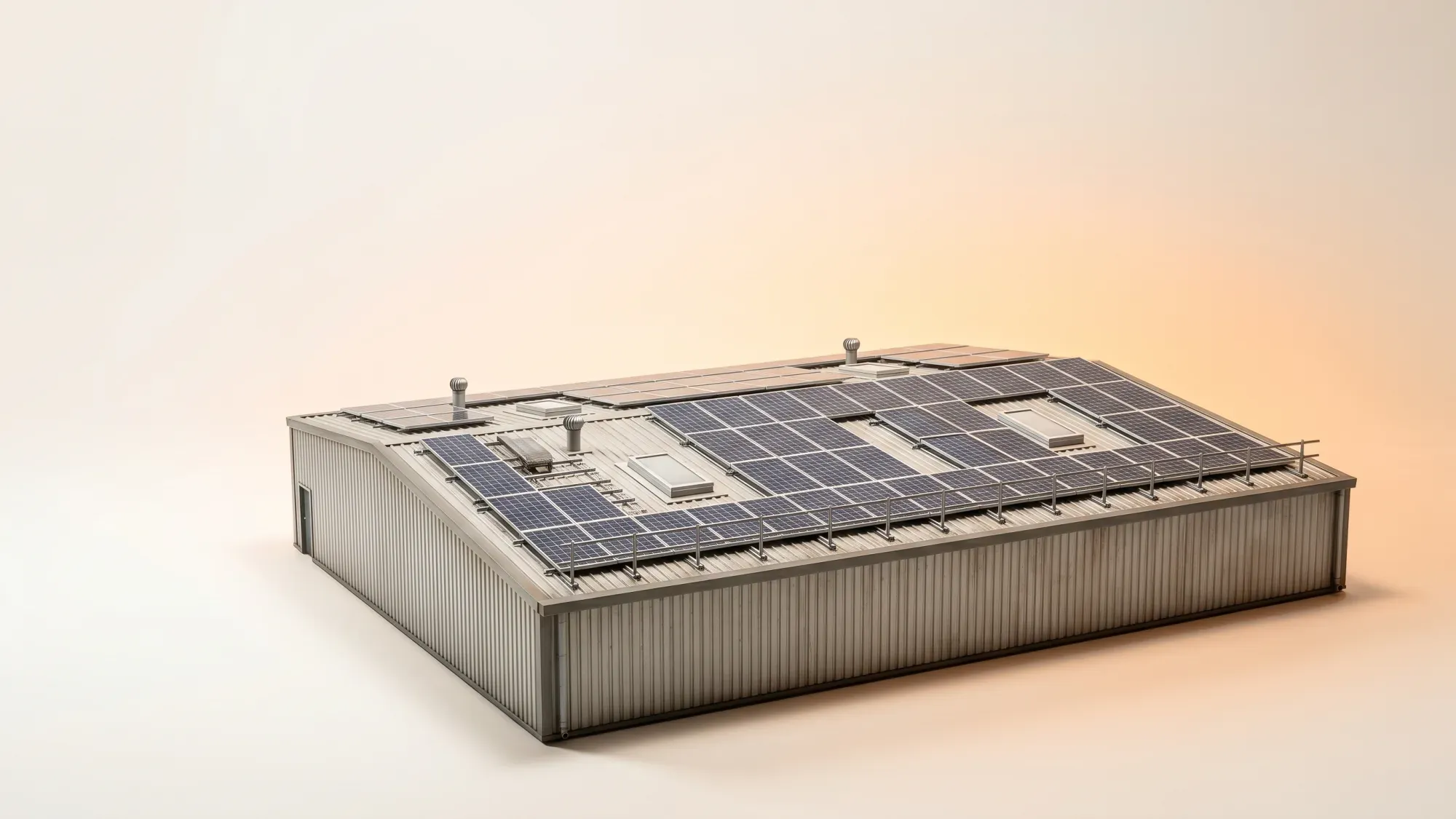
Commercial solar panels offer UK businesses a clear path to significant long-term energy savings and enhanced sustainability. With rising energy costs and increasing pressure to reduce carbon footprints, investing in commercial solar installation has become a compelling proposition for many organisations. This guide provides business owners and facility managers with clear, unbiased information on the feasibility, benefits, and process of installing commercial solar panels.
Understanding how to make the most of your energy is key, whether you're a business or a homeowner. For those managing their home energy, Fuse Energy offers clear pricing and tools to help you take control of your bills. Click here to switch to Fuse Energy today.
Enter your address to get a quote and see how much you could save
Why commercial solar panels make business sense
Installing commercial solar panels is more than just an energy upgrade; it is a strategic business decision that delivers multiple benefits.
Reducing operational costs
One of the most immediate and impactful advantages of commercial solar is the significant reduction in operational energy costs over the long term. By generating your own electricity, your business becomes less reliant on grid power, shielding you from volatile energy prices and providing greater financial predictability. Businesses can typically see reductions of 30% to 80% or more in electricity bills, depending on system size and energy consumption patterns.
Boosting your sustainability credentials
Adopting commercial solar panels visibly enhances your business's sustainability credentials and significantly reduces its carbon footprint. This commitment to renewable energy can improve your brand reputation, appeal to eco-conscious customers and investors, and help meet corporate social responsibility goals. Commercial properties with solar installations are also increasingly valued by buyers and tenants, partly due to improved Energy Performance Certificate (EPC) ratings.
Enhancing energy independence
Generating your own electricity provides a degree of energy independence, protecting your business from grid disruptions and supply chain vulnerabilities. This increased control over your energy supply contributes to greater operational resilience and long-term stability.
The commercial solar installation process
Undertaking a commercial solar installation involves several key stages, from initial assessment to final commissioning.
Initial assessment and design
The first step involves a thorough assessment of your business's energy needs and the suitability of your site for solar panels. This includes evaluating roof space, shading, structural integrity, and current electricity consumption patterns. A detailed design will then be developed, outlining the optimal system size and panel placement to maximise energy generation.
Planning and permissions
Navigating regulatory requirements is a crucial part of the process. Most commercial rooftop solar photovoltaic (PV) installations in England qualify as permitted development, meaning a full planning application is often not required, provided certain conditions are met. For instance, panels on pitched roofs should not extend more than 20 centimetres from the surface, and on flat roofs, they must not exceed one metre above the roofline.
However, planning permission is almost always required for listed buildings, properties in conservation areas, or for larger ground-mounted systems. All installations must also comply with relevant building regulations, covering structural load (Part A), fire safety (Part B), and electrical safety standards (BS 7671, Part P). Systems with an inverter capacity above 3.68kW per phase typically require a G99 application to your local Distribution Network Operator (DNO) before installation.
Installation and commissioning
Once permissions are secured and the design is finalised, the physical installation of the solar panels and associated equipment begins. This includes mounting the panels, installing inverters, and connecting the system to your business's electrical infrastructure. Following installation, the system undergoes commissioning, where it is tested and activated to ensure it operates safely and efficiently.
Financial considerations and incentives
Understanding the financial aspects is key to making an informed decision about commercial solar.
Understanding upfront costs and payback periods
The upfront cost of a commercial solar installation can vary significantly based on system size and complexity. For commercial solar PV systems in the UK, the average payback period typically ranges from 6 to 10 years. However, for energy-intensive businesses, this can be as low as 3 to 6 years, especially after considering tax relief. Commercial solar panels typically have a lifespan of 25 to 30 years, with many systems continuing to generate useful electricity for longer. This means businesses can enjoy many years of free electricity after the initial investment is recouped.
UK government grants and tax relief
The UK government offers various incentives to encourage commercial solar adoption. The most significant is the Annual Investment Allowance (AIA), which allows businesses to deduct 100% of the solar system cost from taxable profits in the year of purchase, up to £1 million. This can significantly reduce the effective cost of the installation.
Other incentives include:
- Smart Export Guarantee (SEG): This scheme mandates energy suppliers to pay businesses for surplus electricity exported back to the National Grid.
- Business rates exemption: Commercial solar panels installed on business premises are exempt from business rates for 10 years.
Financing options for businesses
Several financing options are available to support commercial solar projects:
- Outright purchase: Buying the system outright offers the highest long-term returns and full tax benefits.
- Power purchase agreements (PPAs): A third party owns and installs the system, and your business buys the generated electricity at a reduced rate, often with zero upfront cost.
- Lease or hire purchase: These options spread the cost over time, allowing businesses to gain use of the system with lower monthly payments.
- Commercial solar loans: Many lenders offer specific financing products for solar installations.
Choosing the right commercial solar installer
Selecting a reputable and qualified installer is paramount for a successful commercial solar project.
Key certifications and experience
Always choose an installer certified by the Microgeneration Certification Scheme (MCS). MCS certification ensures that products and installers meet high standards of quality, safety, and performance, and is often required for eligibility for certain incentives like the SEG. An MCS-certified installer will ensure compliance with UK safety regulations and industry standards.
Evaluating quotes and proposals
Obtain detailed quotes from multiple MCS-certified commercial solar installers. Compare not just the price, but also the proposed system design, panel quality, inverter technology, warranties, and estimated energy output. A comprehensive proposal should include a detailed financial model, projecting generation, savings, payback, and return on investment (ROI) specific to your building and consumption.
Long-term support and maintenance
Consider the long-term support and maintenance offered by the installer. While solar panels are durable, inverters typically need replacing after 10 to 15 years. A good installer will offer ongoing monitoring and maintenance services to ensure optimal system performance throughout its lifespan.
Maximising your commercial solar investment
To truly benefit from your commercial solar installation, ongoing management and strategic planning are essential.
Monitoring performance and optimisation
Regularly monitoring your system's performance is crucial to ensure it is generating electricity as expected. Most modern systems come with monitoring platforms that allow you to track energy production and consumption. Identifying and addressing any dips in performance promptly can help maximise your savings and ROI. Pairing solar panels with battery storage can further maximise cost savings by storing excess solar energy for use during peak tariff periods, significantly increasing self-consumption.
Future-proofing your energy strategy
A commercial solar installation is a long-term asset that future-proofs your business against rising energy costs and evolving environmental regulations. By integrating solar into your overall energy strategy, you gain greater control and resilience, contributing to a more sustainable and financially stable future for your business.
Investing in commercial solar panels offers a clear strategic advantage for UK businesses, delivering substantial cost savings, enhancing sustainability, and providing greater energy independence. By following a structured process, understanding the financial incentives, and choosing a certified installer, your business can unlock the full potential of solar energy.
While this guide focuses on commercial solar, managing your home energy effectively is just as important. Fuse Energy is committed to making energy abundant and accessible for every household. We offer clear pricing, real-time usage data through our app, and 24/7 human customer support to help you take control of your energy bills. Switching to Fuse Energy is quick and easy, designed to give you a modern energy experience. Click here to switch to Fuse Energy today and discover a smarter way to power your home. You can also learn more about our mission to build a future with abundant energy here.
Disclaimer
For the avoidance of doubt, this article is provided for informational purposes only and is not intended to constitute legal or financial advice. The author and/or Fuse Energy shall not be responsible for any losses arising out of any reliance on the information contained herein.