Are electric cars cheaper to run?
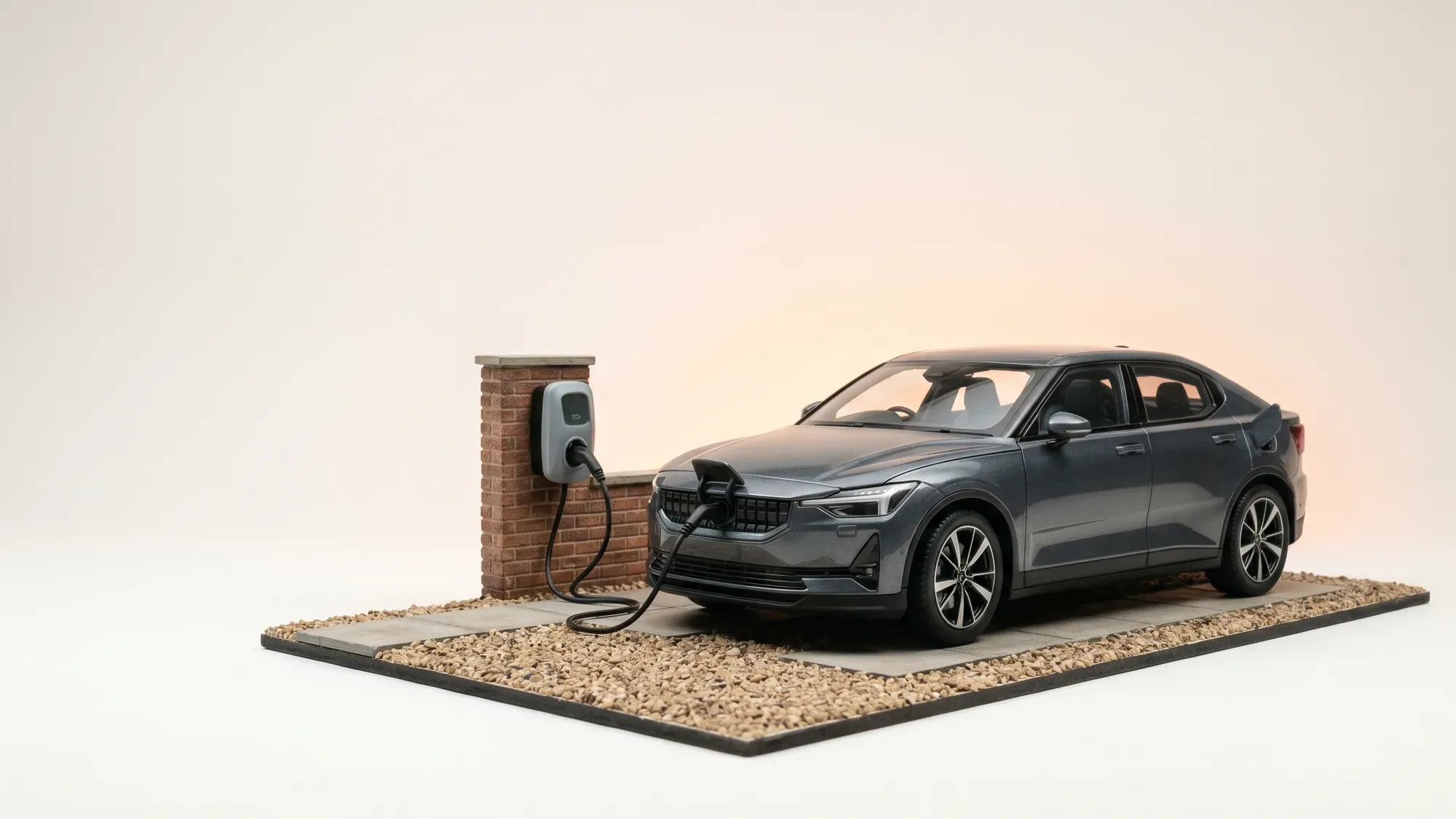
Electric cars are generally cheaper to run in the UK than petrol or diesel cars, primarily due to lower "fuel" costs, reduced maintenance, and significant tax benefits. Despite a potentially higher upfront purchase price, the total cost of ownership (TCO) for an electric car often becomes more favourable over several years.
Optimising your electric car running costs starts with smart charging. Fuse Energy helps you make the most of cheaper off-peak electricity rates, ensuring your EV charging is as economical as possible. Click here to see how Fuse Energy can help you save.
Enter your address to get a quote and see how much you could save
The true cost of electric car ownership
Beyond the purchase price
When considering an electric vehicle (EV), the initial purchase price can sometimes be higher than a comparable petrol or diesel car. However, focusing solely on this upfront cost overlooks the substantial savings available over the vehicle's lifespan. The real financial benefit of an EV emerges when you look at the running costs, which include everything from charging and servicing to road tax and insurance.
Key factors influencing running costs
The main factors that determine how much an electric car costs to run are its "fuel" (electricity), maintenance, and tax. These areas typically offer significant savings compared to internal combustion engine (ICE) vehicles, making EVs an increasingly attractive financial choice for UK drivers.
Fuel costs: electricity vs petrol and diesel
Home charging: the cheapest option
Charging an electric car at home is usually the most cost-effective way to power it. Under the Ofgem Price Cap for 1 July to 30 September 2026, electricity costs around 26.11p per kilowatt-hour (kWh) for Direct Debit customers on a Standard Variable Tariff. This is significantly cheaper per mile than petrol or diesel. The average UK home uses around 2,500 kWh of electricity per year1, providing a baseline for understanding EV charging consumption.
Public charging: what to expect
While home charging offers the best value, public charging costs can vary widely. Rapid chargers, often found at motorway service stations, are generally more expensive than slower chargers. However, even with public charging, electricity can still be more economical than traditional fuels, depending on the network and tariff.
Impact of smart tariffs and charging habits
Smart tariffs, particularly those designed for EV owners, can dramatically reduce charging costs. These tariffs offer cheaper electricity rates during off-peak hours, typically overnight. By scheduling charging during these periods, EV owners can maximise their savings. Your charging habits - whether you primarily charge at home, use public rapid chargers, or take advantage of off-peak rates - will significantly impact your overall fuel expenditure.
Maintenance and servicing savings
Fewer moving parts, less wear and tear
Electric vehicles typically have up to 40% lower servicing and maintenance costs than internal combustion engine (ICE) vehicles. This is because EVs have far fewer moving parts compared to petrol or diesel cars. There's no engine oil to change, no spark plugs, no clutch, and no complex exhaust system, all of which are common maintenance items in ICE vehicles. This simpler mechanical design means less can go wrong and fewer components need regular replacement.
Regenerative braking benefits
Another key factor in lower EV maintenance is regenerative braking. This system uses the electric motor to slow the vehicle, converting kinetic energy back into electricity that recharges the battery. This process significantly reduces wear and tear on traditional brake pads and discs, meaning they last much longer than those on a petrol car.
Tax benefits and government incentives
Vehicle Excise Duty (road tax) exemptions
Historically, electric cars were exempt from Vehicle Excise Duty (VED), commonly known as road tax. However, from April 2025, changes to VED rules mean that electric cars registered on or after 1 April 2025 will pay £10 in their first year, then £200 annually from the second year onwards. EVs registered between 1 April 2017 and 31 March 2025 will pay a flat £200 annually, while older electric cars registered before 1 April 2017 pay £20 per year. Despite these changes, EVs still generally offer lower VED costs compared to many petrol or diesel cars.
Looking further ahead, a new mileage-based charge called Electric VED (eVED) will be introduced from April 2028. This will charge electric cars at 3p per mile and plug-in hybrids at 1.5p per mile.
Company car tax advantages
Electric cars benefit from significantly lower Company Car Tax (Benefit-in-Kind or BiK) rates compared to petrol or diesel cars, making them particularly attractive for business users. For the 2026/27 tax year, the BiK rate for a fully electric company car is 4% of its taxable list price. This is substantially lower than the rates for petrol and diesel cars, which can be as high as 37%. These rates are set to rise gradually but remain low, reaching 5% in 2027/28, 7% in 2028/29, and 9% in 2029/30.
Understanding chargepoint grants
The Office for Zero Emission Vehicles (OZEV) offers grants to help with the cost of installing EV charge points, extended until 31 March 2027. The EV Chargepoint Grant for renters and flat owners provides up to £500 towards installing a chargepoint at the property, provided they have private off-street parking. Similarly, the EV Chargepoint Grant for households with on-street parking offers up to £500 for those installing a cross-pavement solution.
It's crucial to understand the eligibility criteria. The Electric Vehicle Homecharge Scheme (EVHS) for owner-occupiers in houses with off-street parking has been discontinued. A typical homeowner who owns and lives in a house with private off-street parking does not qualify for any current domestic chargepoint grant. For all current domestic OZEV chargepoint grants, the customer applies for the grant themselves via the GOV.UK eligibility/application page; the OZEV-authorised installer's role begins only after the customer's application is approved.
Total cost of ownership: a long-term view
Initial investment vs lifetime savings
While the upfront purchase price of an electric car can be higher, the lower running costs for fuel, maintenance, and tax often lead to a more favourable total cost of ownership over several years. The cumulative savings from cheaper charging and reduced servicing can offset the initial premium, making EVs a sound financial decision in the long run.
Resale value and depreciation
Depreciation is a significant factor in the total cost of ownership for any vehicle. Electric vehicle values saw some fluctuations in previous years, but the market has been stabilising. The depreciation of an EV depends heavily on the specific model, battery health, and mileage, but it is broadly comparable to petrol cars over a three-year period for many models.
Optimising your electric car running costs with Fuse Energy
Managing your energy bills should be clear and easy to understand. Fuse Energy focuses on straightforward pricing, so you can see exactly what you're paying without unnecessary complexity. If you have a smart meter, you can view detailed usage data through the app or website, helping you understand how you can lower your bills. If you don't have a smart meter, Fuse Energy can upgrade your non-smart meter, completely for free. This can make it easier to track spending and make informed decisions about your energy use. Our 24/7 human support team is always on hand with fast response times whenever you need help. Click here to switch to Fuse Energy today. Find out about our mission by clicking here.
References
Disclaimer
For the avoidance of doubt, this article is provided for informational purposes only and is not intended to constitute legal or financial advice. The author and/or Fuse Energy shall not be responsible for any losses arising out of any reliance on the information contained herein.