Air source heating radiator compatibility
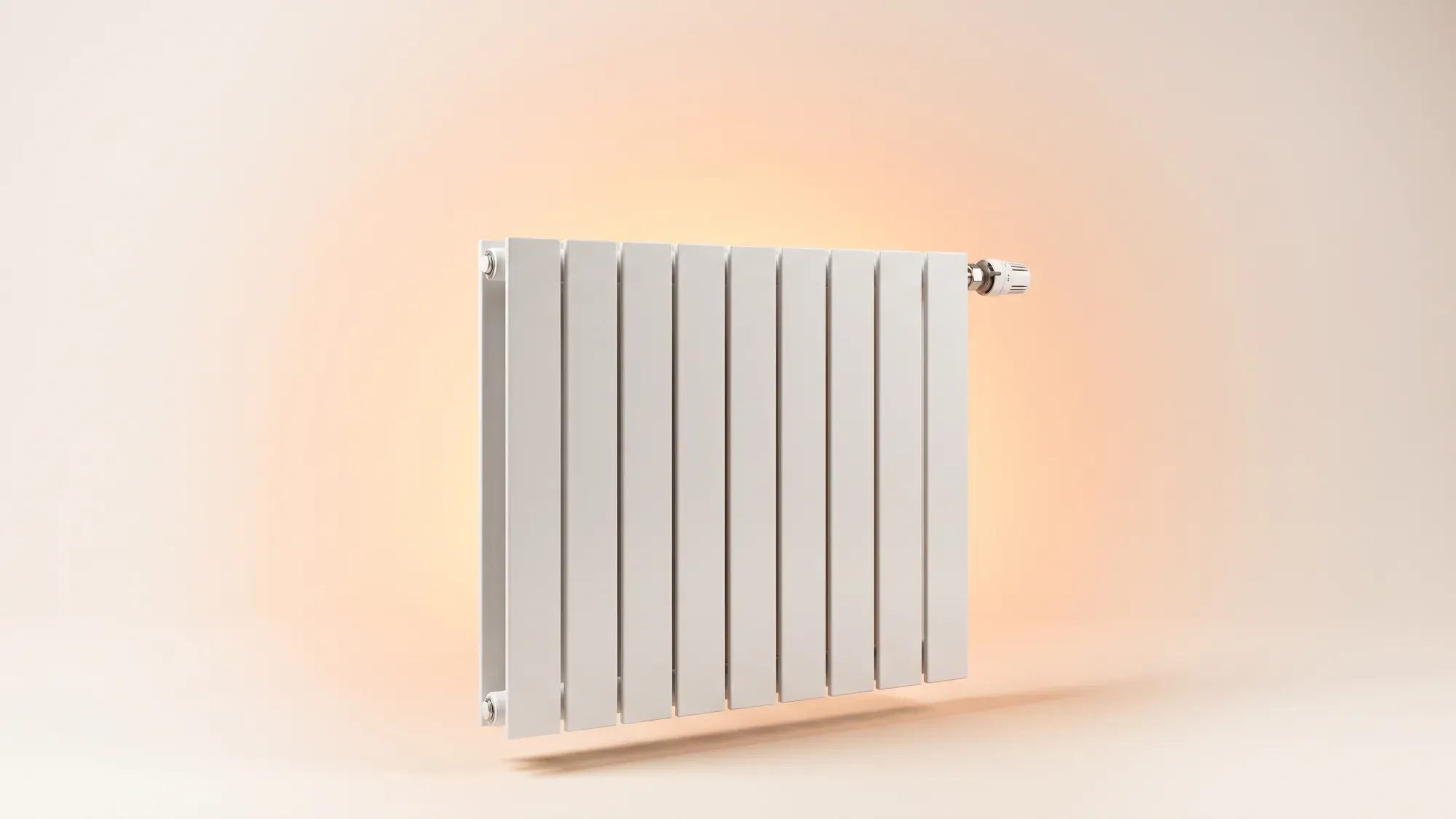
Switching to an air source heat pump can transform your home's heating. Understanding how it works with your existing radiators is crucial for efficiency and comfort. Here's how to integrate air source heat pumps with radiators, helping you make informed decisions for a more efficient energy future.
Considering an air source heat pump for your home? Fuse Energy can help you power it efficiently with smart tariffs and real-time usage data, ensuring you get the most from your low-carbon heating system. Click here to see how Fuse can support your energy needs.
Enter your address to get a quote and see how much you could save
Understanding air source heat pumps and radiators
Air source heat pumps (ASHPs) offer a low-carbon way to heat your home, extracting warmth from the outside air even in cold weather. They operate differently from traditional gas boilers, which impacts how they interact with your radiators.
How air source heat pumps work
Unlike a gas boiler that burns fuel to generate heat, an air source heat pump transfers heat from the air outside into your home's heating system. This process is highly efficient, especially when the system runs at lower temperatures over longer periods. ASHPs typically operate with flow temperatures between 35°C and 55°C.
The role of radiators in low-temperature systems
For an air source heat pump to work effectively, your radiators need to be able to emit enough heat at these lower flow temperatures. If your current radiators were designed for a high-temperature boiler system, they might not be large enough to adequately heat your rooms with the cooler water from a heat pump. This doesn't necessarily mean all your radiators need replacing, but it does mean they need careful assessment.
Key differences from traditional boilers
Traditional gas boilers usually send water to radiators at much higher temperatures, often between 60°C and 80°C. This allows them to heat a room quickly. Air source heat pumps, by contrast, are designed to run continuously at lower flow temperatures, typically between 35°C and 55°C, to maximise their efficiency. This difference is fundamental: heat pumps provide a steady, consistent warmth rather than short bursts of intense heat.
Assessing your existing radiators
Before installing an air source heat pump, it's crucial to evaluate your home's current heating setup. Assuming existing radiators will work efficiently without proper assessment is a common pitfall.
Compatibility: do you need new radiators?
Many homeowners wonder if their existing radiators are compatible with air source heat pumps. The answer isn't always a straightforward yes or no. While some existing radiators can work, they might need to be larger or more efficient to provide sufficient heat output at lower flow temperatures. Your MCS (Microgeneration Certification Scheme) certified installer will carry out a detailed heat loss calculation for each room and advise which radiators, if any, need to be replaced.
Checking radiator size and material
The size and material of your radiators directly impact their heat output. Larger radiators have more surface area to emit heat, which is beneficial for lower flow temperatures. Upgrading to larger radiators or those made from materials like aluminium can increase heat output at these lower temperatures. Radiators may need to be significantly larger than those used with a gas boiler.
Insulation: the foundation of efficiency
Effective home insulation is paramount for maximising the efficiency and comfort delivered by an air source heat pump system. A well-insulated home retains heat better, meaning your heat pump and radiators don't have to work as hard to maintain a comfortable temperature. For instance, proper insulation, such as loft and cavity wall insulation, can significantly reduce a home's heat loss.
Sizing and selecting radiators for optimal Performance
Correctly sizing and selecting radiators is vital for an efficient air source heat pump system. This ensures your home stays warm without overworking the heat pump.
Calculating heat output requirements
To determine the right size of radiator for each room, a professional heat loss calculation is essential. This calculation considers factors like room size, window area, insulation levels, and desired room temperature to work out how much heat each space needs. This ensures that your radiators are appropriately sized to deliver comfort at the heat pump's lower flow temperatures.
Types of radiators for heat pumps
While standard panel radiators can be used, larger double-panel, double-convector radiators are often recommended due to their increased surface area. Fan-assisted radiators are another excellent option, as they use a small fan to increase heat output at lower flow temperatures, potentially avoiding the need for larger replacements. Underfloor heating is also an ideal partner for heat pumps, operating at temperatures where heat pumps are most efficient.
Radiator temperature considerations
With an air source heat pump, radiators typically operate at flow temperatures of 35-55°C, meaning they will feel warm rather than very hot to the touch. This lower temperature is crucial for the heat pump's efficiency. Running the heat pump at 35°C can achieve a higher Coefficient of Performance (COP) than at 55°C, meaning it produces more heat for every unit of electricity consumed.
Integrating and optimising your heating system
A successful air source heat pump installation goes beyond just the unit itself; it involves careful system design and smart controls.
Professional installation and design
The installation of air source heat pumps and associated heating system components should be carried out by MCS (Microgeneration Certification Scheme) certified installers. This ensures quality, compliance with industry standards, and eligibility for government grants. An MCS-certified installer can provide expert advice on selecting the right system for your home and will conduct the necessary heat loss calculations.
Smart controls for enhanced efficiency
Integrating smart heating controls can significantly optimise the operation of your heat pump and radiators. These controls allow for precise temperature management, scheduling, and remote access, ensuring your home is warm when needed without wasting energy. Smart controls can adapt to your lifestyle, further enhancing the efficiency of your low-temperature heating system.
Addressing common radiator issues
If your radiators aren't getting hot enough with an air source heat pump, it often points to a sizing issue, poor insulation, or incorrect system settings. A professional assessment can identify the root cause, whether it's a need for larger radiators, improved insulation, or adjustments to your heat pump's flow temperature settings.
Financial aspects and future benefits
Investing in an air source heat pump and optimising your radiators offers significant long-term financial and environmental benefits.
Running costs and potential savings
While the upfront cost of a heat pump installation can be a consideration, the long-term running costs can be lower, especially as electricity prices fall relative to gas. The average UK home uses around 2,500 kilowatt-hours (kWh) of electricity per year1. Optimising your system with correctly sized radiators and good insulation ensures your heat pump runs as efficiently as possible, translating into lower energy bills.
Government grants and support schemes
The UK government offers financial incentives to encourage the adoption of low-carbon heating. The Boiler Upgrade Scheme (BUS) provides grants of £7,500 towards the cost of an air source heat pump installation in England and Wales2. To be eligible, installations must be carried out by an MCS-certified installer. This grant helps to significantly reduce the initial investment.
Long-term value and energy independence
Choosing an air source heat pump with optimised radiators is a step towards greater energy independence and a more sustainable future. By embracing efficient, future-proof heating solutions, homeowners can take control of their home's energy efficiency and comfort, moving beyond outdated systems. This investment not only reduces your carbon footprint but also provides a stable, comfortable home environment less susceptible to volatile energy markets.
Ready to make your home heating more efficient? Fuse Energy offers smart tariffs designed to complement low-carbon heating systems like air source heat pumps. With clear pricing, real-time usage data in the app, and 24/7 human support, you can take control of your energy bills. Click here to switch to Fuse Energy today and power your home with confidence. You can also learn more about our mission to make energy abundant by clicking here.
References
Disclaimer
For the avoidance of doubt, this article is provided for informational purposes only and is not intended to constitute legal or financial advice. The author and/or Fuse Energy shall not be responsible for any losses arising out of any reliance on the information contained herein.