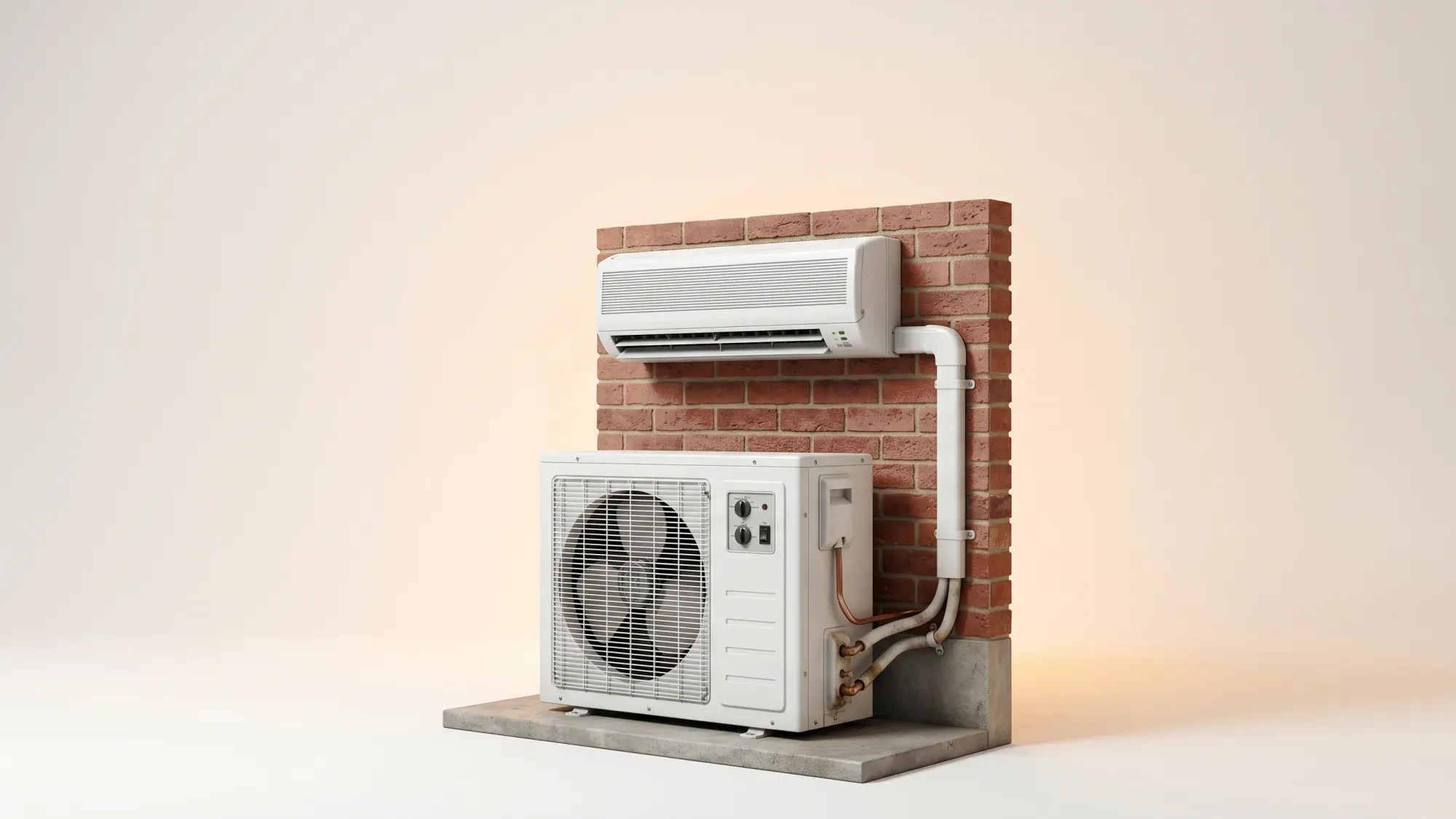
Running an air conditioner in the UK can feel like a luxury, but understanding its electricity consumption means you can enjoy comfortable cooling without the constant fear of high bills. Many homeowners and renters are concerned about high electricity costs, which can overshadow the comfort air conditioning provides. This guide helps you understand and manage your air conditioning electricity costs, enabling you to enjoy comfortable cooling without bill anxiety.
Understanding your air conditioner's electricity use is key to managing your home's comfort and energy bills. Fuse Energy provides clear insights into your energy consumption, helping you stay in control. Click here to switch to Fuse Energy today.
Air conditioning units work by moving heat from inside your home to the outside, rather than simply blowing in cold air. This process requires electricity to power components like compressors, fans, and refrigerants. The amount of electricity consumed directly impacts your running costs.
How air conditioners use energy
An air conditioner's primary job is to transfer thermal energy. It uses a refrigerant that absorbs heat from your indoor air, then pumps this heated refrigerant outside where the heat is released. The cooled refrigerant then cycles back indoors to repeat the process. This continuous cycle consumes electricity, with the compressor being the most energy-intensive component.
UK electricity costs: the Ofgem Price Cap
In the UK, electricity unit rates are regulated by the Ofgem energy price cap. This cap limits the maximum amount energy suppliers can charge per unit of electricity and gas. As of 1 July to 30 September 2026, the typical electricity unit rate for a Direct Debit household on a Standard Variable Tariff is around 26.11p per kWh, inclusive of 5% VAT. This rate is a crucial factor in determining your air conditioner's running costs.
To estimate how much your air conditioner costs to run, you need three pieces of information: its power consumption (in kilowatts), how many hours you use it, and your electricity unit rate.
The basic formula is:
Power (kW) × Hours Used × Cost per kWh = Running Cost
Let's look at some examples using the typical unit rate of 26.11p per kWh.
How much electricity does an air conditioner use per hour?
The power consumption of an air conditioner varies by its cooling capacity, usually measured in British Thermal Units (BTUs) or kilowatts (kW). For example, a 2.5 kW (9,000 BTU) air conditioner might typically consume between 0.8 kW and 1.2 kW of electricity.
| AC Unit Size (kW) | Typical Power Consumption (kW) | Cost per Hour (at 26.11p/kWh) | Cost for 8 Hours (daily) |
|---|
| 2.5 kW (9,000 BTU) | 0.8 - 1.2 kW | £0.21 - £0.31 | £1.68 - £2.48 |
| 3.5 kW (12,000 BTU) | 1.0 - 1.5 kW | £0.26 - £0.39 | £2.08 - £3.12 |
| 5.0 kW (18,000 BTU) | 1.5 - 2.5 kW | £0.39 - £0.65 | £3.12 - £5.20 |
Note: These figures are estimates. Actual consumption depends on the unit's efficiency, room size, insulation, and external temperature.
How much does it cost to run a portable air conditioner?
Portable air conditioners typically have lower cooling capacities than fixed split units but can be less efficient for their output. A common portable unit with a cooling capacity of 2.5 kW (9,000 BTU) might consume around 1.0 kW to 1.5 kW of electricity.
Using the 26.11p/kWh rate, a portable AC running at 1.2 kW would cost approximately £0.31 per hour to operate. For 8 hours of use, this would be around £2.48 per day. While convenient, their efficiency can be lower due to factors like heat exhaust hoses and less effective sealing.
Several factors determine how much electricity your air conditioner uses and, consequently, its running cost.
Energy efficiency rating (EER/SEER)
Air conditioners come with energy efficiency ratings:
- EER (energy efficiency ratio): Measures cooling efficiency at a single outdoor temperature.
- SEER (seasonal energy efficiency ratio): A more comprehensive measure, reflecting efficiency over an entire cooling season.
Higher EER or SEER ratings indicate greater efficiency, meaning the unit uses less electricity to produce the same amount of cooling. Look for units with A+++ ratings for the best performance.
Unit size and type
An air conditioner that is too large for a room will cycle on and off frequently, wasting energy. One that is too small will run constantly, struggling to cool the space effectively. Correct sizing is crucial for efficiency. Fixed split systems are generally more efficient than portable units.
Insulation and draught proofing
A well-insulated home with effective draught proofing will retain cool air better, reducing the amount of work your AC needs to do. This directly translates to lower electricity consumption.
Thermostat settings
Setting your thermostat to a comfortable yet reasonable temperature (e.g., 24°C) can significantly reduce energy use. Each degree lower on an AC thermostat can increase electricity consumption by around 5% to 10%.
Maintenance
Regular maintenance, such as cleaning or replacing air filters, ensures your unit runs efficiently. Dirty filters restrict airflow, making the unit work harder and consume more electricity.
Managing your air conditioner's electricity use doesn't mean sacrificing comfort. Here are practical tips:
- Set your thermostat wisely: Aim for 24°C or higher. Use the "auto" setting for the fan to prevent continuous operation.
- Use timers: Programme your AC to switch on just before you arrive home or turn off when you're asleep or out.
- Regular maintenance: Clean or replace filters every few weeks during peak use. Consider an annual professional service.
- Improve home insulation: Loft insulation, cavity wall insulation, and double glazing help keep heat out.
- Close windows and doors: Ensure all openings are sealed when the AC is running to prevent cool air from escaping.
- Block direct sunlight: Use blinds, curtains, or awnings to prevent solar gain through windows.
- Use fans: Ceiling or portable fans can make a room feel cooler, allowing you to set your AC thermostat a few degrees higher.
- Consider smart controls: Smart thermostats and AC units allow for remote control and optimisation of cooling schedules, often learning your preferences to save energy.
"Are air conditioners expensive to run in the UK?" is a common question, especially with rising energy costs. While AC units do consume electricity, the increasing frequency of heatwaves and warmer summers in the UK means that for many, the comfort and improved sleep quality they offer outweigh the cost.
By understanding how your unit uses electricity and implementing efficiency tips, you can significantly mitigate running costs. The key is mindful usage and choosing an energy-efficient model.
Managing your home's energy use, especially with appliances like air conditioners, is simpler with clear information. Fuse Energy offers transparent pricing and in-app usage data to help you understand and control your electricity consumption. Our 24/7 human support team is also available to assist you. Switch to Fuse Energy today and take control of your energy bills by clicking here. You can also learn more about our mission to make energy abundant and affordable here.